2013/07/07 — Kruger Park to Swaziland

We got up at 5:30 this morning, had breakfast, packed up and was scouting for animals about sunrise at 7am.  We left Kruger Park at 3pm and dropped Jonathan at his room in Manzini at 6pm, which was about an hour after sunset.  It’s amazing how tiring it is to constantly be on the lookout for animals.  What a wonderful weekend and lots of photos to share.
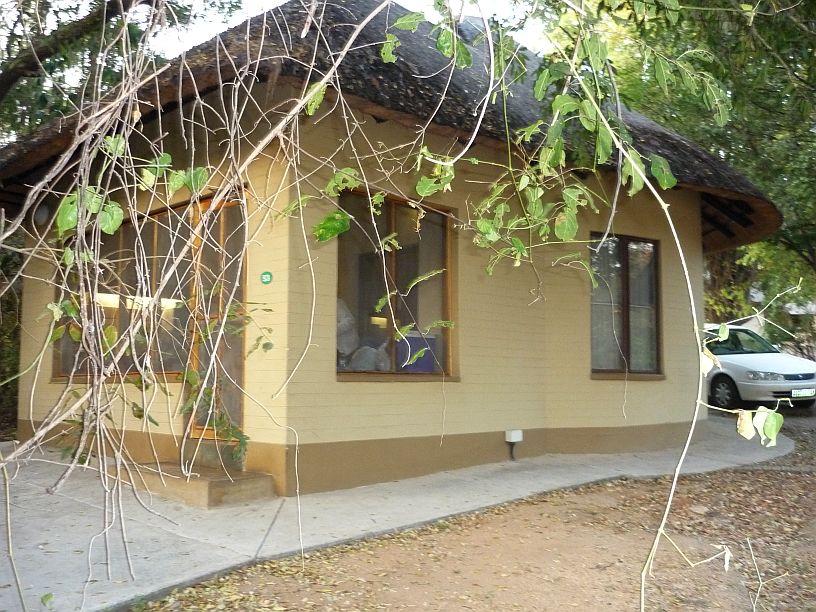
Our three bed bungalow at Skukuza Camp
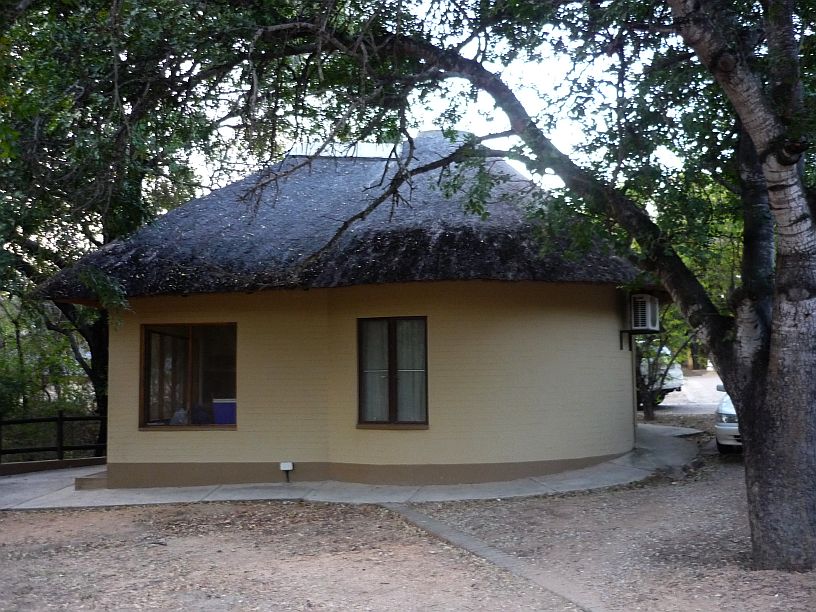
Our three bed bungalow at Skukuza Camp

Our bungalow was a rondavel with added porch/kitchen.

Our bungalow was a rondavel with added porch/kitchen.

The screen porch served as the kitchen with a braai outside where we cooked out supper.

The screen porch served as the kitchen with a braai outside where we cooked our supper.
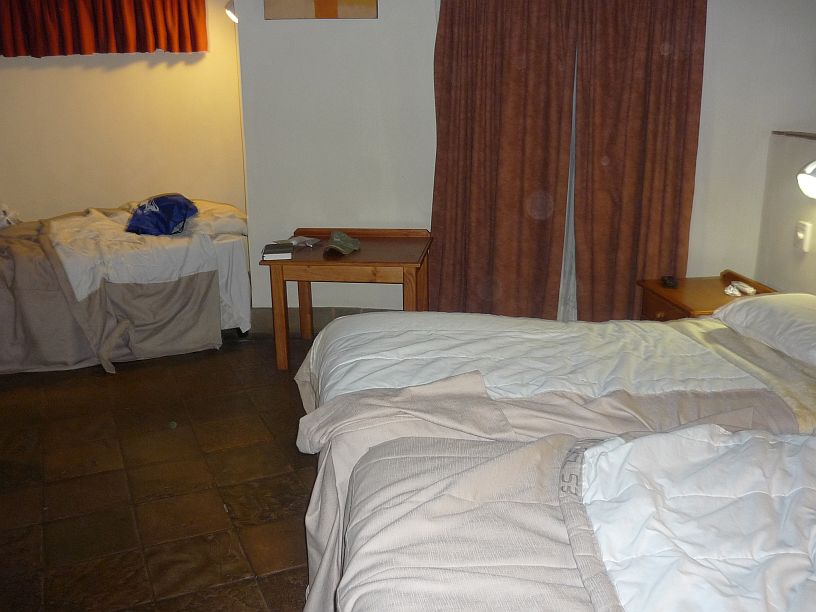
The rondavel part of the bungalow had lots of room for three beds and a private bath with shower.

The rondavel part of the bungalow had lots of room for three beds and a private bath with shower.  I should have taken this photo when we first arrived.  There was a sliding glass door to the porch.

Jonathan and Virginia at breakfast time.

Jonathan and Virginia at breakfast time.  It was downright chilly on the screened in porch!
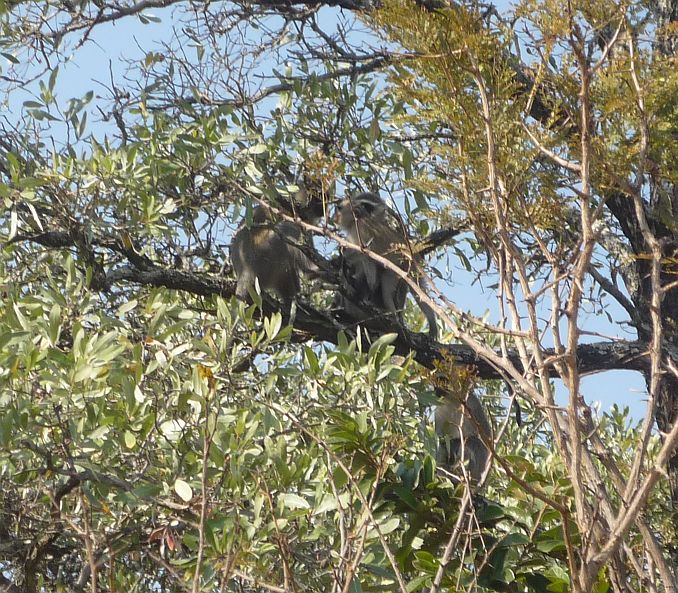
Vervet Monkeys

Vervet Monkeys on the road to Pretoriuskop
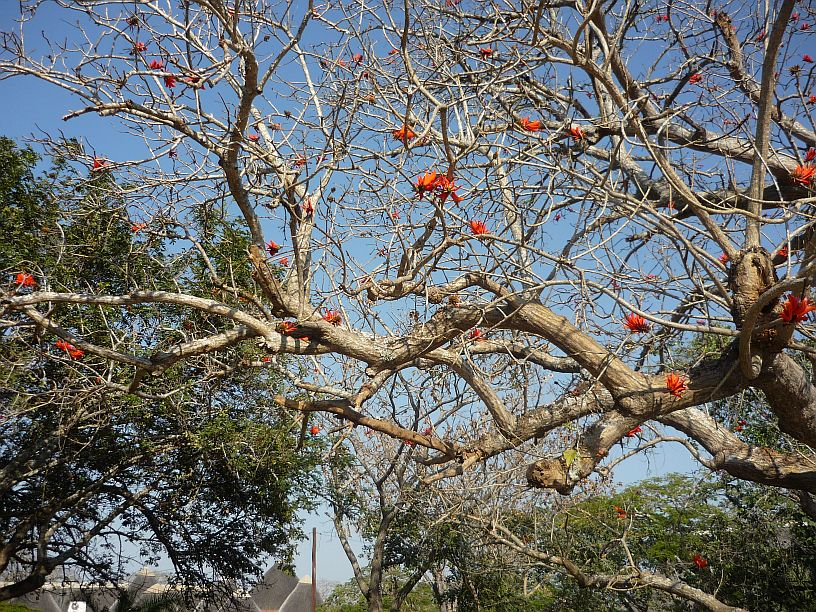
Coral Tree at Pretoriuskop Camp
Coral Tree at Pretoriuskop Camp

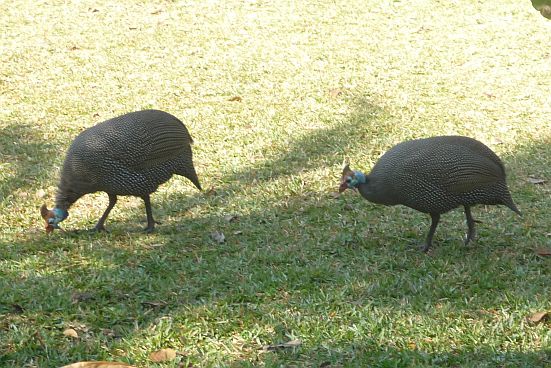
Helmuted guinea fowl at Pretoriuskop Camp
Helmuted guinea fowl at Pretoriuskop Camp

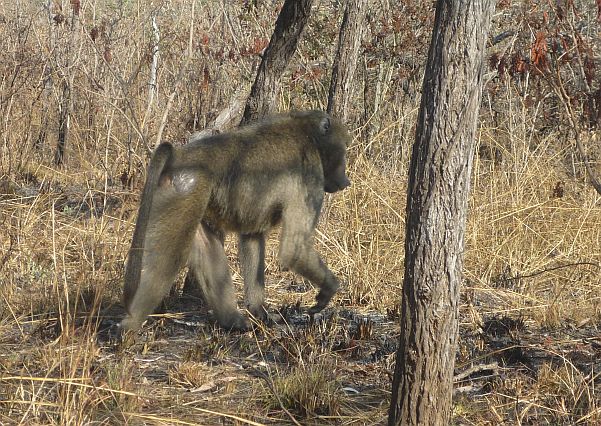
One of a troop of baboons just outside the gate at Pretoriuskop Camp.
One of a troop of baboons just outside the gate at Pretoriuskop Camp.

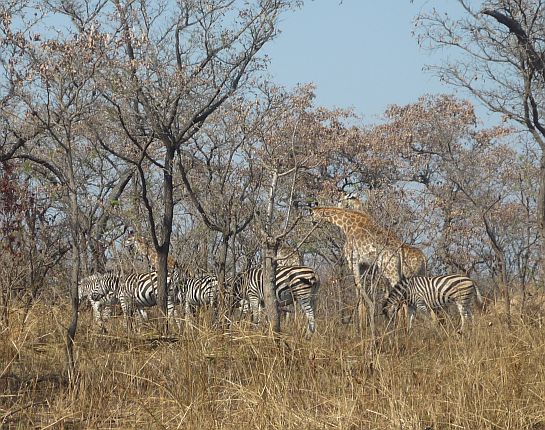
At least four giraffes and six zebra along Voortrekker Road about 10 miles east of Pretoriuskop.
At least four giraffes and six zebra along Voortrekker Road about 10 miles east of Pretoriuskop.

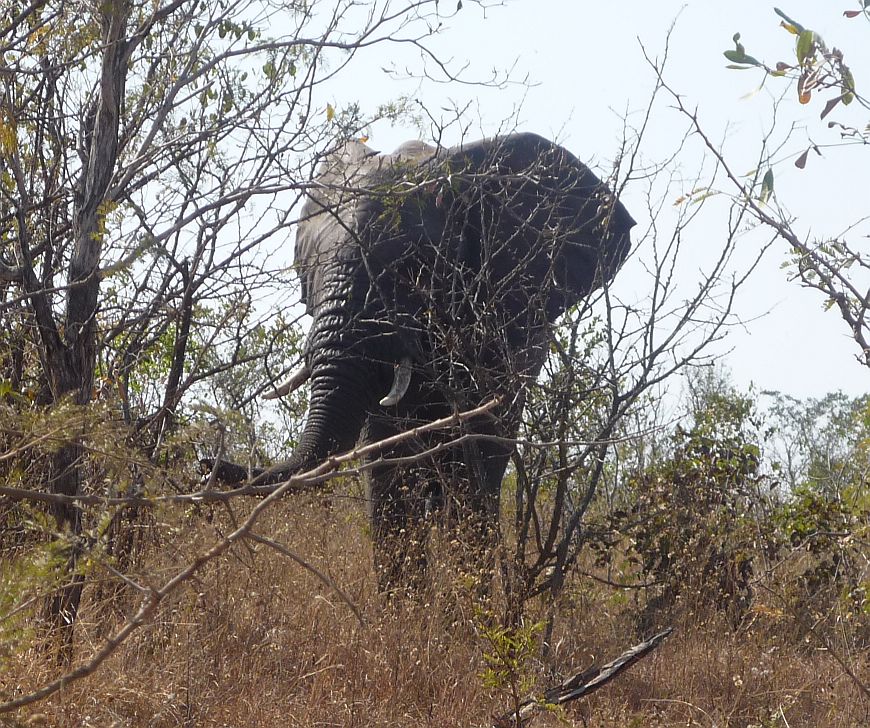
Elephant just west of Afsaal on Voortrekker Road

Elephant just west of Afsaal on Voortrekker Road

We ate lunch at Alsaap get-out point.  Kudu wors (sausage) and pap (corn meal) with gravy cost less than $3.00.

We ate lunch at Afsaal get-out point.  Kudu wors (sausage) and pap (corn meal) with gravy cost less than $3.00.
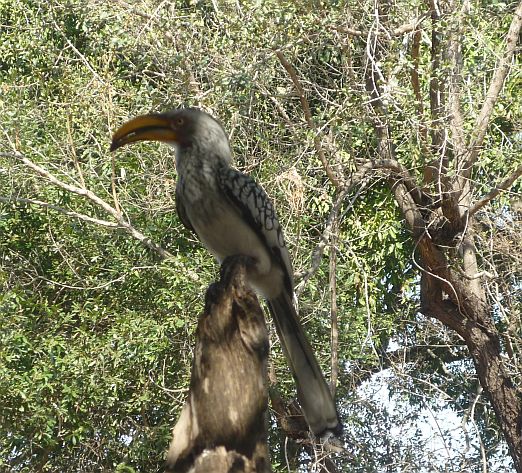
A Yellow-Billed Hornbill watched as we ate.
A Yellow-Billed Hornbill watched as we ate.

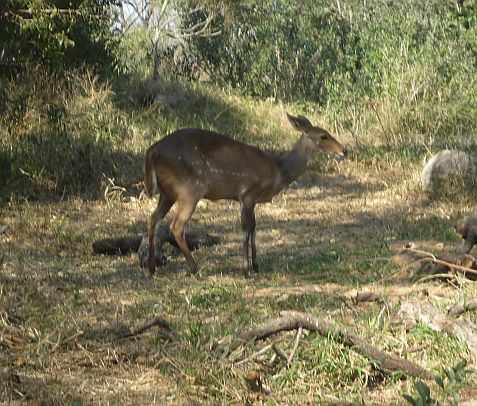
A female bushbuck came within ten yards of our picnic table.  One little boy crept up and touched her, then she moved away.

A female bushbuck came within ten yards of our picnic table. One little boy crept up and touched her, then she moved away.
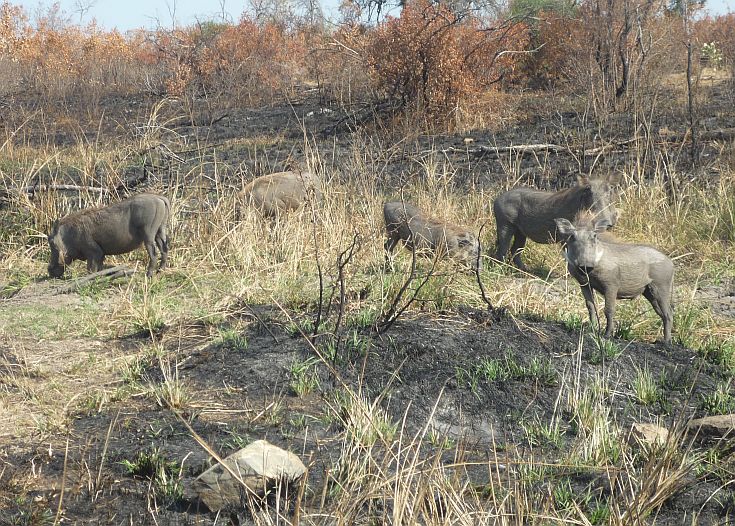
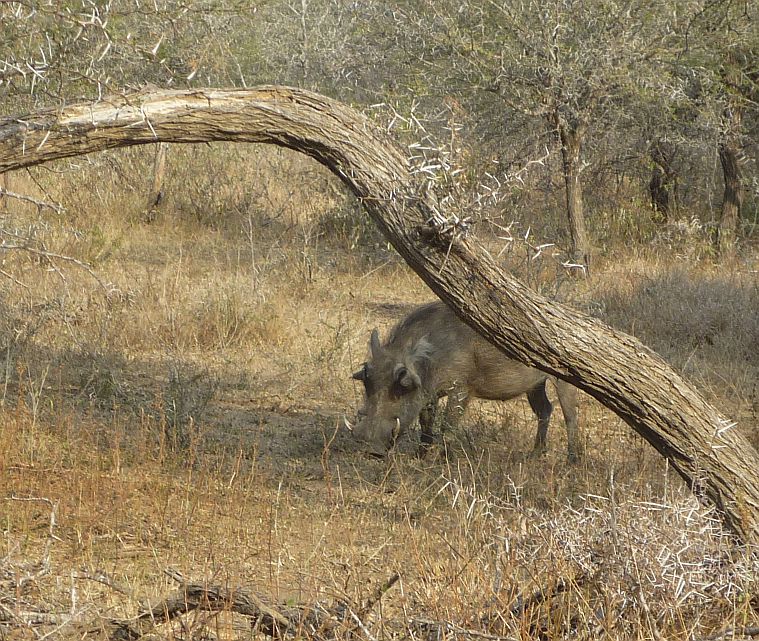
Warthogs grazing on the green grass spouting in a burnt off area of the park.
Warthogs grazing on the green grass spouting in a burnt off area of the park.

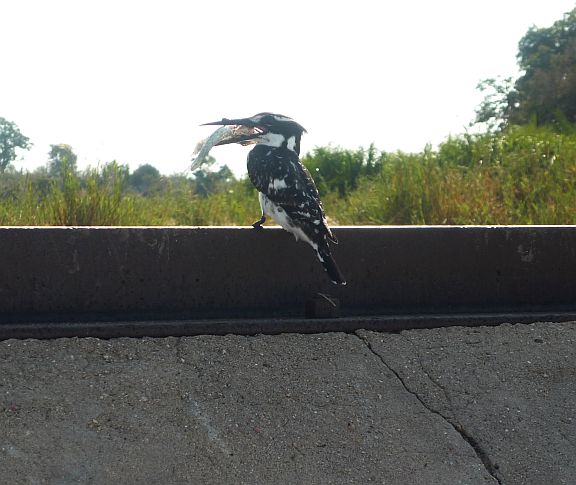
A Pied Kingfisher (living up to it name) standing on the edge of Biyamiti Weir

A Pied Kingfisher (living up to it name) standing on the edge of Biyamiti Weir.
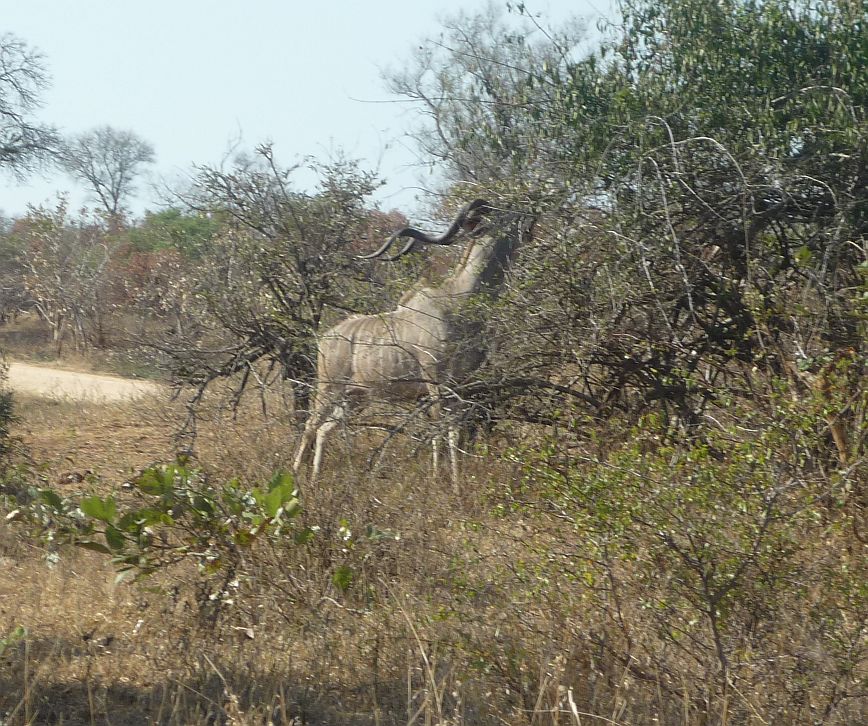
Large male Kudu just north of Biyamiti Wier.
Large male Kudu just north of Biyamiti Wier.

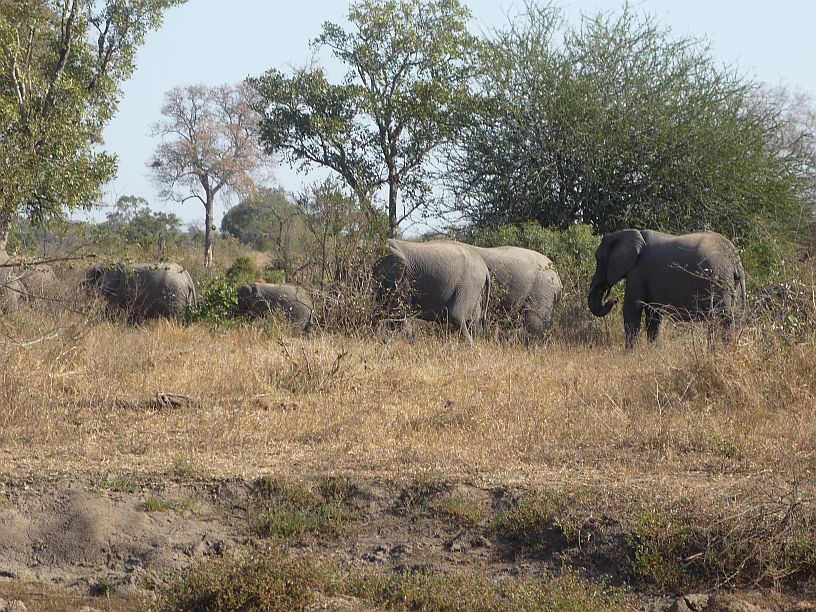
This herd of about 20 elephant was also near Biyamiti Weir to the northwest.  There were all ages of elephant in this herd.

This herd of about 20 elephant, with all ages, was also near Biyamiti Weir to the northwest.

We watched this lone male on the other side of the Mlambane 'river' level crossing for some time.  Then he started across towards us.  When he got within about 30 feet we decided to back out of his way.  Fortunately, there was no one behind us!

We watched this lone male on the other side of the Mlambane ‘river’ level crossing for some time. Then he started across towards us. When he got within about 30 feet we decided to back out of his way. Fortunately, there was no one behind us!
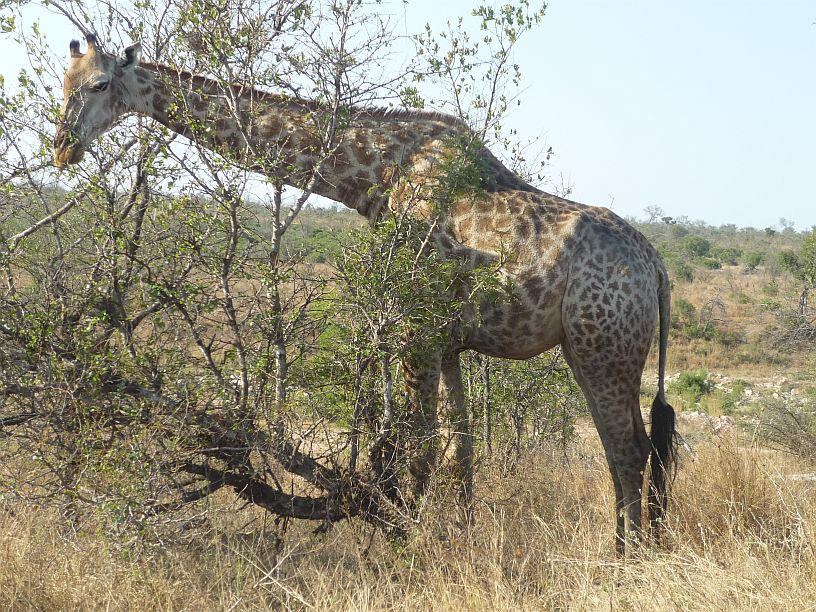
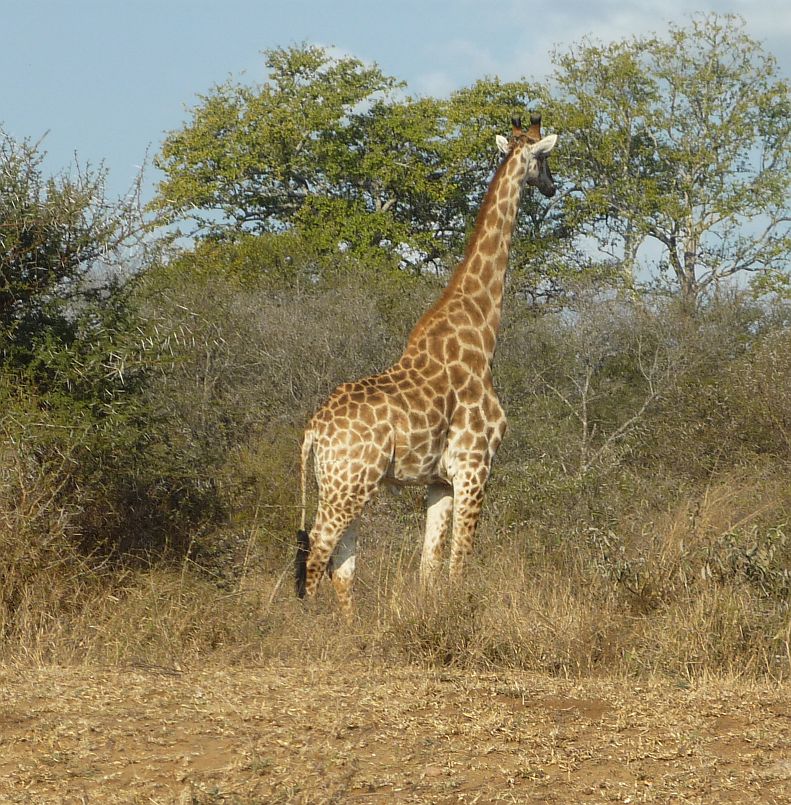
We almost missed seeing this giraffe, because we were looking farther away.  I saw him out of the corner of my eye as we drove past.  He was about 20 feet away!

We almost missed seeing this giraffe, because we were looking farther away. I saw him out of the corner of my eye as we drove past. He was about 20 feet away!

2013/07/06 — Saturday — To Kruger Park

Just north of the Swaziland border are several banana plantations.  There are large sugar cane fields on both sides of the border.

Just north of the Swaziland border are several banana plantations. There are large sugar cane fields on both sides of the border.

We picked up Jonathan about 6:15 and made it to Mananga (Border Gate) about 7:30.  The roads in the north part of Swaziland are like superhighways compared to the bone-jarring gravel roads that we traveled less than 30 years ago.  The speed limit is some places is 120kph (75mph).  There are pedestrian congested areas that the speed limit is reduced to 60kph (37mph) with speed bumps for which one needs to slow to a crawl to avoid damaging the car’s suspension.  Sometimes these are well marked, but not always!

We reached Crocodile Bridge before 9am where we entered Kruger Park for a two day stay.  Here are photos of a few of the animals that we saw:

Shortly after entering Kruger Park we saw this elephant.

Shortly after entering Kruger Park we saw this elephant.

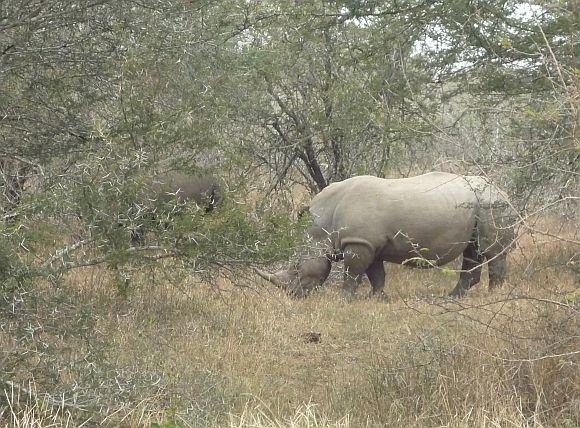
Can you find the second rhino in this photo?

Can you find the second rhino in this photo?

One of about 8 elephants

One of about eight elephants in this group

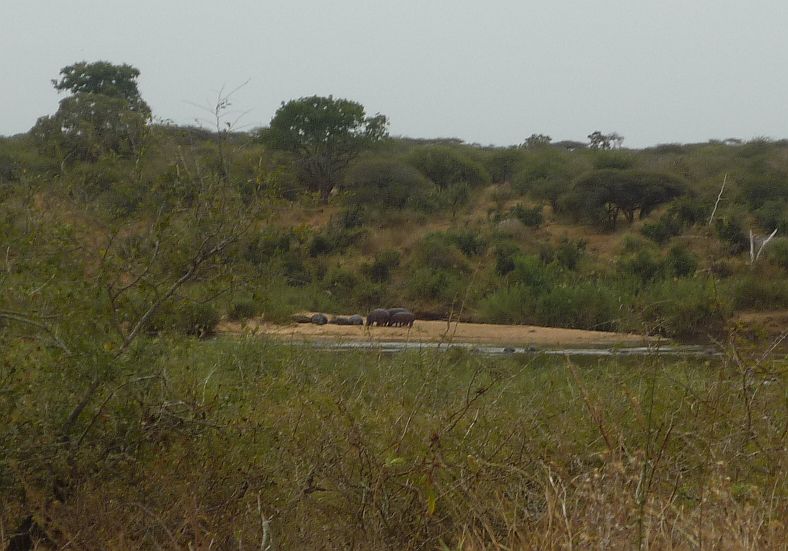
On this cloudy, cool day, most of the hippo were out of the water.

On this cloudy, cool day, most of the hippo were out of the water.

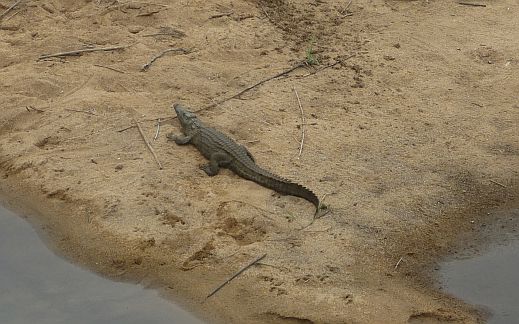
One of two small crocodiles on this sand bar.  We saw larger ones at a distance.

One of two small crocodiles on this sand bar. We saw larger ones at a distance.

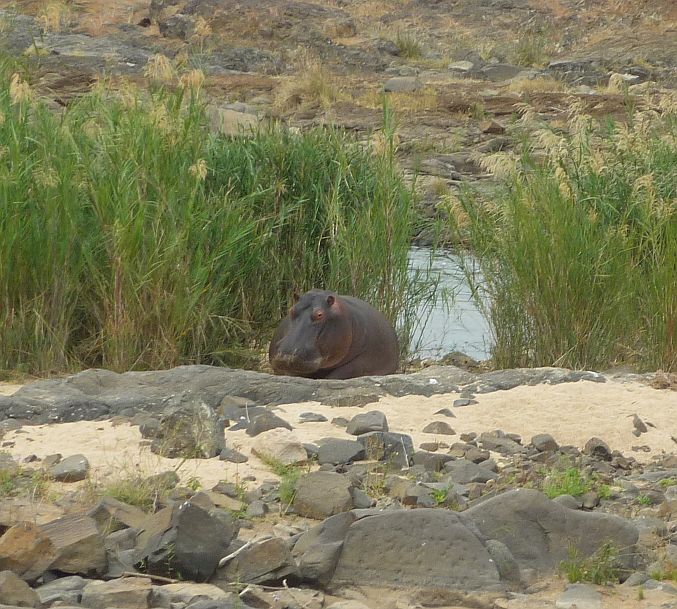
This is the closet photo the we got of a hippo.

This is the closet photo the we got of a hippo.

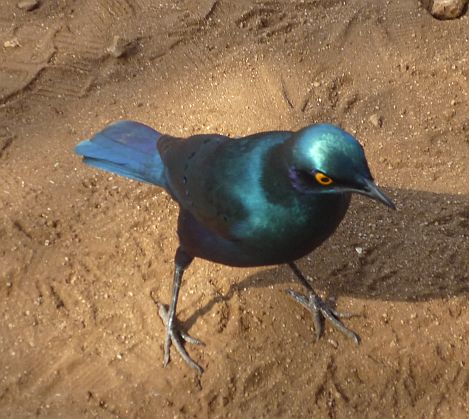
A blue-eared glossy starling picking up crumbs (not ours!) at the Lower Sabie Camp picnic area.

A blue-eared glossy starling picking up crumbs (not ours!) at the Lower Sabie Camp picnic area.

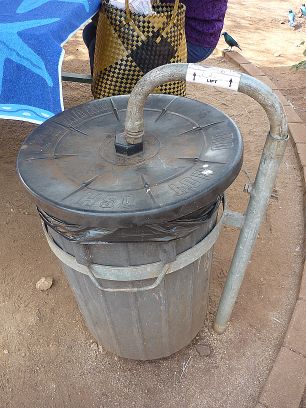
A simple, neat way to keep baboons, and other animals out of the garbage.  The pipe is slotted to keep it from swinging out of the way.

A simple, neat way to keep baboons, and other animals out of the garbage. The pipe is slotted to keep it from swinging out of the way until it is lifted about two feet.

Hippos and crocodiles together.  One of the crocodiles is on the move.

Hippos and crocodiles together. One of the crocodiles is on the move.

More Hippos

More Hippos

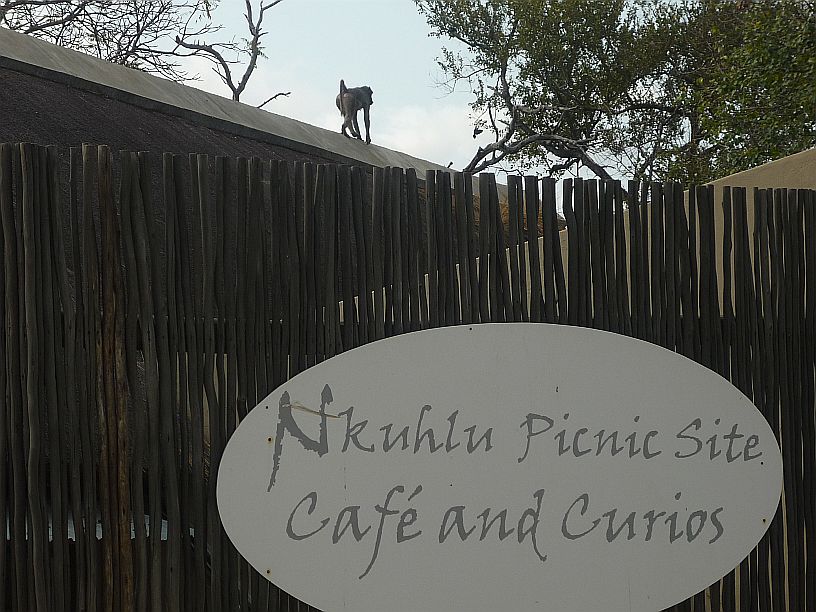
Baboon on roof at Nkuhlu Get-out point -- one of the few places, apart from camps, where you can get out of the car.

Baboon on roof at Nkuhlu Get-out point — one of the few places, apart from camps, where you can get out of the car.

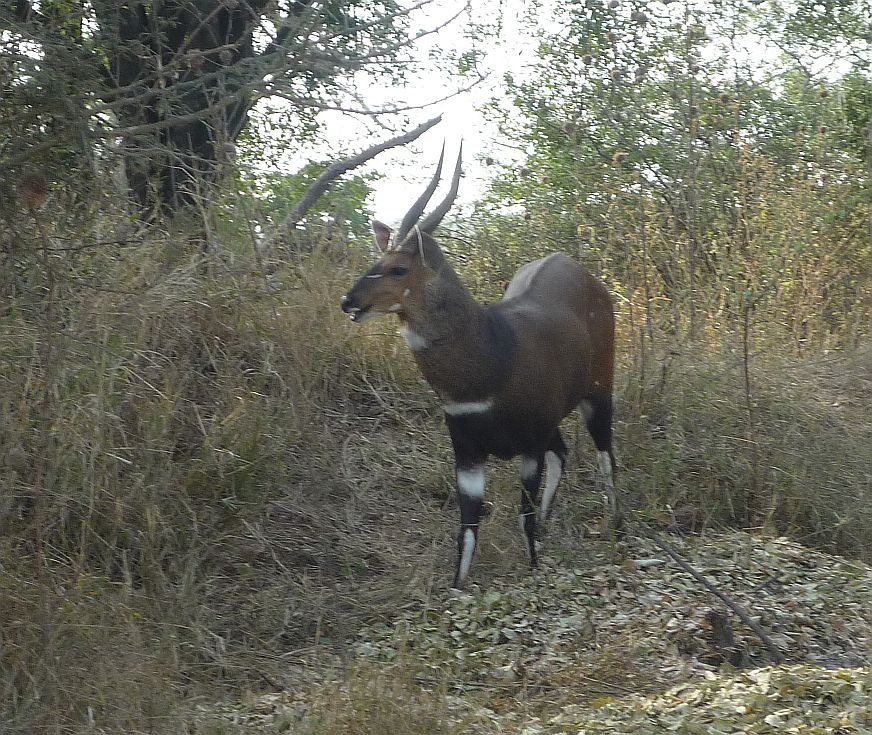
Bushbuck

Bushbuck

Warthog

Warthog

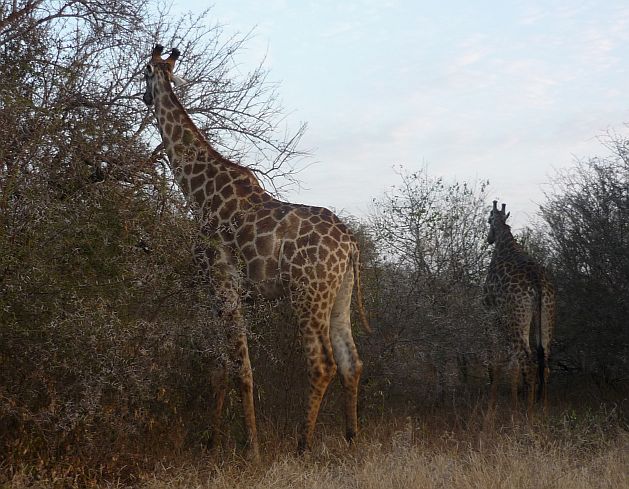
Giraffe

Giraffe

Giraffe

Giraffe

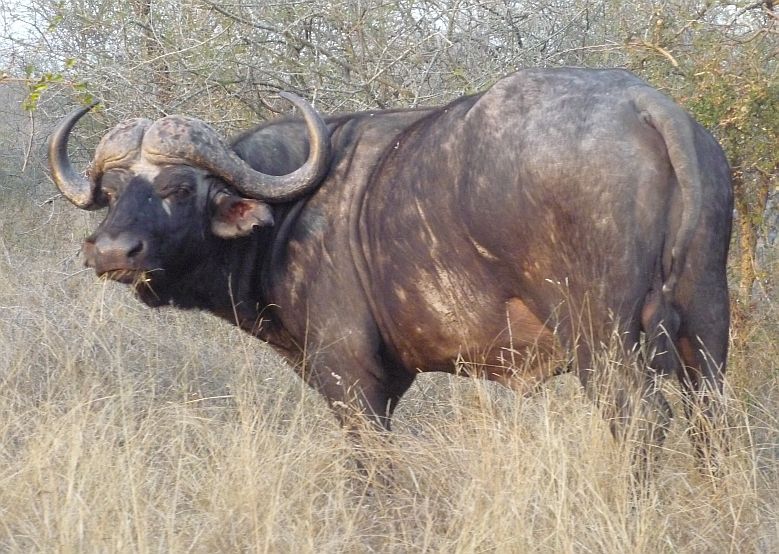
There were about 100 buffalo in this herd.

There were over 100 buffalo in this herd.

This is the closest I have ever been to one of these buffalo.  They are huge!  It is no wonder that they can chase off lions.

This is the closest I have ever been to one of these buffalo. They are so huge that they can chase off lions.  Buffalo are responsible for the death of many people throughout Africa.

After a stop for a picnic lunch at Lower Sabie Camp, and a break at Nkuhlu Get-out, we arrived at Skukuza Camp about 4pm, where we checked into our bungalow.  We then went on an hour drive along the Sabie River, where we happened to pass through a herd of over a hundred buffalo.  In the past, we have only seen a few in the distance, but these were close up and they are huge and look dangerous!

2013/07/05 — Friday — Making Some Progress

This morning, Graham and I rode the mini-bus, a Toyota Regal, that Salema was driving to work.  There were eight of us.

There were a total of 14 men at morning devotions, which is the highest number that I can remember, and we were missing Steve and Klaus, who had meetings in town all day.

Virginia made oatmeal cookies with chocolate chips last night and sent about three dozen to work with me.  I set them out at lunch time and they disappeared quickly.

I worked on emails this morning while the transmitters were on the air.  Then Graham and I did some more diagnostics on TX2 and determined that the erroneous switching off of the filaments is being done by the computer, rather than the fault latch card or the ‘cooling off ‘ command.  This narrows the search down, but will likely be more difficult to track down further, since it looks like the solution may be hidden in the transmitter’s computer program.

I have been fairly certain that the automation system has been switching the transmitters to ‘quarter power filament’ nearly every time it switches ‘driver off’.  I have been adamantly told this is not being done by the automation program.  Today, with Hans’ help, we figured out that the problem is not in the program, but in the circuitry used for interfacing to the transmitter.  Hopefully by removing one diode and adding three diodes, this problem can be corrected.  Since this was discovered near the end of the day, we decided to wait until Monday to make any changes.  It am not certain that this will eliminate all the problems, but there should be considerable improvement.


2013/07/04 — July 4th — A Workday Here

Rummikub tiles can be used for more than just playing games.

Rummikub tiles can be used for more than just playing games.

In Swaziland we do not get the day off for the U.S. Independence Day, so it was work as usual.

Today Graham and I continued our research into the filament issues of the transmitters that are causing intermittent problems.  This has involved using a digital oscilloscope to monitor currents and voltages of the filaments with the hope of ‘catching’ and recording these reading when a fault occurs.  We have had some success and need to analyze the results.  Hopefully, it will be possible to eliminate the problems.

I do want to stress that air time is not lost due to these problems, as they only occur when the transmitter is coming up.  Curing the problems, though, will make the operators’ work less stressful and increase the life of the transmitter tubes, which cost over $17,000 each new.

Virginia tutored the little girl again to day.


2013/07/03 — Wednesday — To Market with Ruth

Ruth and Virginia looking at a handmade wallet.

Ruth and Virginia looking at a handmade wallet.

In staff meeting we heard testimonies from all three interns — Jonathan from Virginia, Samuel from Canada and Sifiso from Swaziland.

After staff meeting, we picked up Ruth from her home and went shopping at the Manzini Market.  Most of our time was spent at the craft market, but a few vegetable were purchased in the old market building.

For lunch we went to Molly’s House of Grills in the Riverstone Mall.  [I made an error in a previous post by referring to it as the Riverside Mall, although it is beside a small river]  The ladies had fish and chips with salad, which was much less greasy

Looking down from the craft market on the tent booths and 'garage' shops --  mostly clothes are sold, here with some herbs used by traditional healers.

Looking down from the craft market on the tent booths and ‘garage’ shops — mostly clothes are sold, here with some herbs used by traditional healers.  The taller building in the back left is the vegetable market.

than the Fish O Chips place next door where we ate before.  I had a 1/4 chicken with chips and salad.  The total bill with drinks was about $10.

When Virginia and I got home in the afternoon we both took naps.  With not much break over the weekend, we were both very tired.  Of course, I get more tired after three hours of shopping than a whole day of work!

I spent a couple of hours writing up a report on what we have found out so far about transmitter tube filaments issues.

We had an early supper then stopped by Pick N Pay to get some grocery items on our way to prayer meeting.

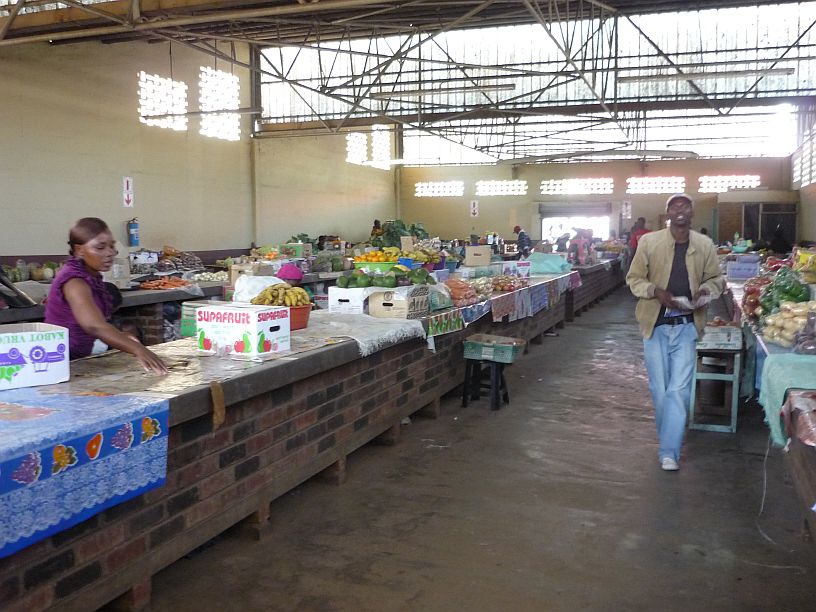
Inside the vegetable market, which has remained unchanged in 40 years.  Usually it is MUCH busier than this.

Inside the vegetable market, which has remained unchanged in 40 years. Usually it is MUCH busier than this.

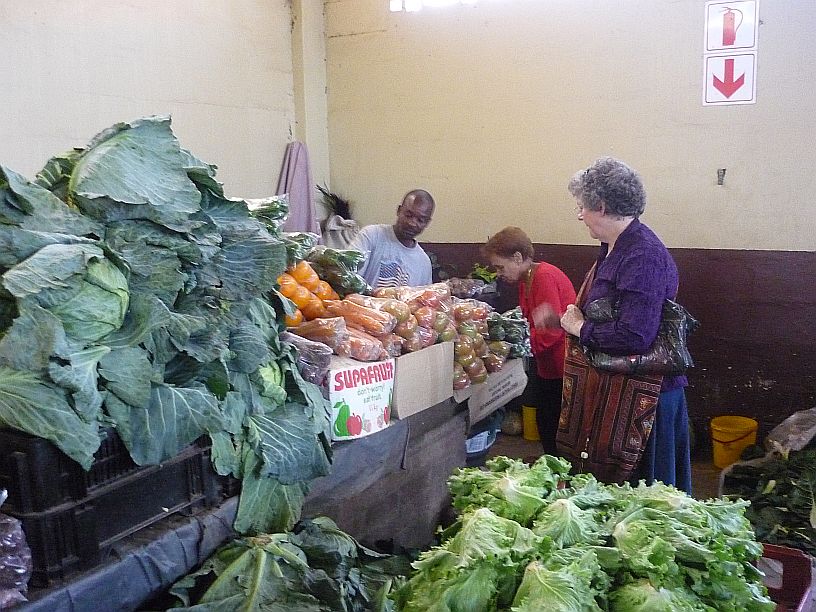
Ruth purchased some carrots here.  Note that the vendor is wearing a T-shirt with an American flag, probably for a used clothing shipment from the U.S.

Ruth purchased some carrots here. Note that the vendor is wearing a T-shirt with an American flag, probably for a used clothing shipment from the U.S.

Pastor Healy spoke on the little book that Peter ate in Revelation 10: 2, 8-10.  His conclusion was that the little book is the Bible, since it is an open book and made public, unlike the closed and sealed book in Revelation 5

Before turning in for the night, we had a good ‘chat’ with Joyce using  Skype texting.

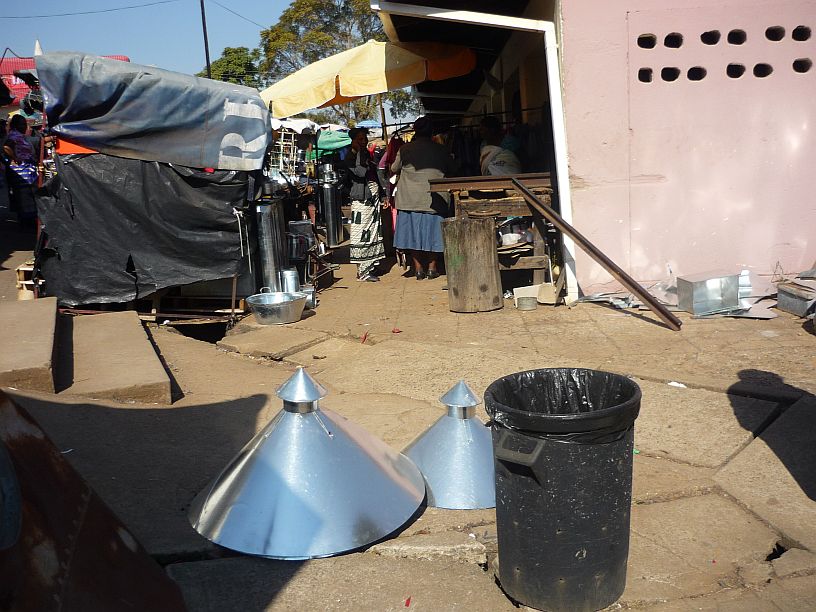
A sheet metal shop in one of the 'garage' shop spill out into the walkways.

A sheet metal shop in one of the ‘garage’ shop spill out into the walkways.

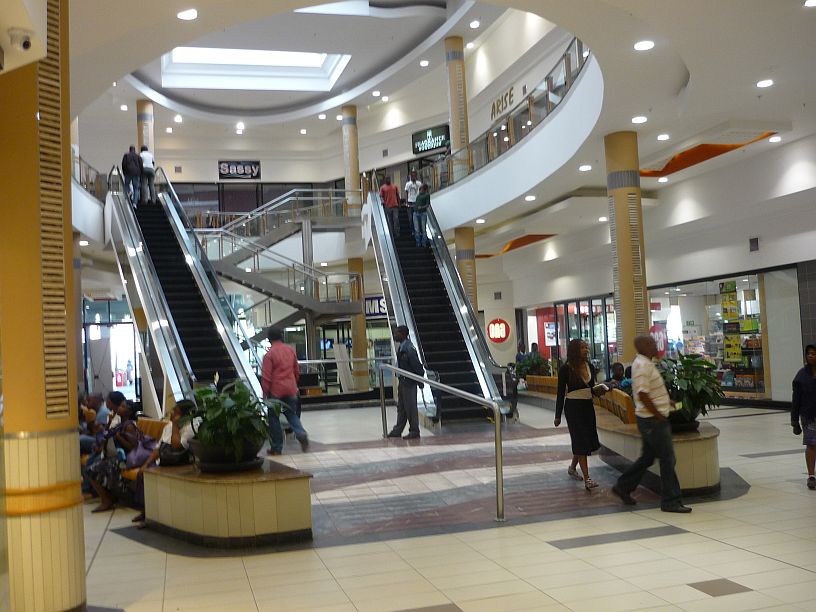
This is in Manzini -- escalators inside the Riverstone Mall!

This is in Manzini, Swaziland — escalators inside the Riverstone Mall!  Notice that the left one goes up — just like one has to drive on the left side of the road in all of southern Africa.

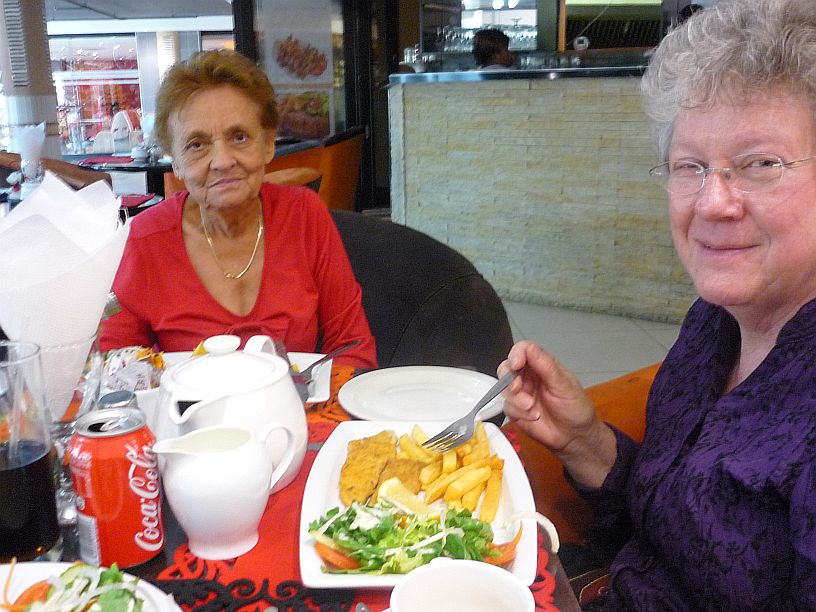
Eating lunch at Molly's house of Grills.  Yes, Coca Cola has been in Swaziland over 40 years.  Their plant in Swaziland supplied the syrup for all of southern Africa for much of that time.

Ruth and Virginia eating lunch at Molly’s house of Grills. Yes, Coca Cola has been in Swaziland for over 40 years.  It is reported that “Swaziland supplies the Coca-Cola concentrate (the sugary syrup the drink is made from) to most of Africa, big parts of Asia and all of Australia and New Zealand from its industrial plant in Matsapha.”  This accounts for at least 22% of the GDP of Swaziland.