5 Nov 2010 Friday

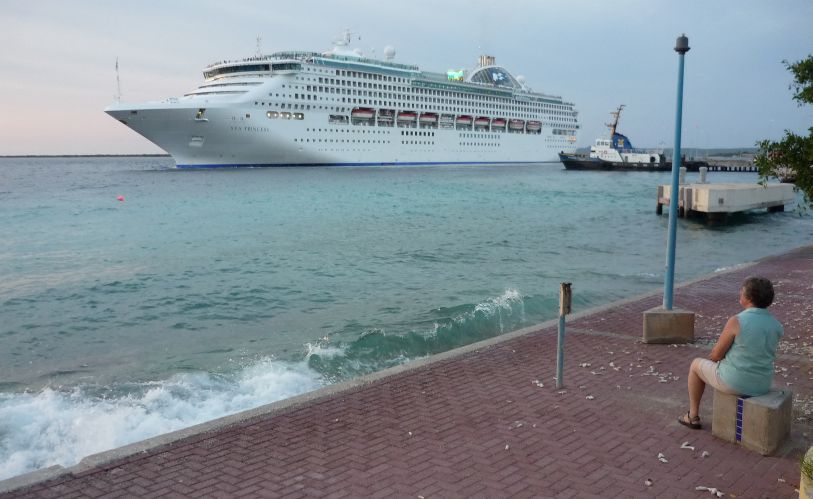
Sea Princess

Sea Princess -- the screen on the top deck is definitely large screen TV!
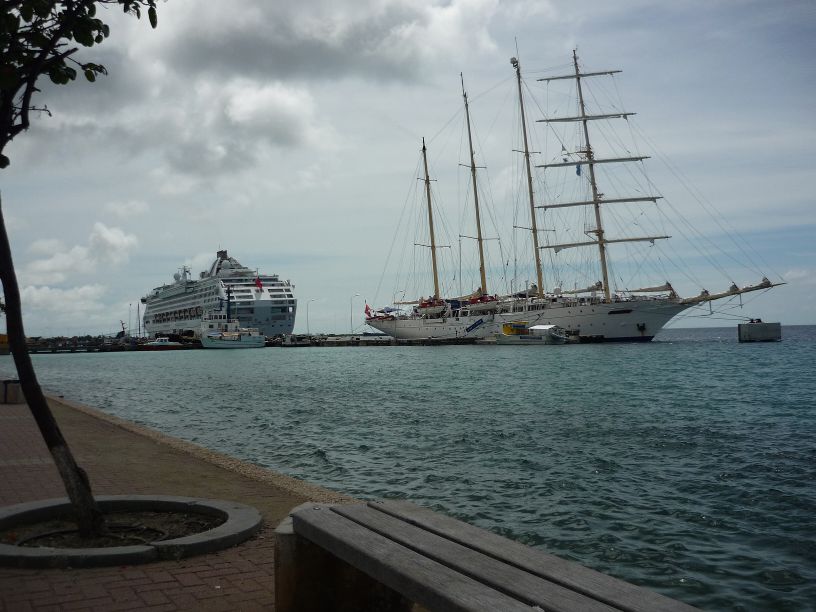
With the men mixing concrete outside for the fence and the need to keep all the windows closed to keep dust out of the house, Virginia has been accompanying me to the office and to the site. This morning on the way to the office, we noticed another cruise ship, the Sea Princess, was already at the dock and tourists were already on the streets.

Sea Princess with Star Flyer (on the right)

This morning, I updated the ‘Security System Notes’ with the additional information gathered from programming and testing it yesterday. I then submitted a draft to Joe Barker as a Word document. It is usable in this form, but will have additional minor changes before I can say it is done.

On the way home for lunch, there was another cruise ship, the Star Flyer of Star Clippers, at the second dock. This one was unique in that it is a sailing tall ship called a clipper.
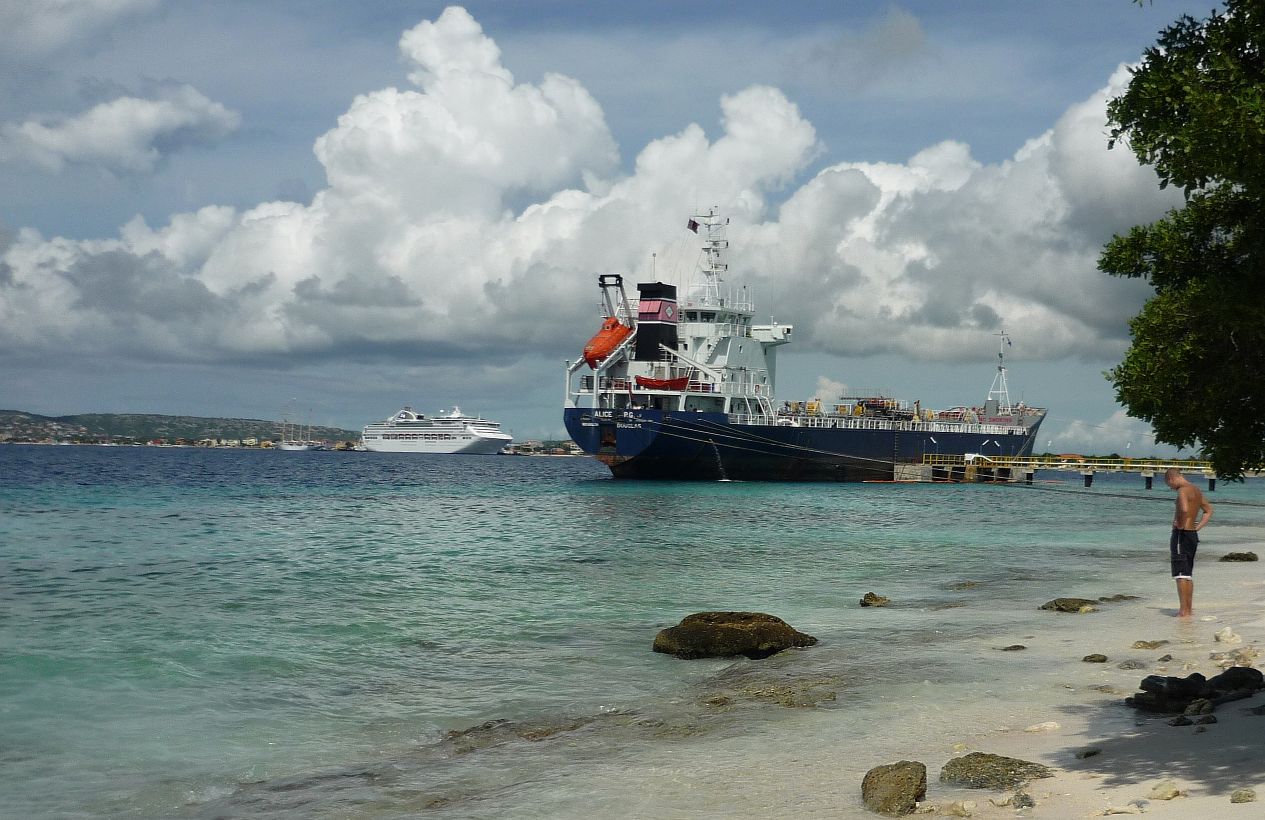
Tanker, Alice PG, delivering jet fuel to the airport.

After a quick lunch of sandwiches, we headed for the site. On the way, we noticed that the tanker, Alice PG, delivering jet fuel was still there. We took a photo of it from one of the most popular beaches, Playa Palu di Mangel (or Airport Beach), of Bonaire, with the Sea Princess in the background. Note the enclosed life boat mounted high on the back poised for a quick getaway. When we talked on the phone later in the evening one grandchild asked why it is taking over a day to deliver the fuel. My reply was that the big tanks must have been very empty, or they were using a very small pump, or both!
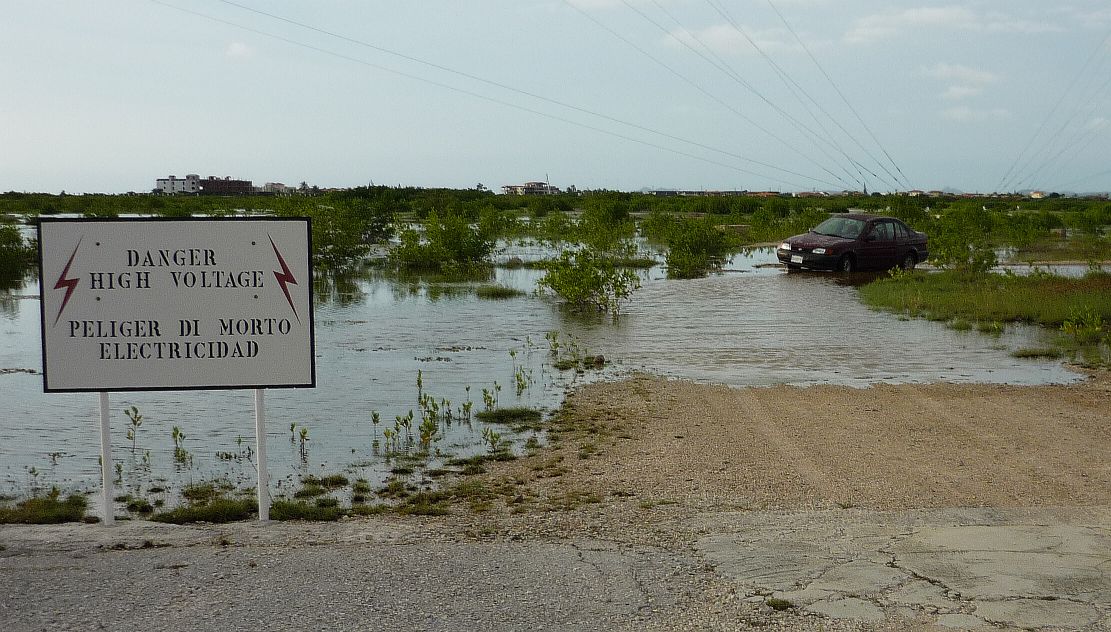
Water around TWR transmitter is the deepest we have seen so far!

As we went on to the site, we could see Salt Pier and observed that the salt ship was gone. It took just under 2 days to load it. Driving into the site, we noticed the water was higher, due to the rain a few days earlier. To park the car in the shaded carport behind the building we had to drive through some water that was not there a couple of days earlier.

Today, I first programmed the security system for one-button review of the time and date. The reason for this was preparing for the next step to program the system to automatically ‘arm’ itself in the event that anyone left after work without ‘arming’ it. I then tested these and more features. About 4pm the TWR staff who normally have access to the site arrived and I gave them training about disarming and arming the alarm. I also demonstrated some of the emergency features, just in case they are ever needed.

At this point, one of the men wanted to hear the siren go off, so we obliged. Joe then mentioned that only one had worked. Being unaware of a second one, Joe showed me the wiring for it. I noticed the output of the system was limited in current capability and decided to verify whether it could handle both sirens. A quick test of the one that was not connected revealed that, even by itself, it required more current than the system could handle. I then checked the one that was connected and noted that it took about 80% of the allowable current. It looks like we will need to install a relay and another 12 volt supply for the higher power siren. I found a relay and socket, so all that is needed now is a 12 volt supply capable of handling 1 amp.
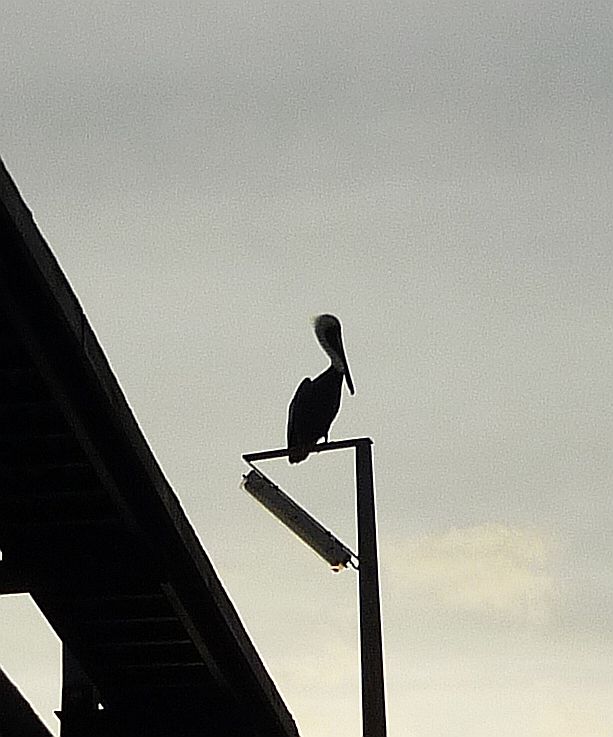
Every time we have visited the salt pier, there has been a pelican sitting on this lamp post. It looks for small fish in the water and dives after it with an awkward appearing splash, but nearly always catches the object of its dive.

As we left the site this evening, the security alarm was fully armed for the first time (except for testing). Joe had told me this morning that the system was installed several months ago, but that nobody was able to take the time required to get it to work. I am grateful to the Lord for answered prayers for wisdom and feel better now about what seemed like a steep ‘learning curve’ for me to get it going.
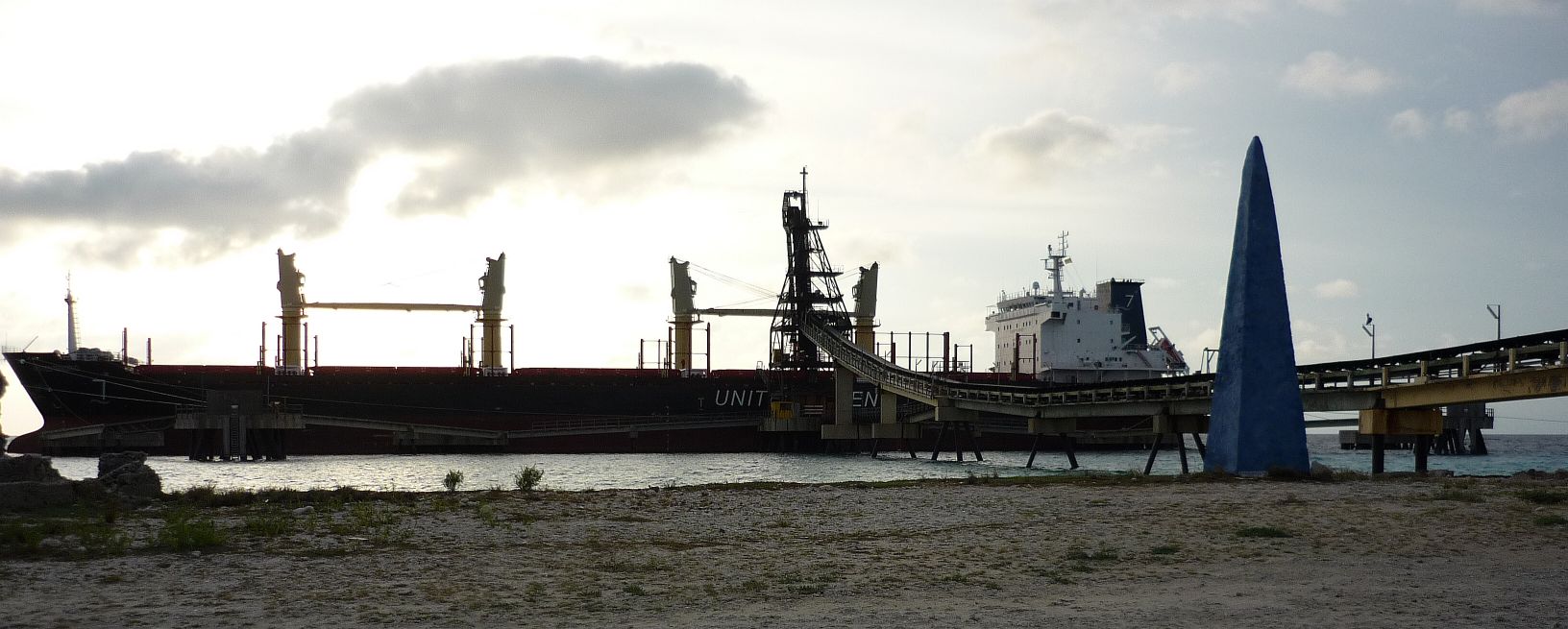
The United Tenorio preparing to load at the Salt Pier. Note the pelican sitting on the light pole above the conveyor just to the right of the blue obelisk.

Looking out the front door earlier (about 3pm), I noticed a large ship head our way and then turn south toward Salt Pier. Also noticed a tugboat accompanying it. On the way home at about 5:45pm, we noticed that this ship, the United Tenorio of United Seven, was moored and preparing to load. There is a blue obelisk (built in 1837) at this pier which is a marker used by salt ships of the 1800s to indicate where they could land safely to load.
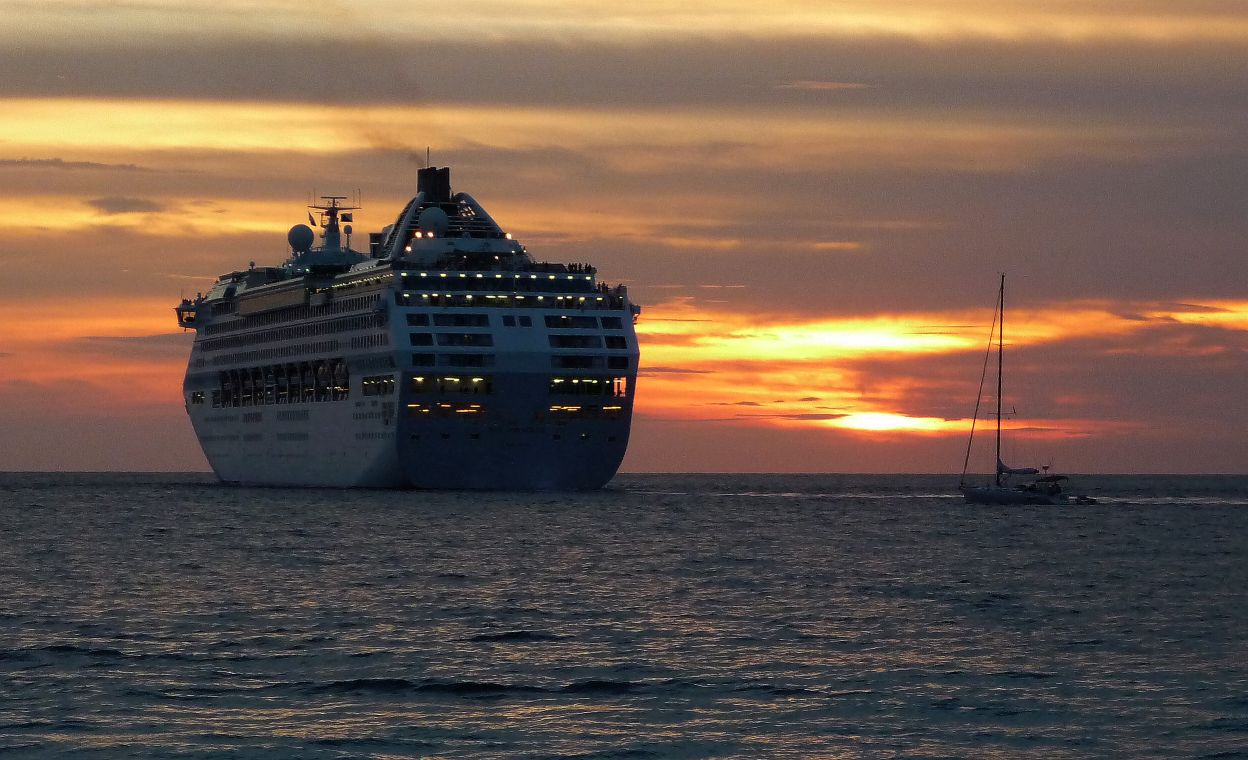
'Sailing' into the sunset to Aruba


We did not go swimming this evening as it is Friday night and the Flamingo Resort parking had overflowed onto the area along our front fence. Instead, we walked along the sea front towards town and watched the Sea Princess leave right at sunset. Looking from the back, it looked like a huge rectangular box and we commented about similarities to what Noah’s ark much have looked like.
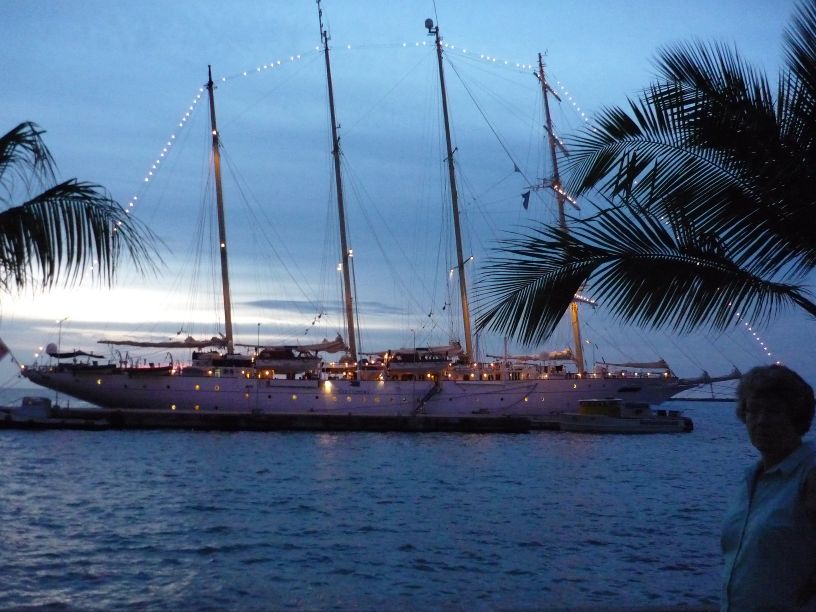
The Star Flyer all lit up in the evening

We then walked on into town and took some photos of the Star Flyer at dusk. Since it is a sailing vessel, it must travel mostly during daylight hours.

For most of the day, we had seen a large barge and tugboat about a mile offshore. From shore, it kind of looked like an
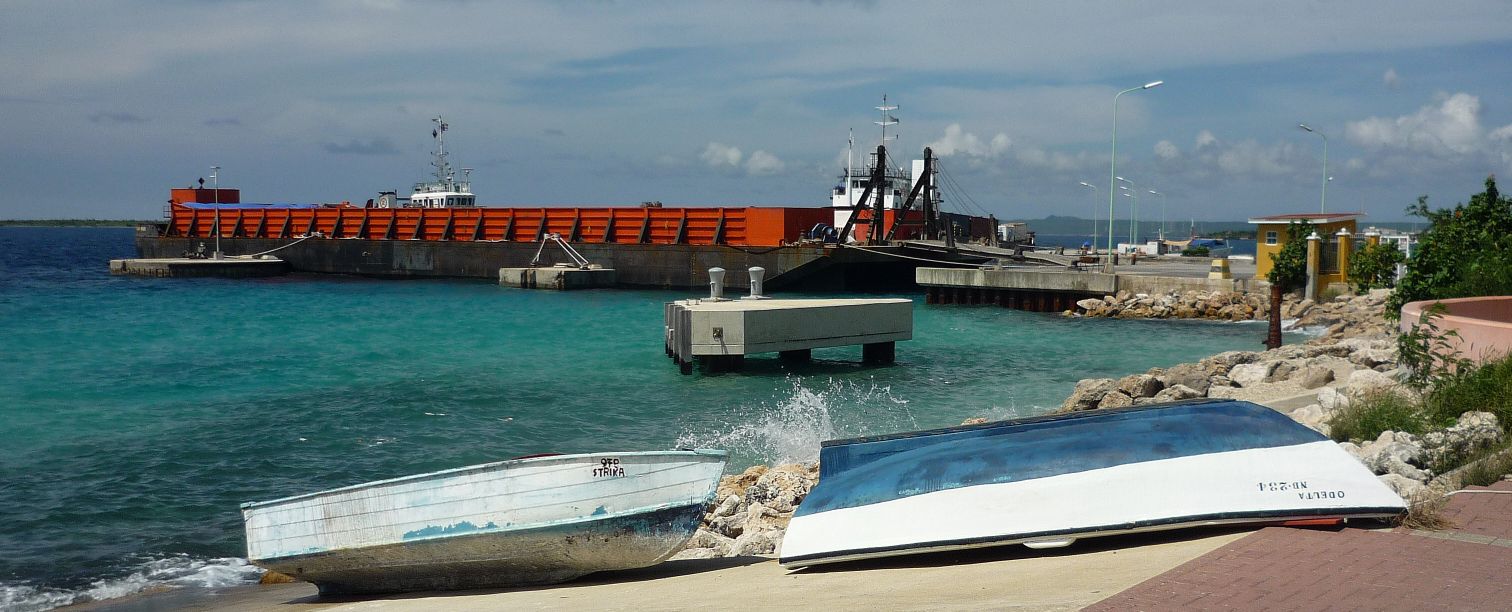
Photo of the barge taken on Sunday at noon. We estimate the size of the barge to be about 80 X 200 feet
airplane floating on the water with its tail fin sticking up in the air. As the Sea Princess was leaving, we noticed that the tugboat began to move the barge toward shore. Moving it into its final position took place after dark at about 6:45pm. During this whole time another tugboat and a pilot boat ‘hovered’ around the barge, the former just in case it was needed and the latter to give instructions and help attach some of the mooring ropes. We had a ‘front row seat’ as we were able to stand on the dock where it tied off and let down a ramp (the ‘fin’ that we had seen) for loading and unloading. The name on the barge was ‘Caribbean Pride’ from Kingstown. It obviously was carrying hundreds of tons of material for use on Bonaire.

Larry talking to Allan and family using Skype

For supper tonight we had leftover Japanese chicken and rice from last night. We also used Skype for an hour or so talking to the Etheringtons and our son Allan and family.

NOTE — To see a bigger (and in some cases, expanded) version of any of the images, just click on the one you want to enlarge.
4 Nov 2010 Thursday

This morning I drafted a document titled “Security System Notes” to provide a one page summary directed to workers for operating the site alarm system and two additional pages for the person maintaining the system to know what features have been changed from default, with instructions for things might normally need to be changed.

Last night, I discovered that the way to overcome a wrong code entry, was to ‘stop, press * and start over again’. This was found in a one line statement in all 100 plus pages of three manuals for the system. I found it by downloading all three manuals via the internet and searching for ‘entry error’, ‘wrong’ , etc., until a search for ‘mistake’ found it. When I tested this ‘error correcting’ procedure, it worked, but was confusing. When a mistake was made and the * key was pressed you often would no longer get the ‘beep’, which is typically given as each keystroke was ‘confirmed’. This must be a tactic of the system to ‘fool’ an unauthorized person into thinking the keypad has been disabled (like it was doing to me for a while!). If you persevered and continued the entry without becoming rattled, it would usually work. This information will now be incorporated into the ‘System Notes’.

On the way to the site after lunch, I noticed a ship at the airport dock. It must be delivering jet fuel for the storage tanks there. Getting closer to the site, I noticed that the ship was still loading at the salt pier. This time they were filling the middle of its three holds. This must mean that after almost a day of loading, they were half filled.

At the site, I continued reprogramming the security system to the specifications that TWR Bonaire wants, then, where possible, tested each change to make sure it worked. Also made notes as reminders to incorporate certain features into the ‘System Notes’. One of the programmed features added was one-button access to the Time/Date of the system. This was needed in preparation for reprogramming the system to AutoArm at a specific time. This will automatically arm the system if someone forgets.

Upon leaving the site, I noticed that the salt ship’s bow was about 2 feet lower than it was shortly after noon. They still have the front hold to fill.

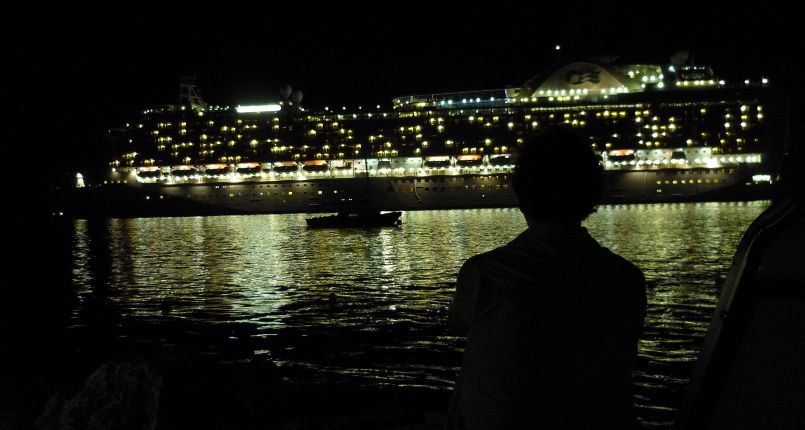
We went for another refreshing swim this evening, but this time with the huge Emerald Princess berthed not far away. Passengers were streaming back on board in preparation for departure. The cruise ships tend to leave about sunset to make the journey to the next location. This one is headed for Aruba.

After taking a shower to wash the salt water off, we decided to go back to the beach to watch the Emerald Princess leave.

The shadow just right of center is Virginia


[An interesting fact — the Emerald Princess like most large cruise ships do not need tugs to maneuver them into or out of port. They have rotatable pods under the ship that allows them to move any direction, even sideways!] Her departure was ultra-slow to prevent a wake that could damage the beaches, or boats. When close to half mile from shore, she slightly in increased her speed, which caused a few waves that were slightly higher than normal to reach shore.

For supper we had a Japanese dish of chicken and rice. Anyone noticing a theme here?! NOTE to Nathaniel Simone — you would love the food here! 🙂

NOTE — To see a bigger (and in some cases, expanded) version of any of the images, just click on the one you want to see.

3 Nov 2010 Wednesday

This morning, Joe and I discussed which of the various available options for the site security we wanted to implement, or revise. There are well over 100 program data fields and most of those have several options within those fields. We decided to leave most fields at their default settings but determined to change about 20 of them. One of the options is the ‘entry delay time’. Initially we were just going to use a standard delay. Then we discovered an option of waiting (0, x, y, or z) number of seconds after the alarm sounds to initiate the ‘call’ to report an intrusion. Our final decision was to allow a much shorter delay to disarm the system before the ‘siren’ sounded, then wait a few seconds before ‘calling’. This way, if for some reason the worker entering the building forgot to disarm the system, he would get a startling reminder when the ‘siren’ sounds to hurry and disarm the system before a ‘call’ is initiated.

After lunch, Virginia accompanied me to the site. I was able to successfully reprogram and test most of the changes to the security system. There is one problem which is presenting a major challenge to which I have not yet found the solution. When a code is being entered, if a wrong code is used (i.e. hitting a wrong digit, by mistake) the keypad locks out any further attempt to reenter a corrected code and the alarm will sound. The only way to get past this has been to power down the whole system. There has to be some simple corrective procedure, so that is on my list of things to research further tomorrow.

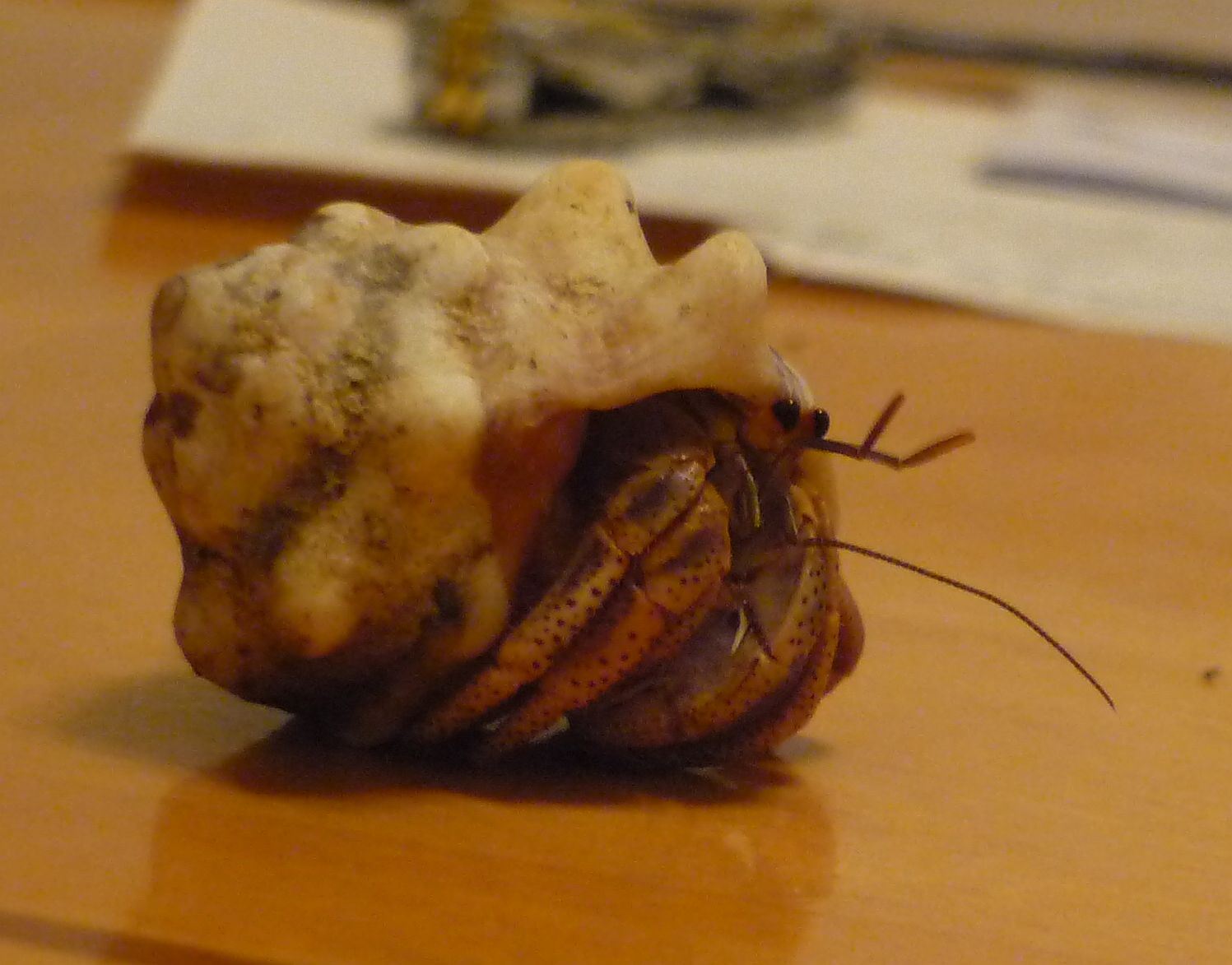
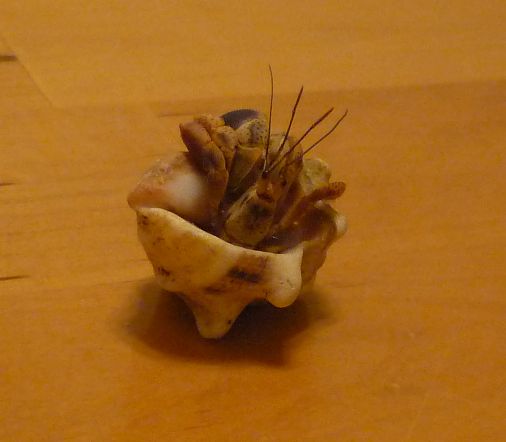
After hiding for some time, Hermie the hermit crab, discovers he is on his back and assesses how he is going to turn himself upright.


After work, we took a detour past Salt Pier to observe progress on loading of the salt ship. We got home with just enough time to go for a swim. It sure was refreshing after missing several days due to the rough waves. We felt cooler the whole evening.

After several minutes of waiting, quick as a flash, when he thinks no one is watching, Hermie rights himself and begins to scurry away, always ready to stop and retract into his shell if he feels threatened.

After our swim, as we were walking on a sidewalk on our way home, I saw a small piece of ‘coral’ move. I thought, “That’s strange, neither of us kicked it!” Almost immediately and subconsciously from experience 40 years, I remembered it could only be one thing — a very small hermit crab. We picked it up and brought it home to release in another area with less traffic. It’s overall length was about one inch.

After supper, I added three blog entries with lots of photos for two of them. I am amazed how long it takes to add photos and keep a reasonably organized look.

Hermit crab

2 Nov 2010 Tuesday

No problems with the transmitter overnight. Joe Barker and I discussed the switch from exciter A to exciter B at start up yesterday. We reprogrammed the Gentner controller to switch the carrier control unit on five minutes before switching the transmitter on to see if that takes care of the glitch.

I discussed with Joe what needs to be done now that the transmitter building security system is ready to fully arm. This can not take place until all authorized persons are assigned codes and given instructions on the ‘arming’ and ‘disarming’ of the system. We also decided to use the system’s phone notification feature which allows programming of two numbers [in case the first is not available]. We also plan to connect it to the Gentner to provide alarm capability via an alternative route.

Virginia and I came home from the office for lunch — toasted cheese sandwiches. Dutch gouda cheese is fairly reasonably priced here when purchased in ‘wheels’.

Virginia accompanied me to the site, where I began to trace the specific phone line (out of many) that we wanted to use for security. I then had to identify which was the incoming termination, then which was the ‘tip’ and ‘ring’ wire of the pair. Now I was ready to connect it to the security system in such a way that it would take over the line should it be ‘in use’. I then had to program it via the keypad with two phone numbers. We decided it should call my cell phone first.

Before testing it, the ‘siren’ was disconnected. We wanted to keep our sanity and not have the electric company people from next door running to check the alarm. I then proceeded to simulate a fire alarm. The keypad beeper went off, but no call to my cell phone. The phone line was ‘tied up’ so I knew it was trying and I could hear that a voice mail box was responding. After a bit of head scratching, I determined, to my embarrassment, that one digit of the number entered for my cell phone was incorrect.

After correcting the number, it now worked, but I could not hear a message when it called. It also kept calling over and over. Finally, I found a place in the manual where it states that the primary number is tried eight times and, if it gets no response, the secondary number is tried eight times. It also appears that this system is set up to call a security monitoring service computer, not regular phones. Since I don’t speak ‘computer’, it thinks I am not responding and kept redialing me EIGHT times. I suspect the secondary cell phone was shut off. When I listened in on the system phone line, I heard the voice mail box of that cell phone answering. No wonder the phone line, used by the security system was tied up for so long. It had to go through this process a total of 16 times!

Even though the security system is set up for calling a security company computer, it is still usable. When the security system ‘calls’, we know which line it is calling from and we’ll see this on the cell phone’s display. We should change the cell phone display to read ‘Tx site or alarm’. If there is no response to our answer, we will know the security alarm has been triggered. This will be verified when it keeps calling back persistently — eight times! This can be tolerated in the, hopefully rare, event of a real alarm.

Tomorrow, I will check to see that the secondary cell phone had 8 ‘missed calls’ [how about 16!], which will verify that everything is working correctly. Then I can look at what is required to connect the security system to the Gentner. It will probably require an interface to be designed and implemented as well as programming of the Gentner to ‘tell’ it what to do when there is an alarm. It will probably call my cell phone, but on a different phone line. It can also ‘flash’ up a message on the remote transmitter monitoring/controlling computers.

Virginia went to town to do some shopping then returned to take me home. We stayed around for the transmitter to come up and noted that there was no ‘glitch’, like there had been yesterday at start up.

In the past 24 hours, we have had about 3 inches of rain. The site is mostly underwater again. The air is cooler, but more humid. It is amazing how cool 80F feels after the last three weeks!

We went for a walk along the seaside again tonight. The waves were not as high as last night, so we will probably begin swimming again tomorrow.

1 Nov 2010 Monday

The transmitter ran great over the weekend with no cutbacks.

I reviewed some of the proposed projects and their priorities with Joe Barker. The number one project is still the installation of the UPS for the transmitter site and moving the temporary one there back to the studio, where it belongs. But the UPS is not expected to arrive until next week, so the security system is currently the priority.

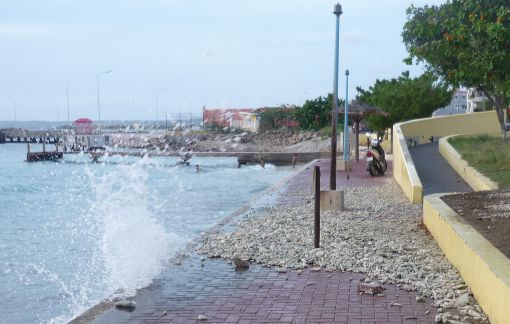
During our walk this evening we saw some coral debris resulting fron higher waves caused by Hurricane Tomas passing about 100 miles north of us. Just in front of the pier is a small beach where children like to play. As we got nearer, we noticed children wearing their 'birthday suits'.


At the site, I concentrated on the motion sensors. The ones in the office area and transmitter room seemed to be functioning properly. Another one in the old transmitter room was not sensing movement, not the one in the work area at the back. They are mounted quite high on the wall and their beams were aimed high. I opened them and aimed the beams as far as they would go downward. They now began to detect, even at the far side of the rooms, but I did notice they did not work as well when walking directly toward the detectors.

The waves pushed up huge piles of coral onto this walkway.


Reading up in the manual for the detectors, I found that they detect motion most effectively for movement parallel to the wall they are mounted on. This checked out to be true, so we may want to review whether there might be a better place to mount them. Of course this would involve rerouting and extending the wiring for them.

Before leaving, I was able to partially activate the security system for the first time in months, if ever. I definitely know more about the system after working with it for a couple of days.

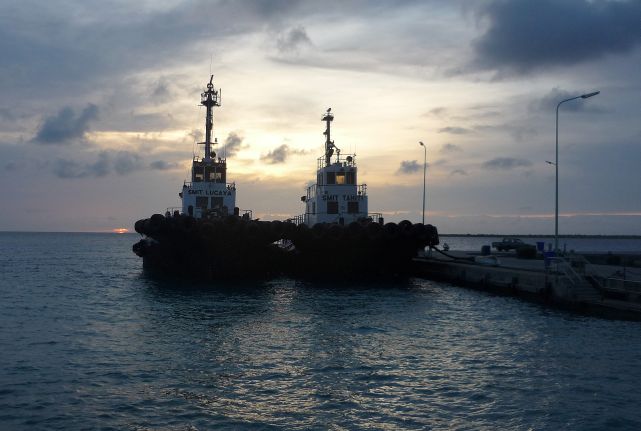
'Twin' tugboats tied at the pier. They are used for the huge oil tankers that dock at the oil depot at the north end of Bonaire.


After getting home, Virginia and I decided to walk over to see if the sea had calmed enough for a swim. It was still pretty rough, so decided to go for a walk along the seaside into town.

Just as we started, the transmitter ‘called’ my cell phone to inform us that something was amiss. We quickly went back home and verified the radio signal was OK. I fired up the computer and found that the transmitter was on Exciter B instead of A, which was an indication that something with turning ‘on’ the carrier control had caused the switch. I was able to remotely switch back to exciter B. Will do some changes tomorrow to see if something can be done to avoid this in the future.

The crane in the background is on a barge. It should be interesting to see how they unload it onto the pier, which is beside it.

Now that things were settled down, we returned to our walk. In several places where the sidewalk is close to the shore, the rough waves had deposited coral pieces on the walkway. Waves were still splashing occasionally onto the walkways, but the piles of coral were indication that Hurricane Tomas had some effect resulting in the waves previously being even higher.

Getting to bed quite late tonight after putting photos into two blog entries before posting them.