31 Oct 2010 Sunday

The church meets in a school auditorium. Has great ventilation as long as a good breeze is blowing.

The Sunday morning service at the International Bible Church starts at 9am. The youth had the opportunity to open the service. It was livelier than the usual opening, but it was good. Unfortunately, they were not able to project the

The three young ladies (three row in front of us) really 'get into' the rythm. They are students attending the medical college on Bonaire.

words on a screen as planned, so many of us ‘older’ folk had a hard time singing the words of some of the songs. Sound familiar?! Some of the songs were in the hymnbook and we did fine with those.

Pastor Totoram Baran is an excellent Bible expositor and had been teaching a series on the

Pastor Baran speaking (NOTE the two-tone purple pulpit)

seven churches in Revelation. Pastor Baran grew up in Guyana. He graduated from Guyana Bible College and Biblical Theological Seminary of Hatfield, Pennsylvania. He has been an evangelist, church planter, pastor, and principal. He came to

IBC hopes to move into its new building by the end of this year. It is located about 500 meters north of the TWR studios.

Bonaire after directing a multi-faceted inner city ministry in Newark, New Jersey.

His wife, Felicia was born and grew up in Bonaire and graduated from the Jamaica Bible College. We knew Felicia, as well as some others in the church, from forty years ago.

This kunuku was the last farm we passed on the way to the coast. Wonder what they grow here?!


IBC usually has adult Sunday School at 10:45am, but this morning they were having their annual business meeting. Virginia and I went home, ate leftover Cashew Chicken and relaxed for a while.

These flamingos were in the mud flats across the road from the kunuku.

We then decided to do some sightseeing on the east coast, especially since Hurricane Tomas is brewing about 150 miles NE of Bonaire. The waves should be a little higher than normal. We decided to visit a place called the Blow Hole located about 200 meters south of the inlet to the Lagoen. Also a

The small bay with drift wood and trash at west end

bay, unnamed on any map that we have found so far, located about 1000 meters south of the Lagoen. Neither of these places are marked on road signs, or near roads found on maps, so I used satellite views from the internet to

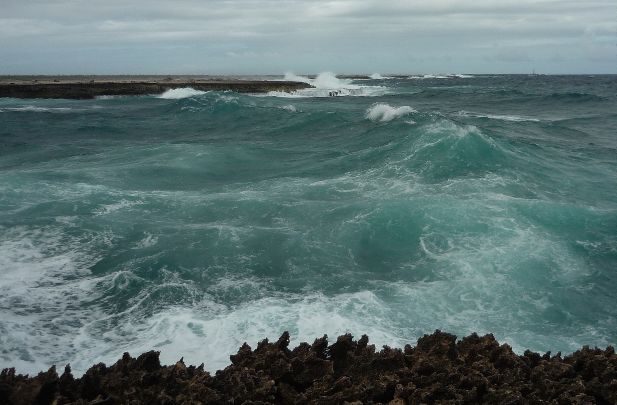
'Small bay' with big waves

locate the dirt trails (and memories of treks taken 40 years ago).

A big wave enters 'small bay' -- note the big waves crashing in the distance

Waves are also big at the entrance to the Lagoen, but, because it is shallow, it is still fairly calm at the west end. Note waves crashing up the coast looking north. If you look closely (near the upper right corner) you might find Boka Spelonk, the lighthouse we visited yesterday.

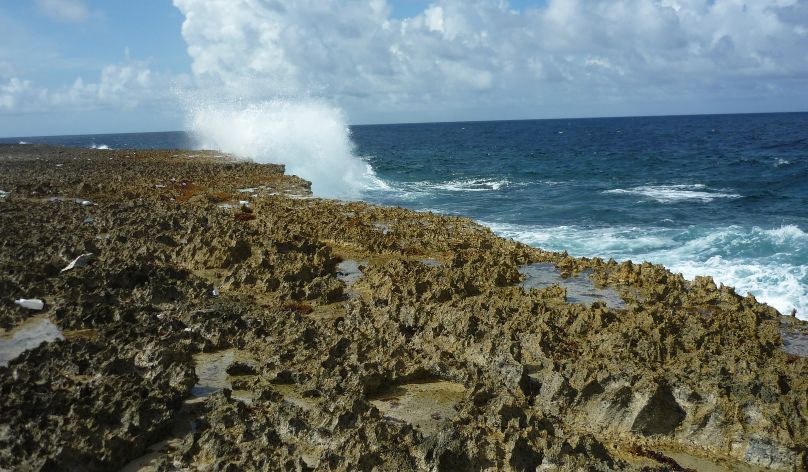
A big wave has hit the Blow Hole with little to show for it.

It's still hard to see why they call it the Blow Hole!

After getting back we decided to go for a swim, but this only lasted a few minutes as the waves were about 4 times higher than normal making it hard to keep one’s footing as the swells came in. Also noticed there were still no boats anchored off shore. We heard this morning that

Blow Hole -- 'there she blows'

most boats had moved into the marina to avoid any possible damage that Hurricane Tomas might bring as it passes about 150 miles to the north.

NOTE — To see a bigger (and in some cases, expanded) version of any of the images in this blog, just click on the one you want to see.

30 Oct 2010 Saturday Afternoon

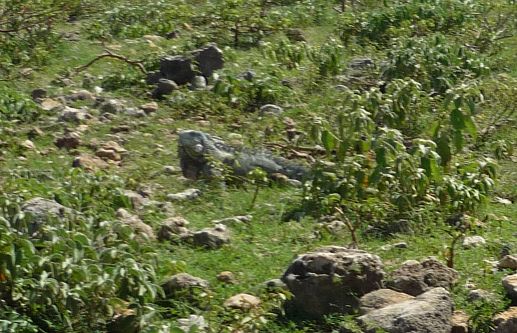
Look closely for the 4 foot iguana

After lunch today and since it looked like there were no rain storms coming, we decided to go where we tried to go last Saturday — to the lighthouse on the easternmost point of Bonaire. So we traveled almost to the Lagoen, then headed north and east on some

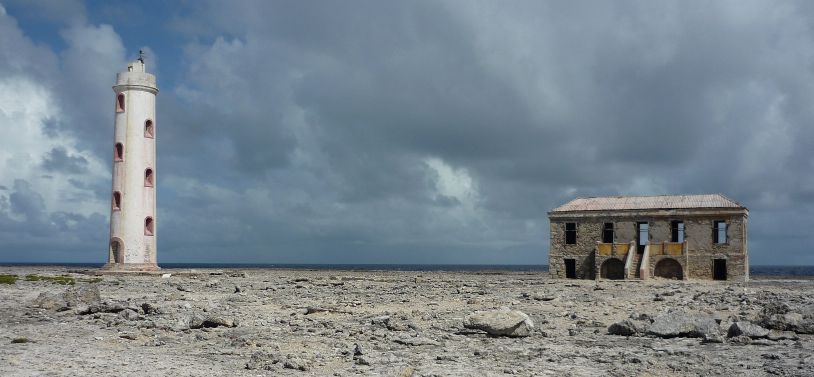
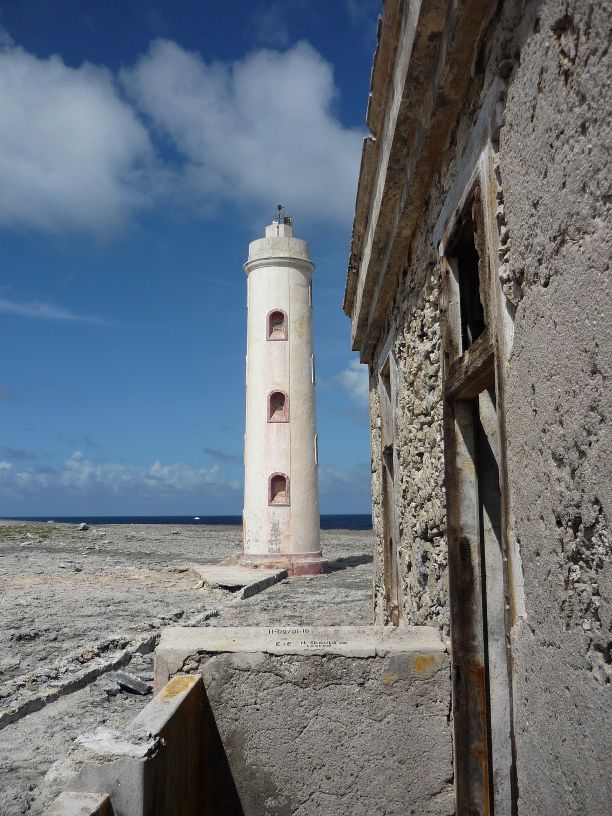
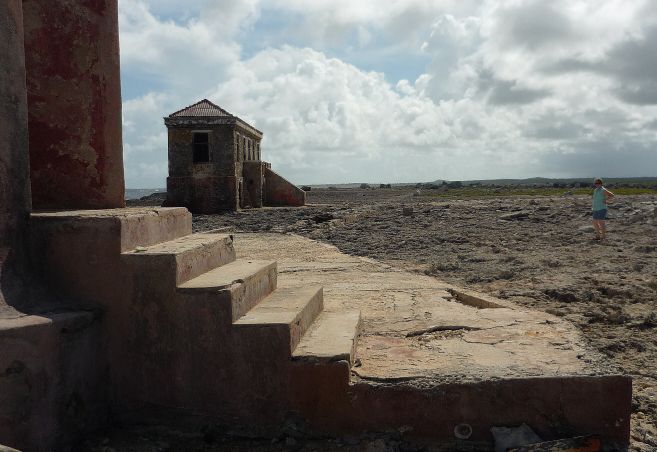
Boka Spelonk lighthouse and keeper's house

dirt/mud/rock ‘roads’ to get to Boca Spelonk.

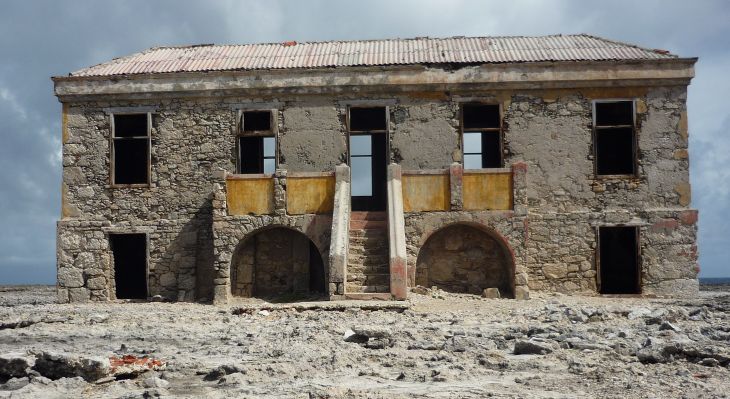
The lighthouse looks like it needs several good coats of paint, but the keeper’s house needs a whole lot more. It looks like some of the upper story wood floors have

The house looks huge, but it is only about 30 feet long and 10 foot wide.

been removed, probably not with approval! The walls are covered with slime — YUCK!

For perspective, the window in this end of the house is less than 3 feet wide

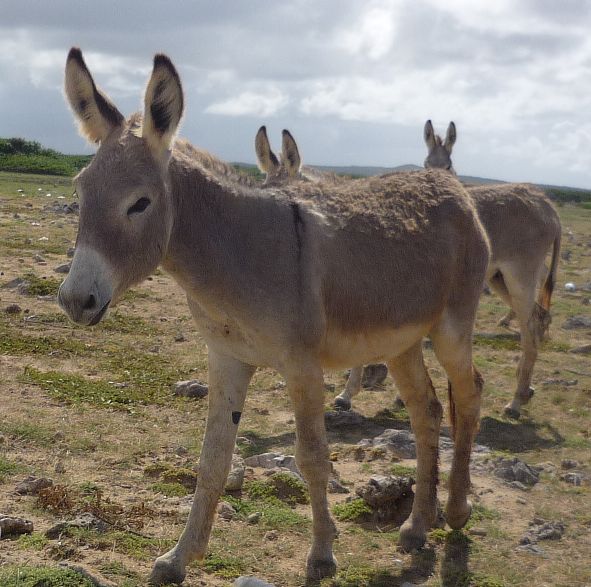
Just north of the lighthouse we came across this herd of about 8 wild donkeys.


Most of the east coast is like this. You don't want to trip and fall, which would be so easy to do!

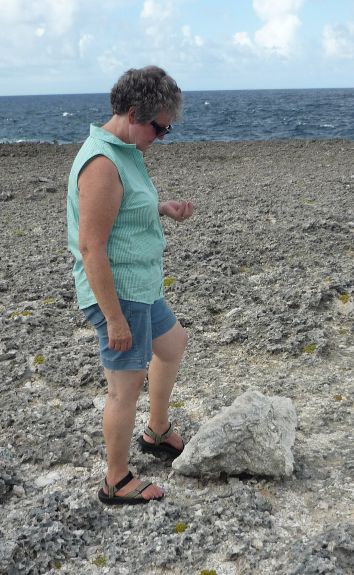
When we first saw this, we thought it was a HUGE conch shell! It turned out to be a rock.


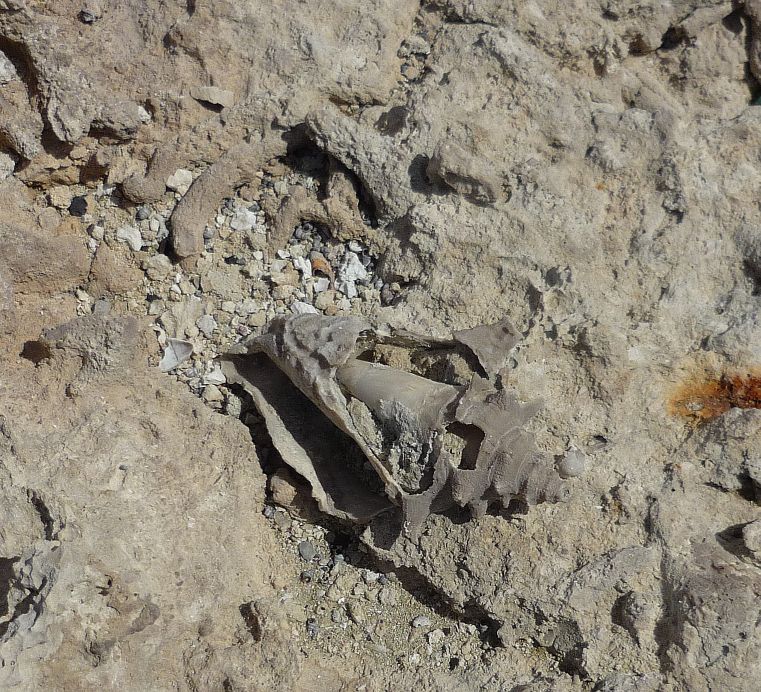
This was a real conch shell that was embedded into the rock and is now being exposed as the rock erodes.

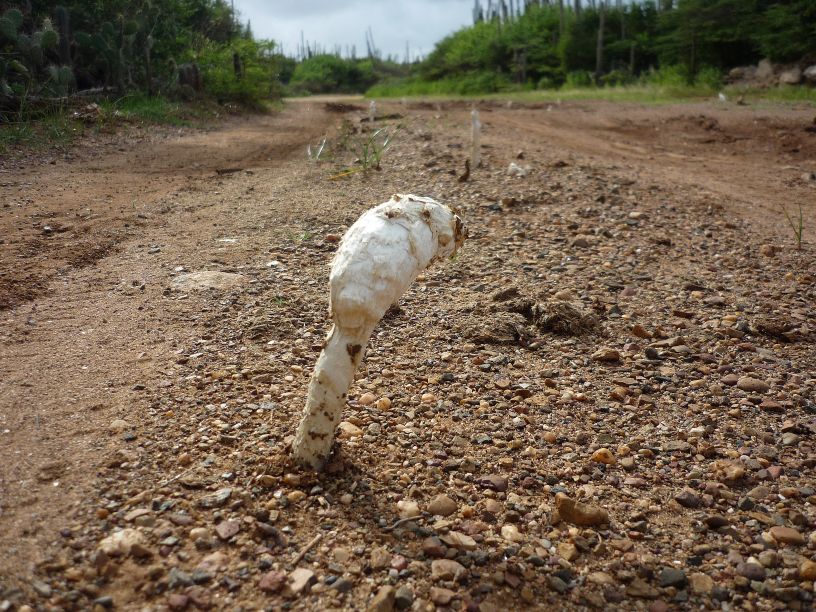
We trailed north along the coast to join the road to Rincon. Just before reaching it we found several of these strange 'mushrooms?' growing in the middle of the road. This one was about 9 inches tall.


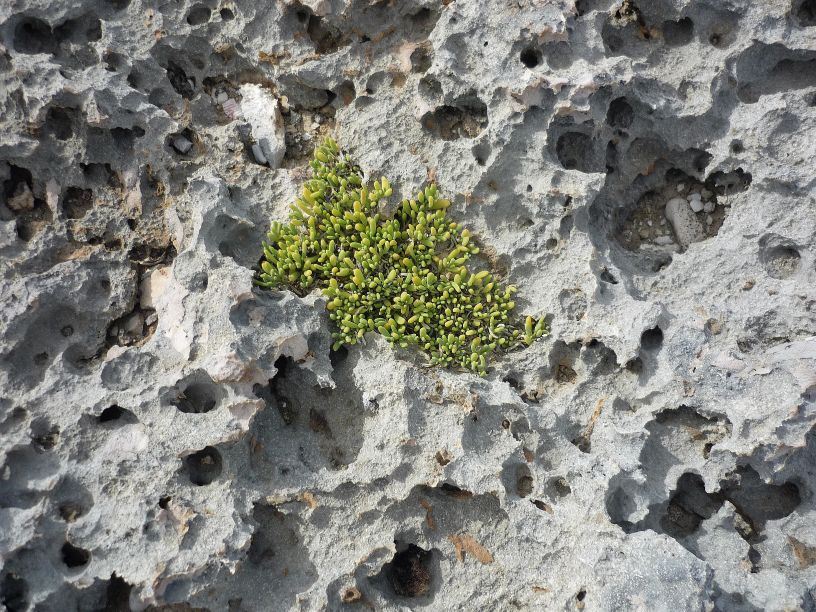
This is about the only vegetation that we could find growing on the coastal rocks.


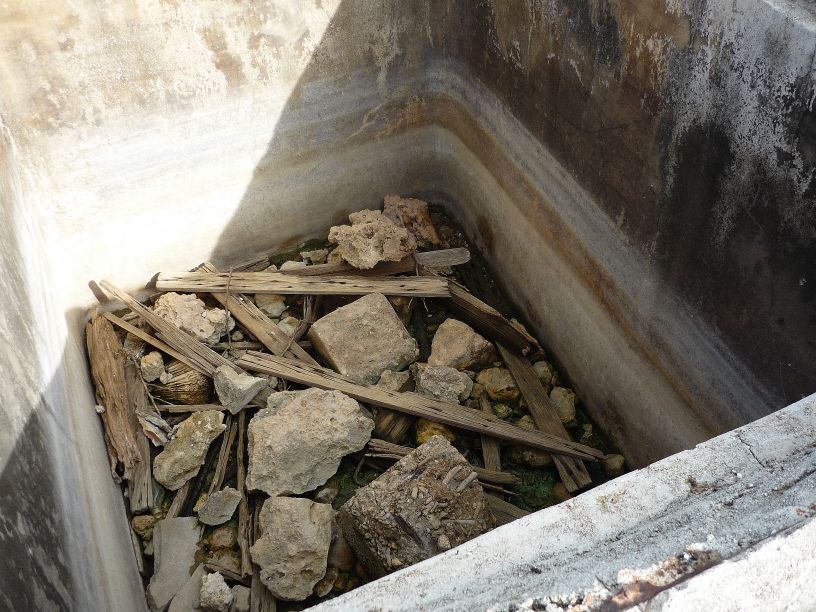
Looking into the cistern of an old kunuku (farm) house. You can still see the rings on the wall showing water levels. The wood is from the old cover over the cistern.


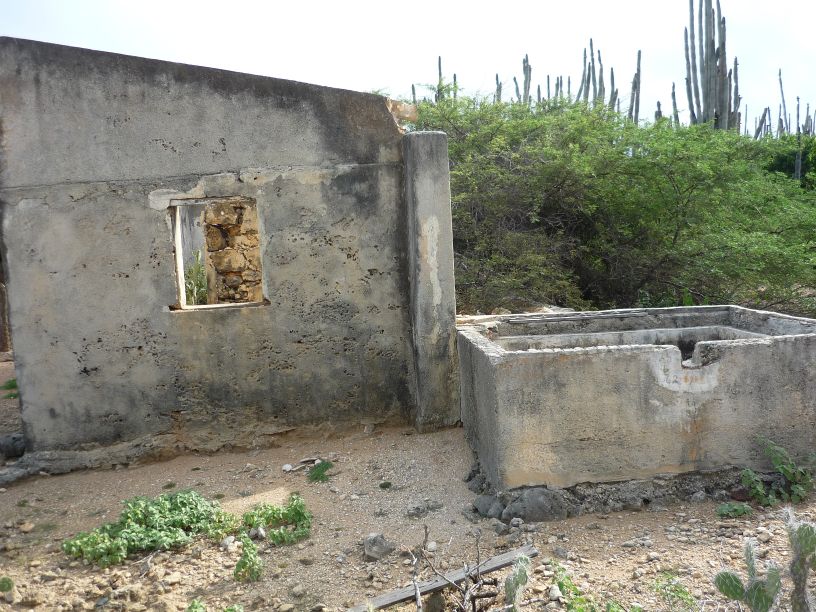
An old abandoned kunuku (farm) house. Rain water ran off the roof into the cistern at the right. This was probably their only source of water.


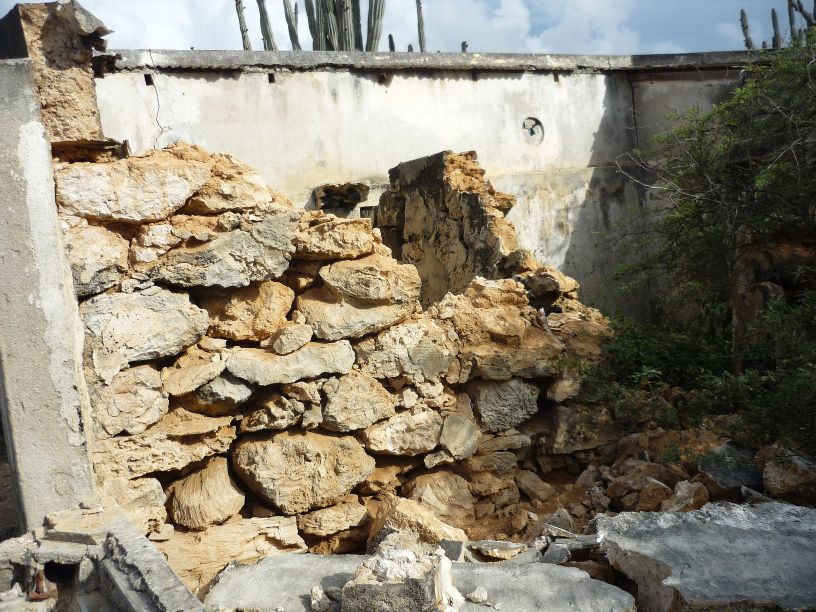
Construction involved carefully stacking rock, then applying a coat of plaster.

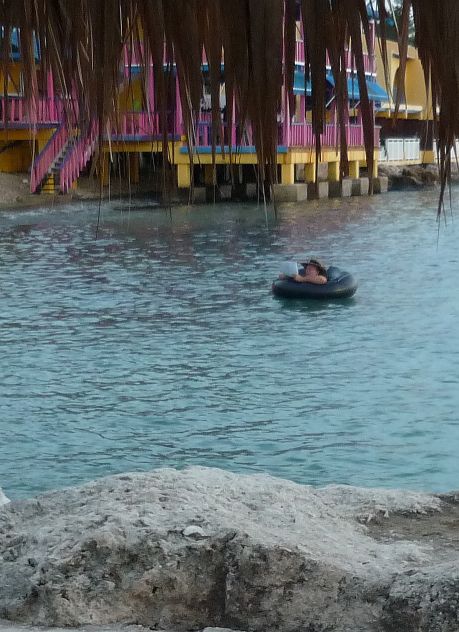
When we went swimming this evening we saw and interesting site. A woman floating in an inner tube wearing a floppy hat and reading a newspaper. How did we know it was a woman? We saw her doing the same thing a week ago and were surprised to learn it was not a man when she got out!

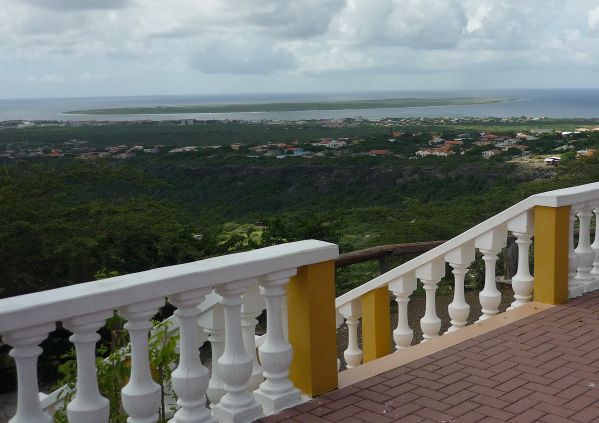
We should have put this in this morning's blog. It is looking down from the cross on the hill toward the city of Kralendijk. Just off the coast is the small uninhabited island of Klein (Little) Bonaire.

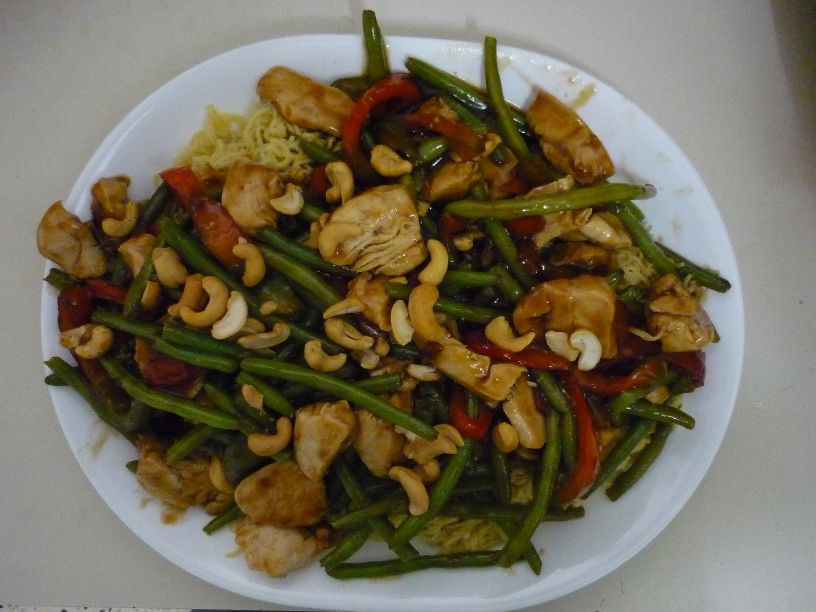
Virginia made a delicious platter of Cashew Chicken for supper!

There are no instructions in English on this box, but Virginia did very well with the Dutch instructions. The Afrikaans we saw for so many years in southern Africa must have helped.


NOTE — To see a bigger (and in some cases, expanded) version of any of the images in this blog, just click on the one you want to see.

When we went swimming this evening we noticed there were no boats anchored off shore like there normally are. We later heard about Hurricane Tomas brewing to the east of us. Will have to see what happens. Bonaire is not usually effected much by hurricanes.

30 Oct 2010 Saturday Morning

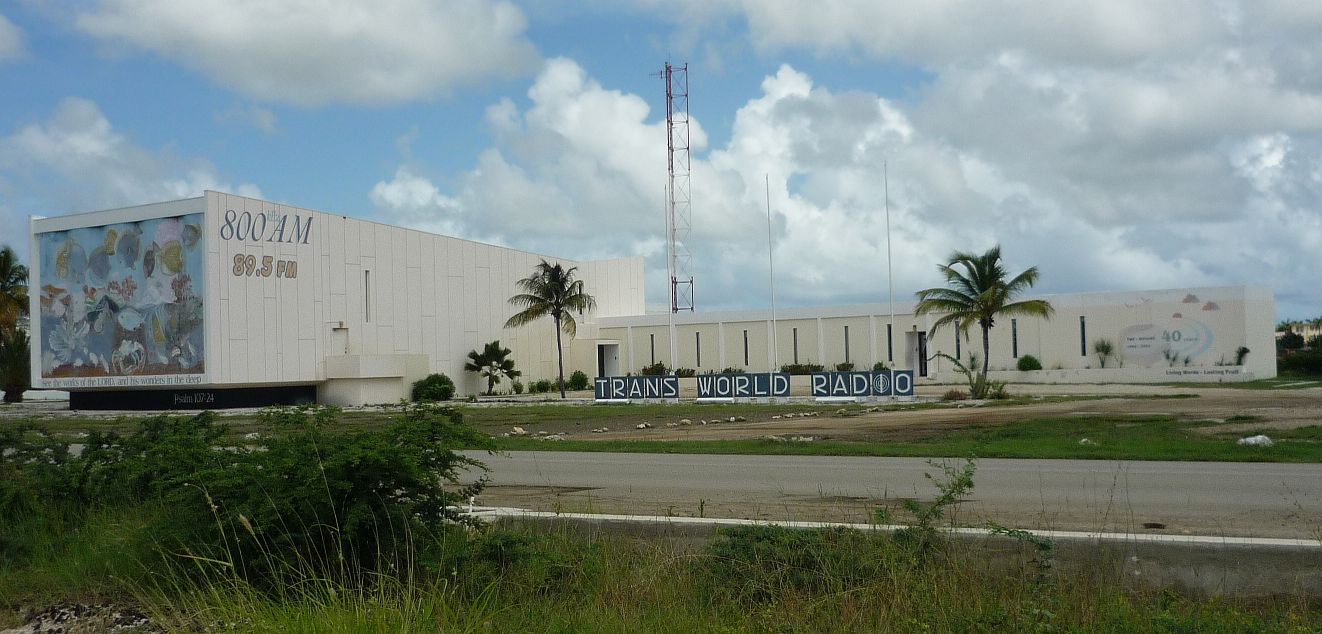
Trans World Radio Office/Studio

This morning we slept in until 8am then had a leisurely breakfast. We drove around town and took lots of photos:

NOTE — To see a bigger (and in some cases, expanded) version of any of the

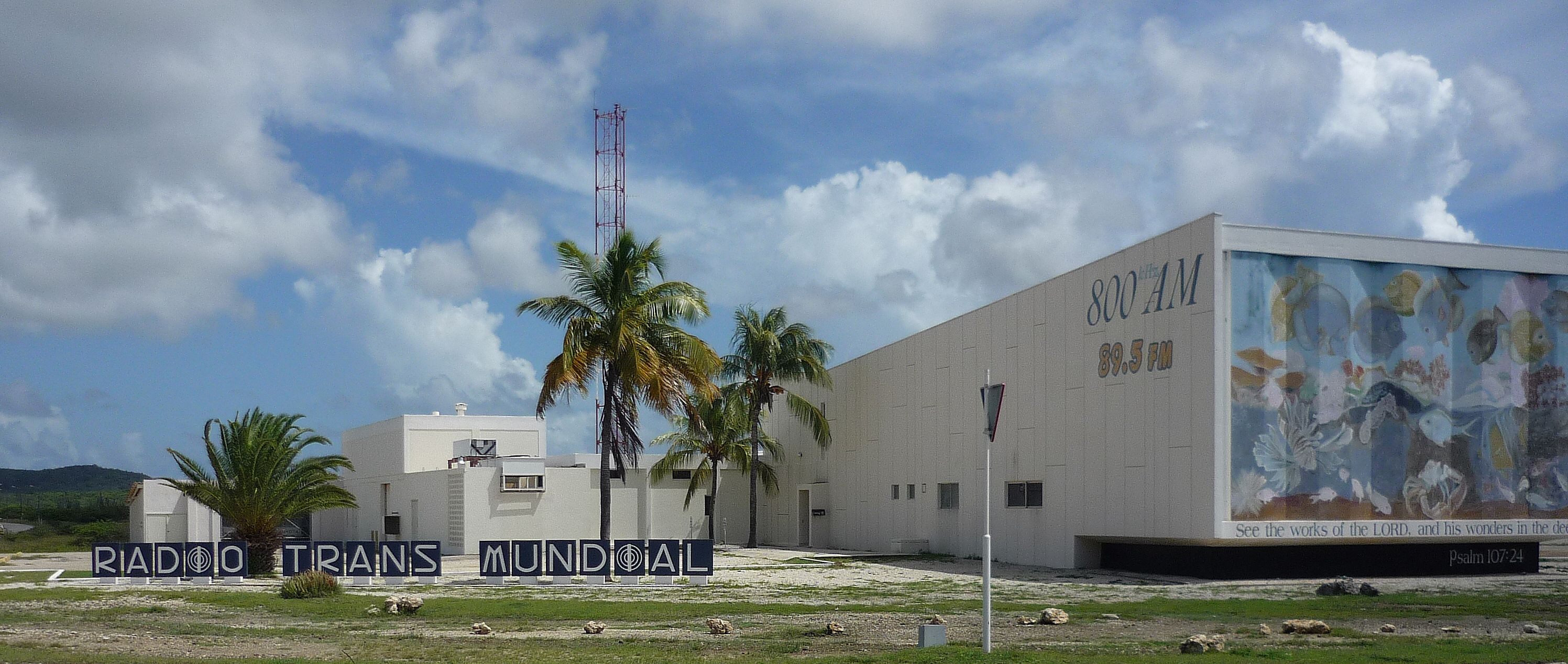
Radio Trans Mundial is TWR in Spanish

images in this blog, just click on the one you want to see.

Closer look at mural on front of TWR studio

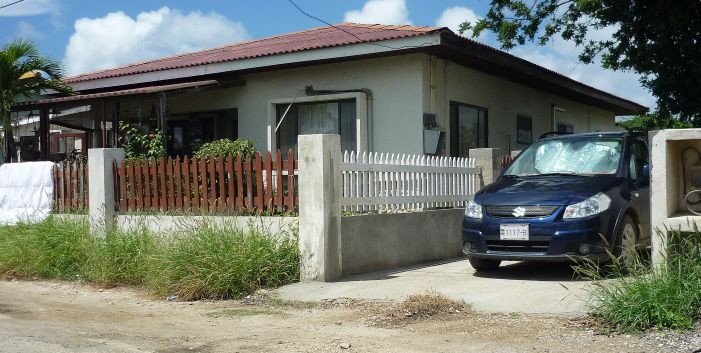
In the summer of 1967, Larry roomed in this house with John Hocking, Don Beans and Richard Newell

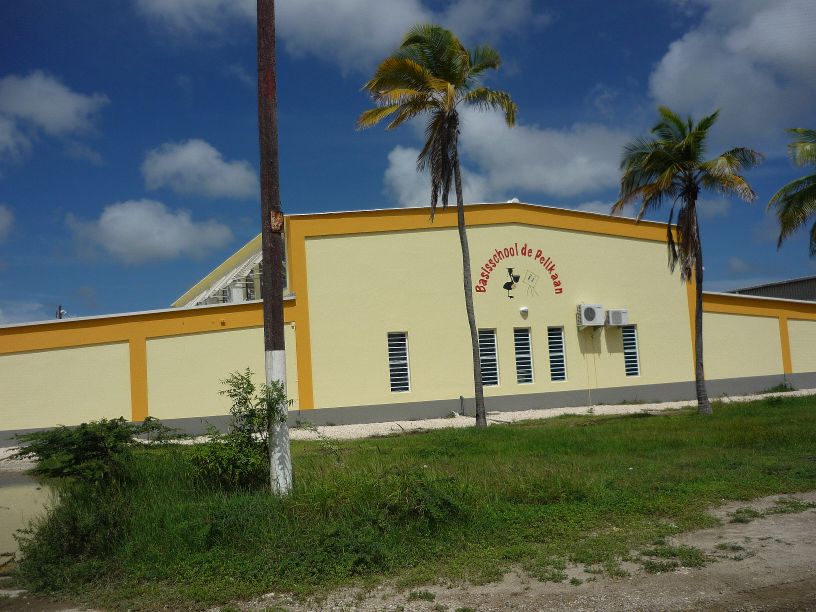
TWR's old activity building is now the private Pelican School

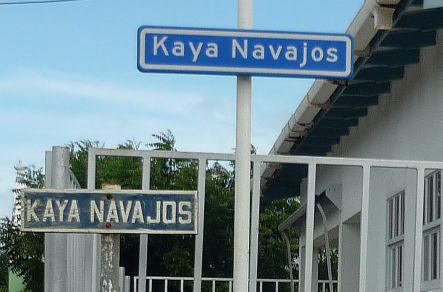
Navajo Street

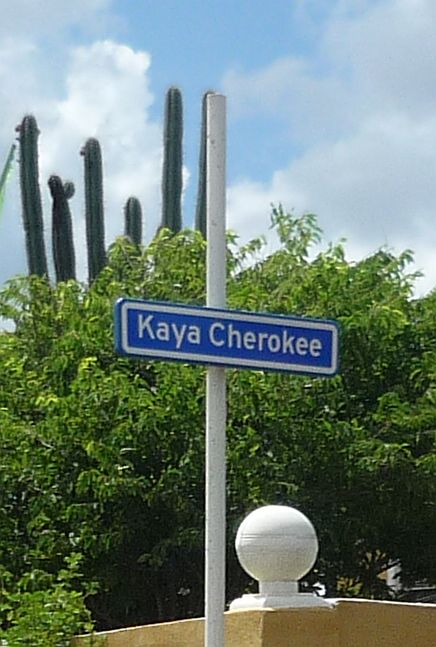
Cherokee Street

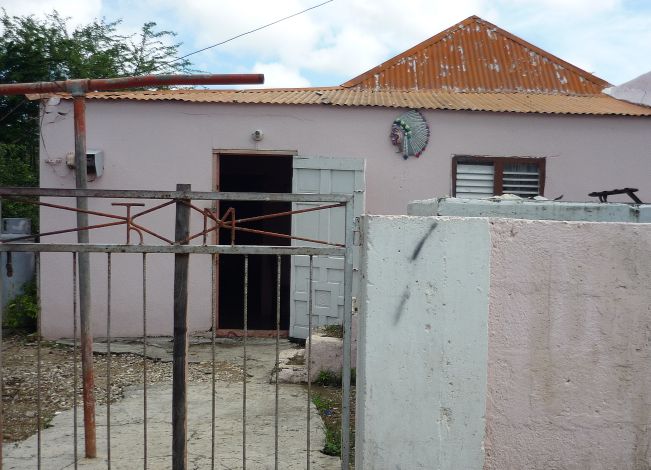
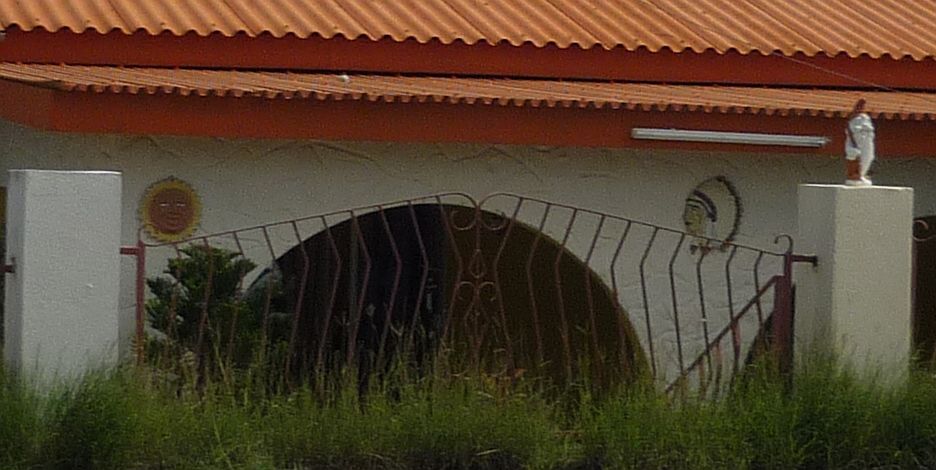
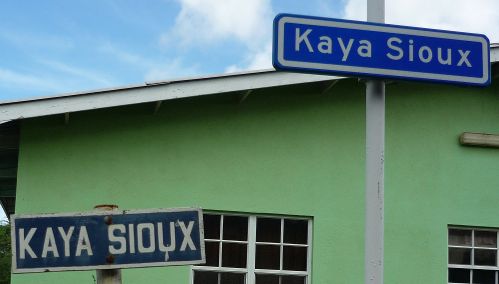
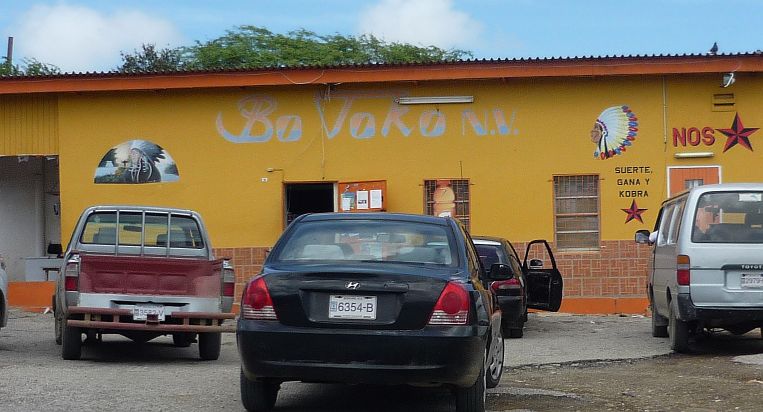
Why the American Indian head and street names?

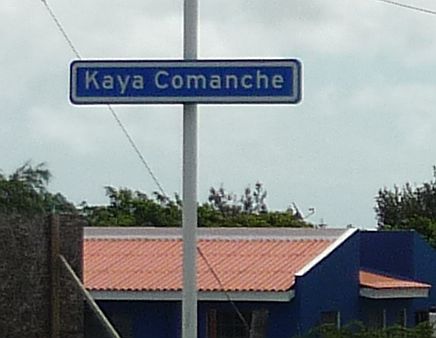
Comanche Street

Indian symbols on a more modern house

Sioux Street

Indian Imagery on the shop Your Call

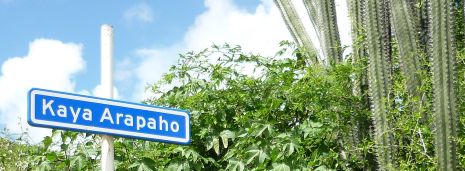
Click on Arapaho Street

Before Peter Stuyvesant was Governor of New Amsterdam (later New York City) he was governor of the ABC islands (Aruba, Bonaire, Curacao). A tour guide told us that while he was governing New Amsterdam,

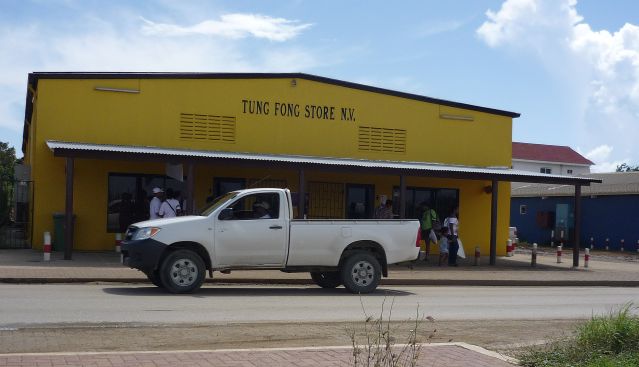
A tour guide called this Bonaire's Chinese Walmart!

Stuyvesant sent some American Indians to settle on Bonaire. We have not been able to verify this so far, but this may be why there are so many American Indian symbols on Bonaire.

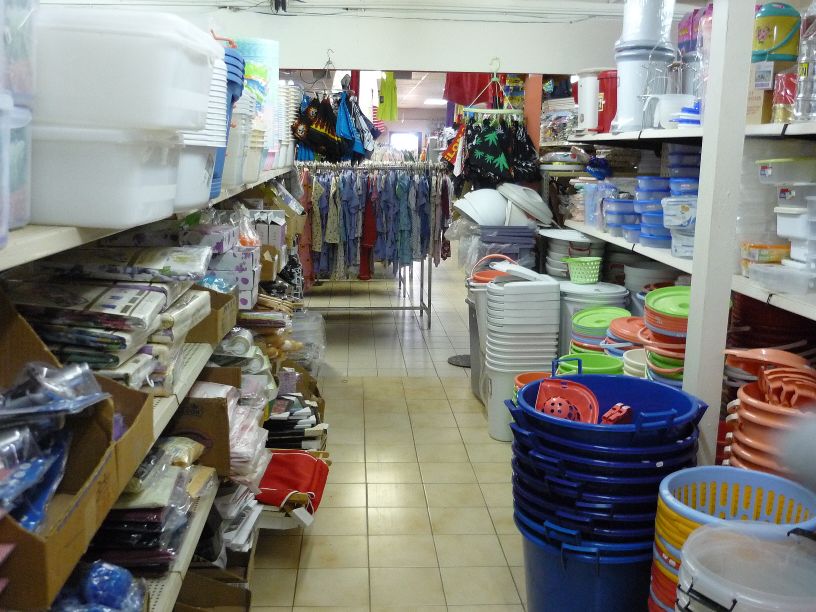
Levi's Orignal (sp!) 501 jeans for only $12.82 and made in China


Looks close, but not quite the same as inside the Dunlap Walmart!

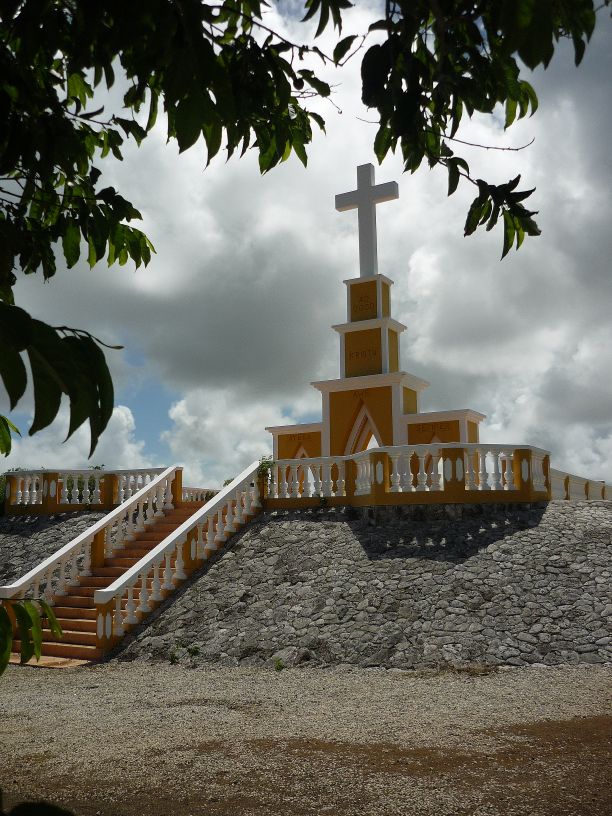
On top of the hill overlooking Kralendijk

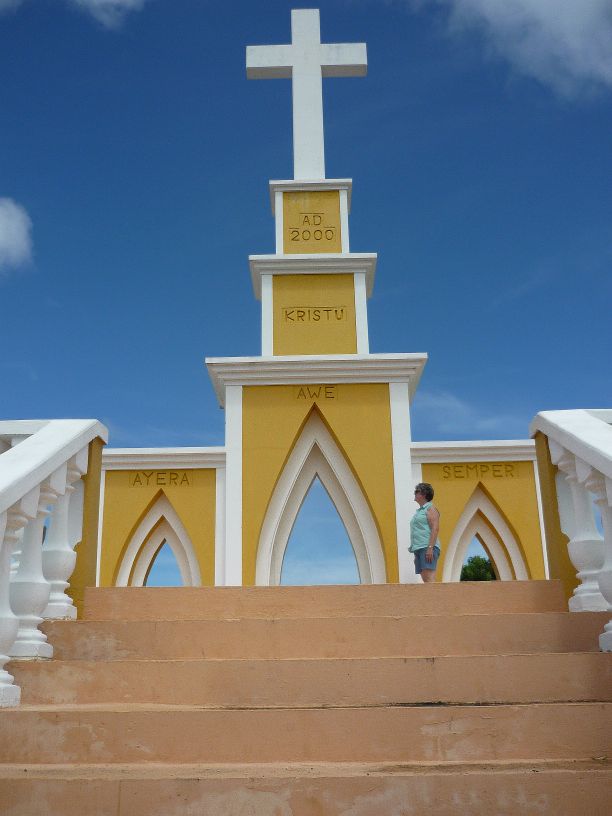
This place is called Cruz Seru Langu or Large Cross Hill. The inscriptions translated are 'CHRIST -- Yesterday, Today, Always'

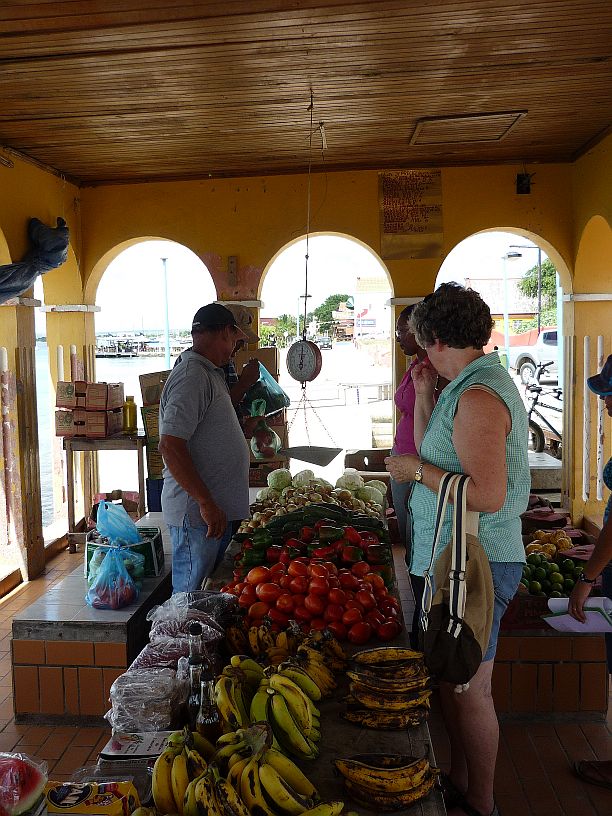
Virginia shopping for Papaya, Peppers and Bananas at the 'Fish Market'

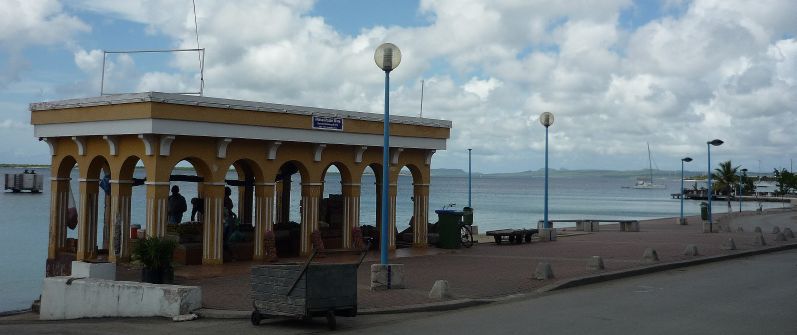
Well, it's located at the docks and used to be a real Fish Market!

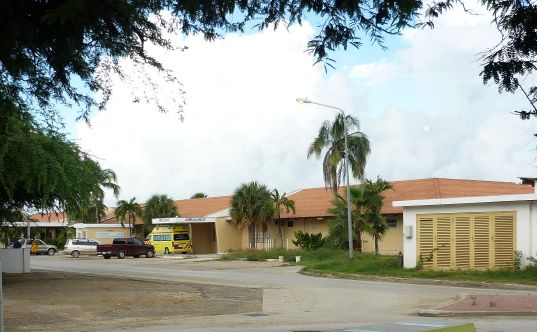
Bonaire's Hospital

29 Oct 2010 Friday

As expected this morning, there were no cutbacks overnight. We do not expect any more while using Amplitude Modulation Companding (AMC), unless a lizard or other creature ‘bridges’ an arc gap.

After devotions this morning, my first project was to investigate why the studio’s on-air monitor for 800kHz sounded so distorted. Our receiver at home sounded OK. My investigation, using headphones, found that the unbalanced RCA plug output of the on-air receiver sounded fine, but the balanced ‘line output’ for the monitor amplifier sounded bad. I pulled the receiver out of the rack and took it to the engineering lab only to find it would not receive any stations. I concluded that the lab must be shielded, so moved the receiver to an office. There it received the signal on 800kHz plus several Venezuelan stations. Opening the receiver revealed that a small circuit board had been built up and added to provide the balanced line output. Of course there was no schematic of this, so I thought about tracing one out. Before doing so, I decided to poke around a bit, with no success, until I touched the tiny on-board potentiometer for controlling the line output level. The distortion cleared up, so I ‘turned’ it back-and-forth a few times to clean up the dirt or corrosion, put everything back together and the problem was solved.

I then wrote up the procedures that we used yesterday to set the AM transmitter up for AMC operation, focusing on the steps that are not included in the manual. This is to be added to the manual, so it can be set up next time without having to contact the manufacturer.

After a lunch of toasted cheese sandwich, cauliflower and baked french fries with the ever present glasses of iced tea, I spent the afternoon at the transmitter site.

The next project, in order of priority, is to finish installation of, and activate, a new security system. There is an older system in service, but this new one will provide expanded protection and has greater capability of informing authorities of any problem. It has a computer for the ‘brains’ of the system and ‘tons’ of options. It has been partially installed, so I have to determine what has already been done and what still has to be done. There was even a question whether the control keypad near the door was even functional. It has a display on it, but it appeared to be totally ‘dead’.

After reading through about 100 pages of various manuals for the base unit, keypad, sensors, and optional accessories, I was finally able to figure out how to bring the display to ‘life’. Now it was possible to enter the security code and determine how various options had been programmed. At one point I was entering numbers to looks at some of these options, when all of a sudden the system was ‘armed’. The display read, “SYSTEM ARMED, you have (x) seconds to exit”. This was a shock to me, as I did NOT know how to ‘disarm’ the system yet! Shortly, it started beeping more loudly and a ‘siren’ outside sounded. Fortunately, I knew where the siren was connected and quickly disconnected it. I also removed the power and battery backup.

Before reconnecting it, I decided it might be good to learn how to ‘disarm’ it! After sorting through several more pages of instructions, I learned how and I powered it up (except for the outside siren!). It came back on, saying it was ‘busy’ (apparently ‘booting up’ its computer) then switching directly to being ‘armed’. It took a few times running to power the system down, before getting the security code and disarm keys entered in the right sequence and at the right time, so the alarm would not trigger. It would have been quite a sight if someone had seen me running madly back and forth!

I now feel comfortable ‘arming’ and ‘disarming’ the system. Also have some idea of which sensors are working, or not. Hopefully it will be possible to begin getting everything working next week.

It was approaching 5:30pm, the time the AM transmitter signs on, so I decided to wait for it to come on before leaving for home. It came on for a fraction of a second, dropped off, then came right back on at normal power, but with the backup exciter. I decided to switch back to the primary exciter. This required switching from ‘remote’ to ‘local’ control, then making the exciter switch. I then had to switch back to ‘remote’ control. Immediately up switching to ‘remote’, the transmitter came down and switched to the backup exciter again. I tried it again and the same thing happened, except this time I noted the transmitter was in ‘standard’ modulation mode when in ‘local’ control and switched to AMC when switched to ‘remote’. Joe was in town and made the switch from the secondary to primary exciters remotely and everything worked OK because the transmitter stayed in AMC with no switch to ‘standard’ modulation. It looks like the macros for starting the transmitter will all need to be changed for smoother transitions while using AMC.

I got home tonight to find cars parked everywhere along the road and in the space between the curb and our fence. Fortunately, the ‘no parking’ sign on our gate worked and there was just enough opening to park the car in our carport. I checked out the beach and verified, as we had suspected, that swimming there tonight was out of the question.

For supper tonight we had leftovers from last night — still yummy! Instead of papaya for desert, we had a treat — a little ice cream and chocolate.

28 Oct 2010 Thursday

When I woke up shortly after 6am, I checked the transmitter, via a computer at home, and found there were once again no overnight cutbacks. I increased the modulation another 0.2dBU to 8.3dBu to see if I could induce a cutback. [If it would have cutback, I have the ability to remotely return it to full power] No cutback occurred, so will leave it at this level for tonight.

We managed to contact Nautel today and found that there are some adjustments, not mentioned in the set up procedures, that would bring the no modulation power level with AMC back up to 100kw, instead of 80kw. One of the setup procedures is to set the ‘gain balance’ so there are 0 volts between two specified points. We had done this procedure as explained in the manual. What was not mentioned, is that, after everything is set up and AMC switched on without modulation, this same ‘gain balance’ control can be adjusted, while switching between AMC and ‘standard AM’, so that the power levels are the same. This procedure must be done starting with low power, then repeated while increasing the power in steps to 100kw.
This afternoon, we followed these additional instructions. Now everything seems to function properly on AMC and when switched back to ‘standard AM’. We did some tests switching between the two and found that we could switch quickly from ‘standard AM’ to AMC. Switching from AMC to ‘standard AM’ resulted in multiple faults that shut the transmitter down and it could not be turned on again without shutting off the mains and turning them back on. I then carefully watched what was happening during the switching off of AMC and noticed that the power output would jump to over 130kw. I suggested putting a time delay before the transmitter was allowed to come back on after switching AMC off. This worked, if the delay was over 10 seconds. I then suggested an alternative to switch the transmitter power to 25kw at the same time as switching AMC off, waiting for about 2 seconds, then switching to 50kw. After another 8 seconds, then the switch could take place to 100kw. This way there is dead air for only one second instead of 10 seconds. Two macros, for 50kw and 100kw, was set up to automatically go through this process when switching dynamic carrier control (AMC) off.

Test programming was now successful run with AMC for about 30 minutes. We felt comfortable allowing AMC to be used for this evening’s broadcast. It is now after 10:30pm. The transmitter has been running for 5 hours and seems to be performing well. With this method of dynamic carrier control, AMC, the voltage peaks are considerably less than with ‘standard AM’, so I do not anticipate any problems with cutbacks.

We got our evening swim in tonight. We’ll have to make other plans for tomorrow because it is Friday night AND payday. We suspect there will be a BIG party!

Supper tonight was chicken strips on rice, with green beans, and the rest of the papaya for dessert.