16 Oct 2010 – Saturday

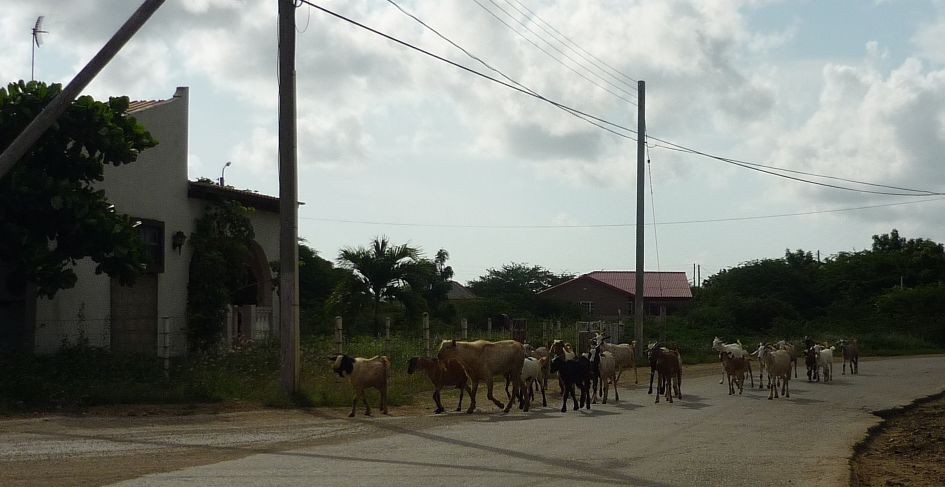
Goats in the road are a much rarer occurence than they used to be.
We slept in late this morning — must have needed it. The heat seems to have a draining effect on those of us not used to it. The typical high is about 87F and low is 80F, but the last few days that has been more like 95F and 89F respectively. Forecast for next week is supposed to be more normal.

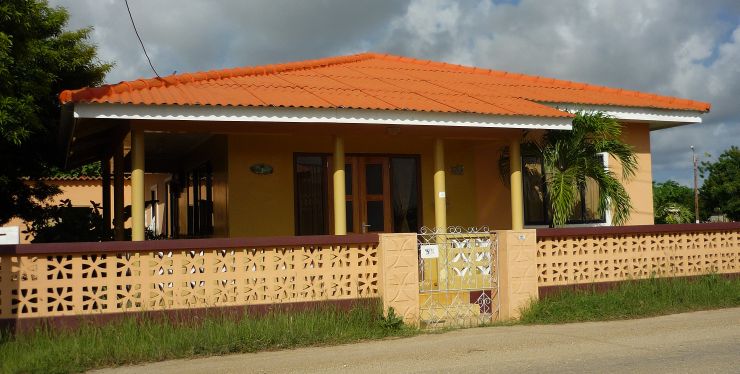
The 'bachelor pad' in Tera Cora where I lived with Joe Miller and Jim Munger in 1968-69. It used to be last house in town on the way to Lac Bay. Now there is about another mile of houses.

In an email yesterday we learned that the 50,000-watt AM transmitter for Swaziland is supposed to be packed into its container on Monday 18 Oct 2010 at 9am. Pray that it can be loaded and secured in the allotted 2 hours before charges begin for extra hours. Also pray that it will be able to make the ship departing for Africa on 23 Oct.
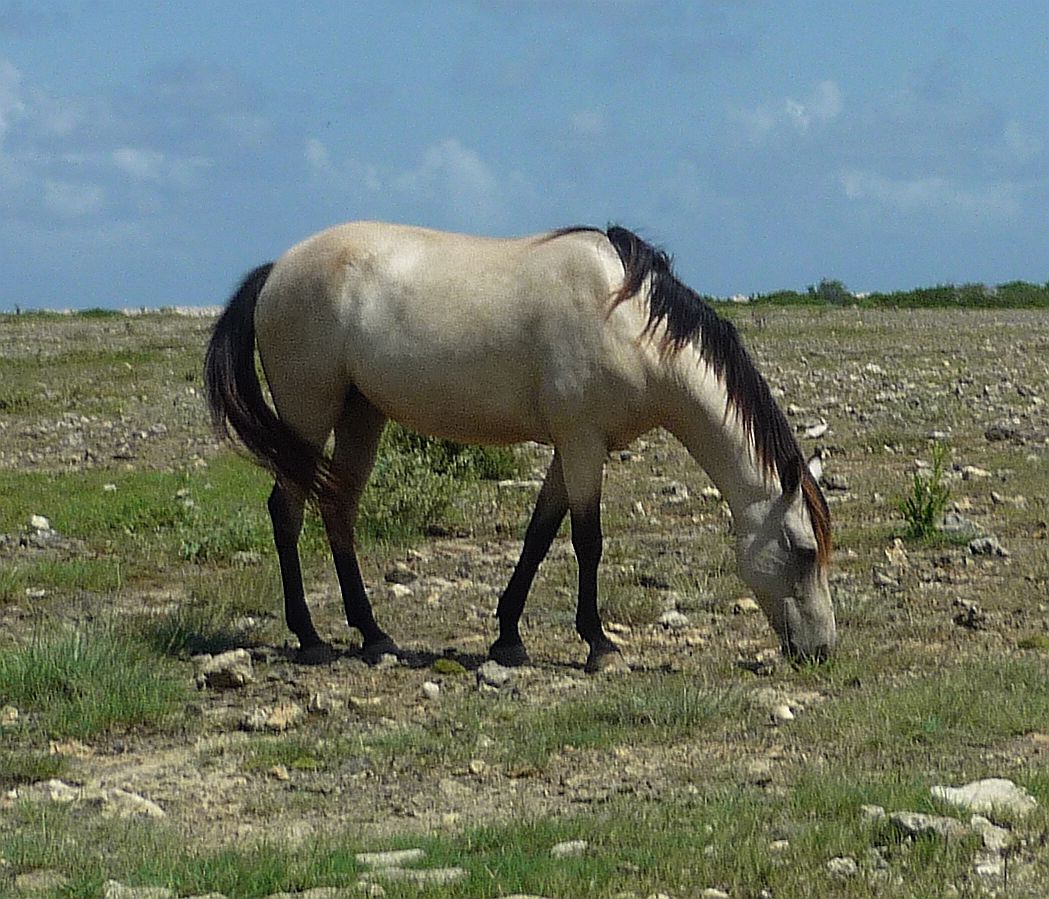
This horse was in the middle of 'nowhere' with no fences, but obviously tame.
The transmitter ‘called’ me at 9am this morning, which seemed strange since it was not supposed to be on the air at that time. Joe Barker then called to say that he had changed the settings so the transmitter called in the morning about cutbacks in power rather than interrupting sleep. Of course, if the transmitter was off the air, it would still call. Virginia and I went to the site to check the events log to see exactly what had happened. Found that there had been several cutbacks, but in each

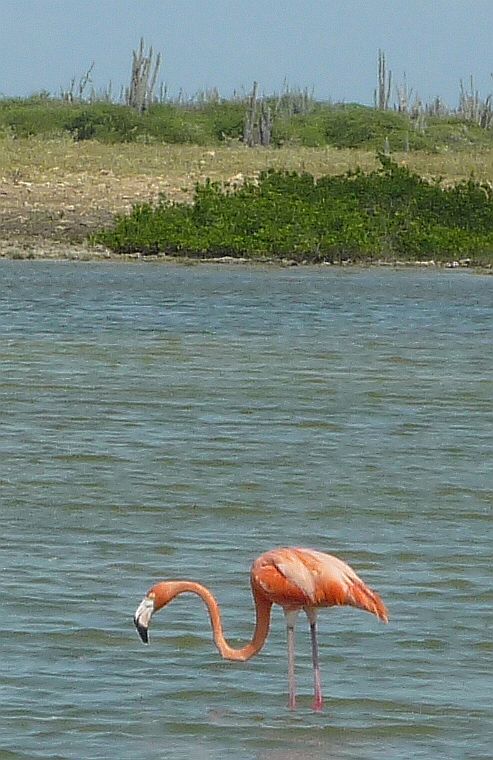
Today we got the closet photo of a flamingo yet.

case the transmitter returned to full power within minutes. The listeners would have hardly noticed. If would be good if the system could be programmed to call if the transmitter did not return to full power within a certain amount of time. I will need to investigate whether that is an option with this monitoring system.

While at the site I continued to disassemble the PA Module to get to the faulty parts. I think everything is accessible now, but I need to grind down the outside diameter of a 5mm socket to less than 7mm. Fortunately there is a small lathe at the site, if it can be made operable.
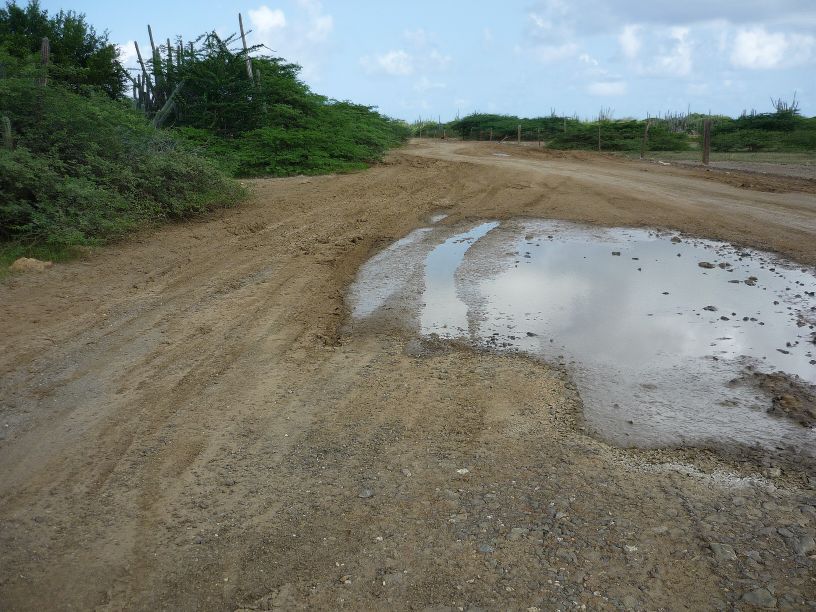
We had to leave the main road to go to Lac Bay, which is obviously not a frequent tourist destination!


From the site we came home for an early lunch, then filled up the car with gas at about $4.60 per gallon to do some sight seeing. Today we went to Lac Cai (Lac Bay) on the east (windward) side of Bonaire. Lac Cai is a shallow bay that is very calm in spite of being being on side of the island with larger breaking waves. I estimate the bay is about 10 feet deep in the deepest parts and one
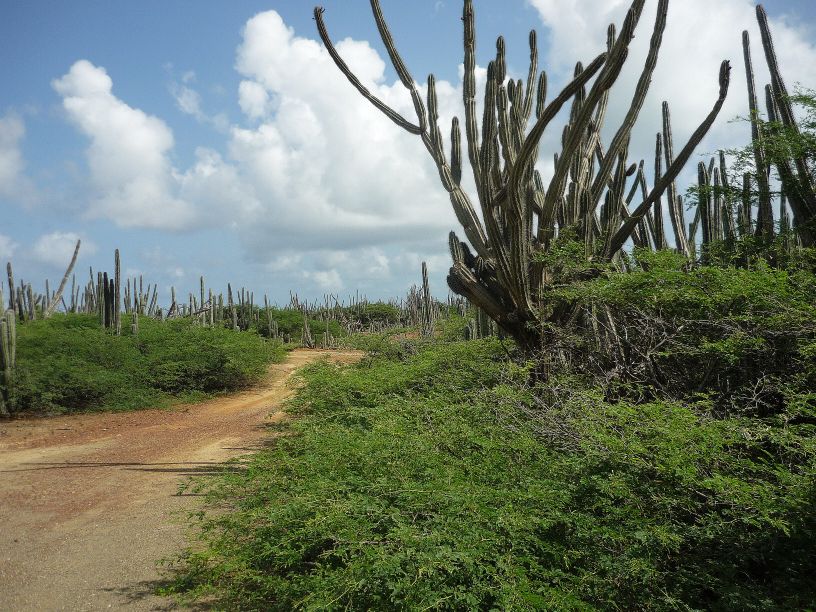
This is why Bonaire has been called a desert island. Even the bushes have thorns!
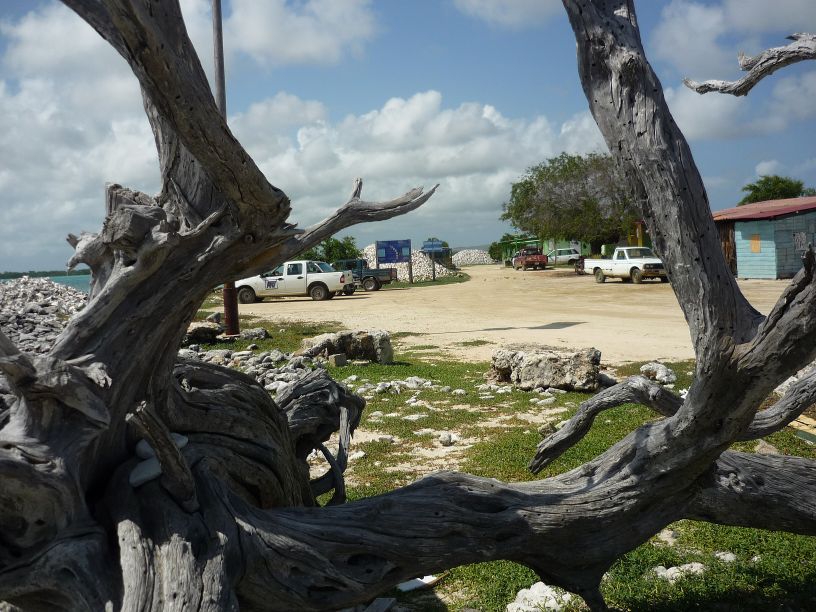
can see all the way to the bottom every where. There also seems to be more sand there than any place we have seen so far. This bay is famous for all the conch, and their shells. They are protected now but 40 years ago I would go diving for conch and brought home a couple of really pretty shells.

Only a couple of the half dozen piles of conch shells are seen here.

The huge piles of conch shells that were let after the conch were harvested to eat are still there after 40 years, but are all bleached white and crumbling.

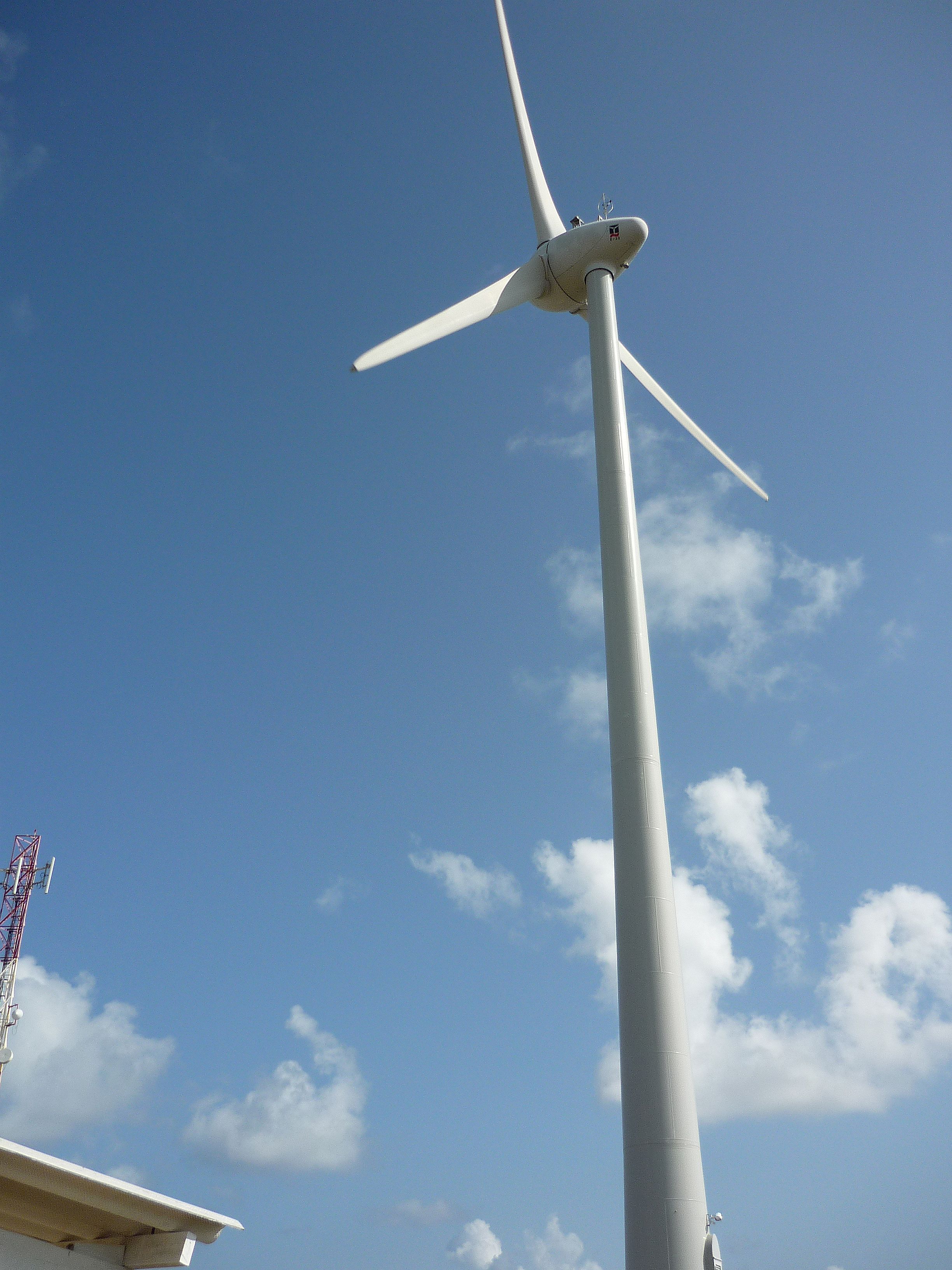
On the way back home we passed a wind turbine, one of more than a dozen large ones on Bonaire. We are rather amazed how quiet it was while standing under it, but it may have been louder with faster winds.
Back in town, we decided to do some shopping at Cultimara, where it is possible to select fruits and vegetables (not prepackaged) and sort out the bad ones. We then shopped at Warehouse Bonaire Supermarket. Stores are now open on Saturday afternoons. Will need to check tomorrow to see if some are open on Sundays.

The fruit and vegetable selection (for a price) at Cultimari Supermarket
Again we were able to have our regular half hour plus swim at sunset. This evening was amazing! Exactly as the sun set, there was a boat in the distance that completely fit into the circle of the orange setting sun. Unfortunately we did not have our camera with us. Even if we did have, we probably could not

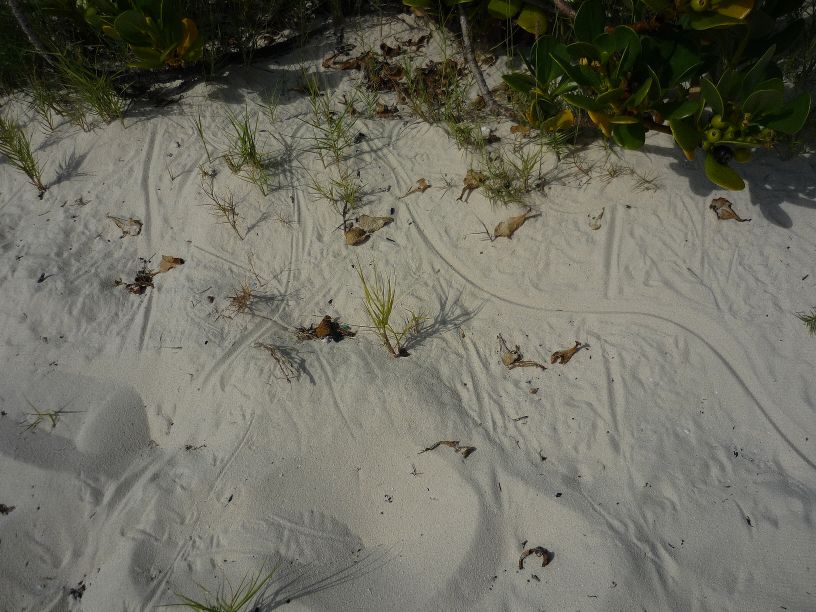
Anyone want to quesss what these tracks in the sand are from?

have gotten out of the water fast enough to get it.

NOTE — To see a bigger (and in some cases, expanded) version of any of the photos in this blog, just double click on the one you want to see.

A near duplicate of a photo taken of me 40 years ago at one of the conch shell piles. The difference is about 30 pounds and no gray hairs!
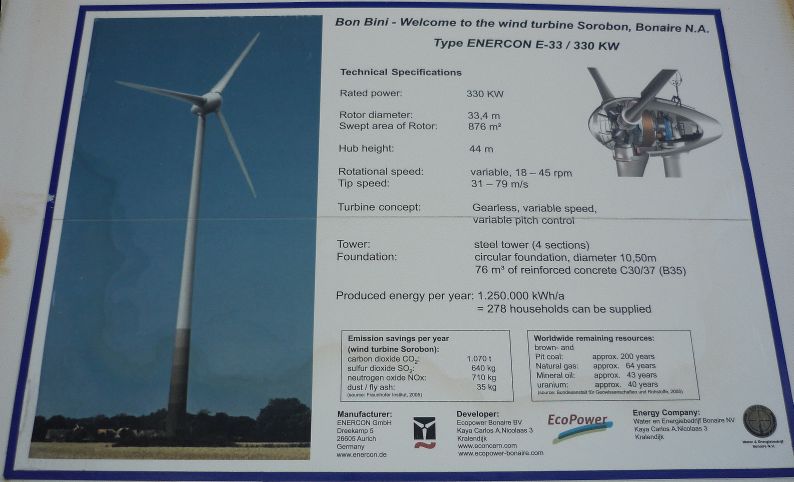

Technical specs of the wind turbine photo above

15 Oct 2010 – Friday

The first thing that happened this morning occurred about 1am when the transmitter ‘called’ me that an ‘event’ had occurred. Since I could still hear it broadcasting I decided that it must have cutback on power due to arcing on the antenna arc gaps. I dialed in the code to return it to full power, but could not verify that it had happened. In the morning and at the office, we were able to download the logs and found that a cutback had taken place at that time and that full power was restored shortly thereafter. So did it do it itself or was it my phone call? Don’t know for sure.

After devotions this morning, I went with Ivan, a Bonairean worker, to the site and using a four wheel drive vehicle drove to each of the four towers to clean and paint with black paint the four arc gaps to see if it helps reduce the number of bugs from swarming around them. While there I noticed that there were thousands of little bugs flying around the white walls of the antenna hut next to the tower. I am wondering if the wall next to the tower was painted a darker color whether that also might help. The bugs would hopefully then be attracted away from the tower to the other white walls and roof. Might be worth a try?!

Just thinking — the arc gaps are usually brass and set a specific distance apart to arc over at a voltage just higher than normal operating voltage. I would think that painting the gap would provide a layer of ‘insulation’ on both sides of the gap and effectively increase the arc over voltage. By how much, I do not know, but something to consider!

We had an unusual opportunity in the afternoon. Amado and Sue Felix own Achie-Tours and provide tours especially for the cruise ships that stop in Bonaire. Yesterday Sue called Virginia and said that they had a couple of vacant seats on one of there better tours and asked if we would like to go. So from about noon we went on a three plus hour tour. It was very nice. Amado worked for TWR back in about 1967 and Sue came from the U.S. to help TWR short term the summer of 1969, while Larry was also serving his second short term stint on Bonaire. Amado and Sue were married in 1971 and are heavily involved in many business ventures on Bonaire. They have been a big help to TWR all through the years.

Our swim this evening was very short, as there was a huge crowd at the beach and lots of partying. Privacy was none existent and we did not feel that it was prudent to leave our belongings out of our reach (although the things of value, a cell phone and our keys were hidden from view). Especially while the transmitter is on the air from 5:30 pm to 8:30, I must be available to receive and act on any call to the cell phone from the transmitter.

After several late evenings, we turned in early.

14 Oct 2010 – Thursday

During devotions this morning the FM transmitter went off the air. It was quickly determined that the cause was a power failure and, with no backup power, it did not return until after lunch. This is a small 600-watt transmitter broadcasting to the people of Bonaire.

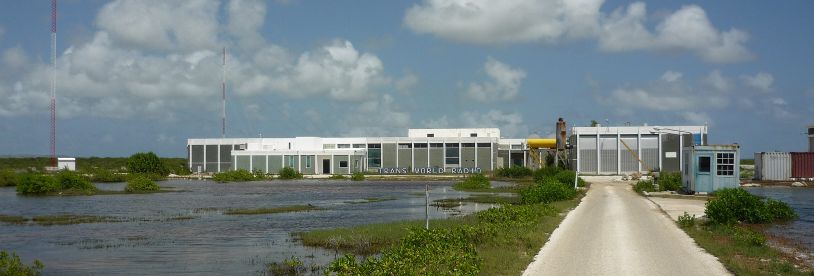
Main Gate at Transmitter Site (water everywhere!)

We reviewed the 100,000-watt AM transmitter log and found that power was reduced at 9pm last night and continued at that lower level most of the night. Rich West called me via the internet from Elkhart to suggest that this was likely caused by water bugs flying through the arc gaps of the towers, causing a flash over, then the transmitter sensing a problem and reducing power to prevent further arcing. Water bugs are around because of standing water due to unusually heavy rains a couple of weeks ago. Rich says this problem will go away as the water slowly dries up.

TWR Bonaire Transmitter Building

Which it is! Rich then noted that after the ground dries up termites start coming out of the ground about 9am. He also noted that by painting the arc gaps a dark color rather than white, like they were initially, that the frequency of arcs was reduced. I wonder if some type of screen could be used around the gap to prevent this, but this screen would have to be insulation material that can handle the high voltage! With Virginia’s experience with salty dust coating the windows screens, that may not be such a good idea!

Nautel 100,000-watt AM (medium wave) Transmitter


The automation system has now been programmed to give me a call when the transmitter reduces power so we will be more aware of what is happening, and maybe find a solution. Joe Barker also tried to set up a laptop computer so that I could increase the power back to normal from home when this happens. Unfortunately, it did not work from the place where we are staying, so we’ll have to think about this some more. Transmitter control can be done via my cell phone, but it is very cumbersome and I can not verify whether corrective action has actually taken place.

The phasor for the four tower switchable array is much bigger than the transmitter. The antenna system has three patterns -- north, south and non-directional.


The above efforts took a considerable amount of time so I only got to the site about 3pm. Picked up on the spare PA Module repair that was started yesterday. Managed to locate most of the spare parts, needed to make the repairs, including one spare fuse, which had a different number than the manual specified. Also gained access to all the faulty parts in the module after taking out lots of screws. Now to remove the faulty parts from the circuit boards. I’ll need to get the soldering station from town. Also need a thin wall 5mm socket or nut driver with a maximum outside diameter of 7mm. Can find nothing at the site or in town with thin enough wall. May have to get a socket and grind it down on the lathe.

Hopefully there will be more obvious progress tomorrow.

Another thing I discovered this morning is that the odd fuse that was blown in the PA module is only rated at 150 vdc rather than 500 vdc like the other proper ones. This could have been the cause of added damage with the initial failure. The one I discovered this afternoon in stock is a Ferraz Shawmut A5Y20-2 which is a direct replacement for the Buss Limitron KLM-20 fuse(s) that are needed.

This evening, we learned that plans to pack the 50,000-watt AM transmitter tomorrow morning in Elkhart has been delayed due to the shipping company’s inability to determine whether it will be able to connect with the ship leaving for Africa on October 23 and arriving there on December 5. TWR Swaziland would prefer it not get held up and incur storage fees should it arrive during the long holiday breaks by customs and others over Christmas and New Years.

NOTE — To see a bigger (and in some cases, expanded) version of any of the photos in this blog, just double click on the one you want to see.

13 Oct 2010 – Wednesday

We learned this morning that the 50,000-watt transmitter for Swaziland will likely be packed in Elkhart yet this week into a 20 foot container brought by the shipping company. Two hours are allowed to pack it after which an hourly charge is assessed.

Virginia needed the car to do some shopping, so she took me to the site after lunch.

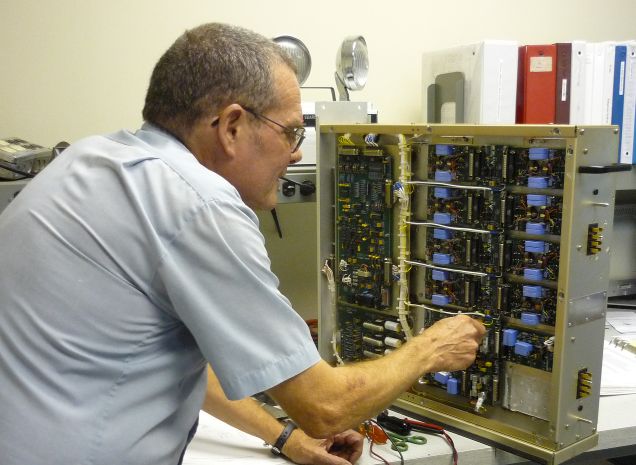
Repairing PA Module (note -- the faulty modulation module is removed from the bottom right)

I began to trouble shoot the problem with the spare PA Module and found that one of the Modulation modules and the two RF modules that it supplies appeared to be shorted. [There are a total of four Modulation modules and eight RF modules in each PA module.] The interconnecting strap between the Mod and RF modules also showed a short. I disconnected the RF modules from this strap and the RF module short disappeared. I then unplugged the Modulation module and found that it still showed a short. Problem found!! Not so fast – I decided to measure the interconnection and found it to still be shorted. There is a filter board between the Modulation module and the RF modules. The FET used for this filter board for a crowbar protection circuit was also shorted. Will continue working on this tomorrow.

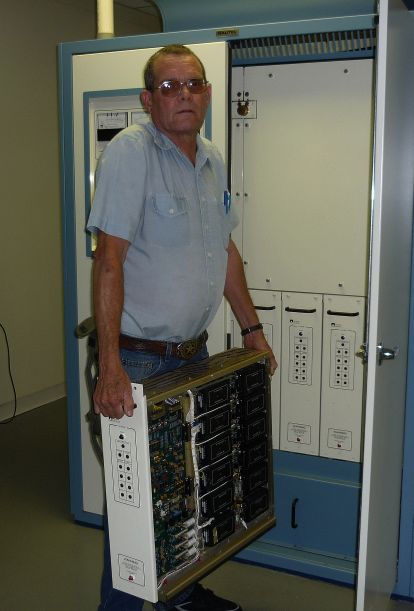
Larry with one of 16 modules


Before the time for the 100,000-watt AM transmitter to come on the air, I tested each of 16 PA Modules in the transmitter to ensure they were all performing properly. By inhibiting them one-at-a-time, it was determined that they were all OK. The power when each one was inhibited dropped the output about 11,000 watts. Calculations indicated that this was correct. Also, if ¼ of a PA Module failed, as is the case with the faulty one that is being repaired, a calculated loss of 3 kw compared to good RF Module would be expected and that is exactly what we had observed.

When I checked my email this evening, I learned the shipping container for the 50,000-watt AM transmitter will arrive at the Elkhart technology center first thing Friday morning.

11 Oct 2010 – Monday

Virginia and I were given a tour of the studio building this morning.  Much of it is no longer used as almost all the programs now come in over the internet and are loaded into one computer (with a redundant computer for more reliable operation).  Quite a contrast from the continual taping and playing of programs nearly 24 hours per day in years now long past.  The studio and offices are now used for various other things, such as a private school and youth outreach ministries.

After lunch, Joe Barker took me to the transmitter site for a tour and introduction to the Nautel 100,000-watt medium wave (AM) transmitter and associated auxiliary equipment.  Joe went over a list of things that he would like to have done, in addition to my being on call for any broadcasting problems originating at the transmitter site.  The site can call my cell phone to let me know that the transmitter is coming on, then calls again if there is any problem during start up or throughout the broadcast schedule.  Not sure of the exact hours yet, but think it is on from about 5pm to 9am.

I know the priority work for me is to install a new UPS for the transmitter site and move the one that is there back to the studio where it came from. This will entail some rewiring because there are usually two UPSs at the studio on two different phases and some rewiring had been done to be ensure uninterrupted supply to vital circuits that were on the UPS that has been moved.  This move had been required to replace a UPS that had failed at the transmitter.  Since the replacement will not arrive for a couple more weeks, I will be looking at some other projects to reduce even further the need for trips to the transmitter, especially during the middle of the night.  Actually the transmitter itself is very reliable, but power supply problems seem to be the main source of failure.

Tomorrow we plan to be at the 8am devotions and from there we’ll see how the day proceeds.  Virginia will be receptionist on Tuesdays and Thursdays.