2104/06/21 — Saturday — Sightseeing

After a late breakfast, we went to the Agat post office to mail a letter.  It weighed over one ounce, so needed additional postage.  We expected to pay an extra $0.21 for the extra ounce, but was told it would be an extra $0.49.  We suspect that this small post office had only the regular $0.49 stamps to sell.
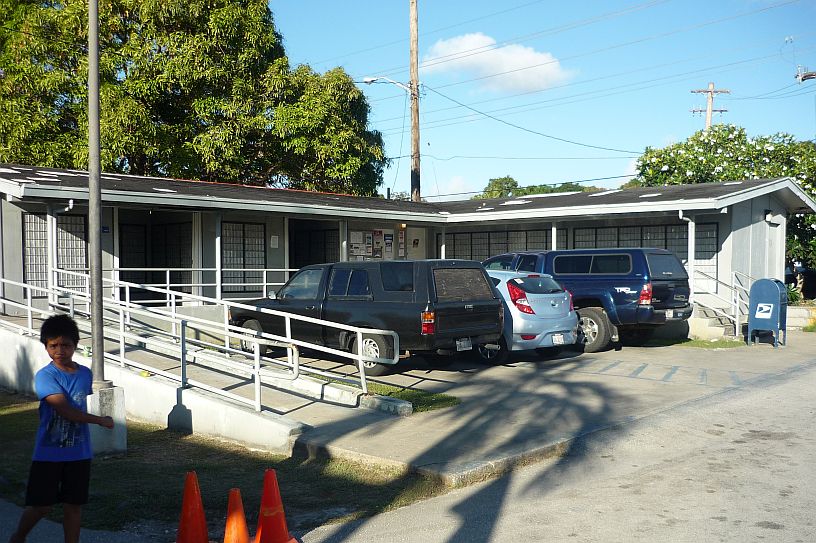
The Agat post office shares the same parking lot as the small Agat MacDonalds mention in a previous blog.  To get service, you must ring the doorbell.  The top half of the Dutch door opens for service and remains open for as short a time as possible to conserve the cooled air inside.  The customer stays in the warm air!

The Agat post office shares the same parking lot as the small Agat MacDonalds mentioned in a previous blog. To get service, you must ring the doorbell. The top half of the Dutch door in the corner opens for service and remains open for as short a time as possible to conserve the cooled air inside. The customer stays in the warm, humid outside air!

We then headed to Gaan Point — http://www.nps.gov/wapa/planyourvisit/gaan-point.htm — which is next to the post office to take a couple of photos while there was still some morning sun.

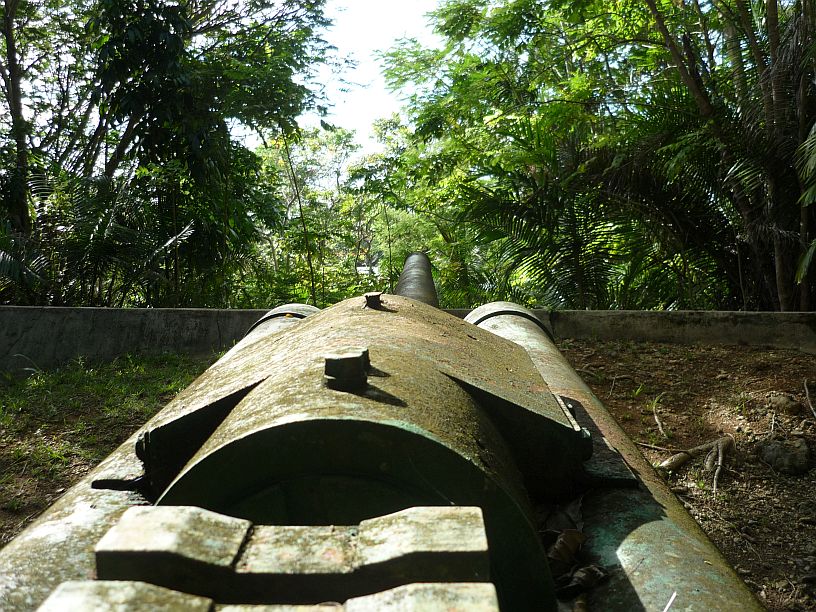
Ga'an Point in Agat, Guam.  This is the 200mm coastal defense gun mentioned in the above website.

Ga’an Point in Agat, Guam. This is the 200mm Japanese coastal defense gun mentioned in the above website.
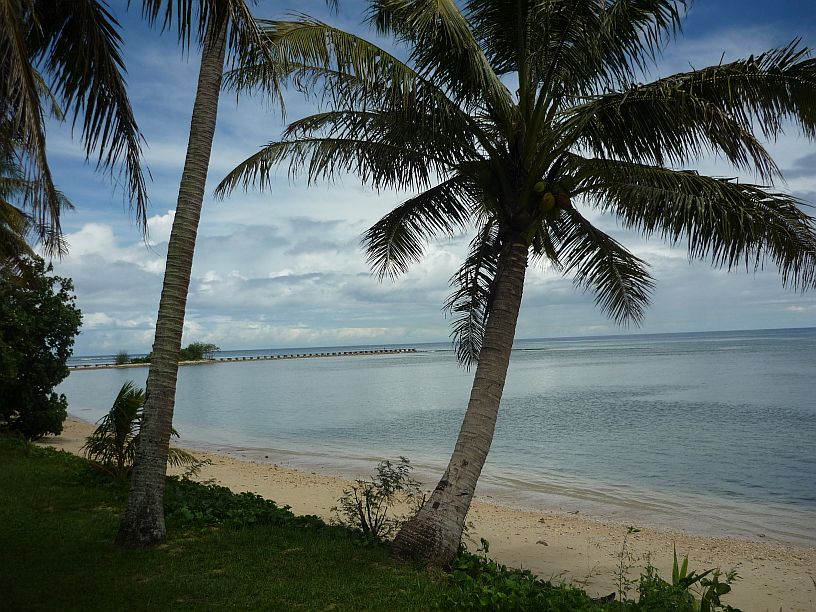
An old pipeline at Ga'an Point -- there is a similar one at Asan Beach.  The park ranger did not know the origin.  I have not located any information anywhere, but speculate that it was either a fuel line to deliver fuel to and/or from ships, or possibly an old sewage line dumping just beyond the reef.

An old pipeline at Ga’an Point that can also be seen in the previous photo — there is a similar one at Asan Beach. The park ranger did not know its original purpose. I have not located any information anywhere, but speculate that it was either a fuel line to deliver fuel to and/or from ships, or possibly an old sewage line dumping just beyond the reef.

We decided to head back to the T. Snell Newman Visitor Center — http://www.nps.gov/wapa/t-stell-newman-visitor-center.htm – for a third time.  This time we finally saw all the exhibits that we wanted to see.  While there, one of the rangers did a one hour presentation about Asan Point and Beach and how they have changed over the years since the retaking of Guam from the Japanese in July 1944.  In recent years, attempts are being made to restore much of the beachfront to what it looked like in 1944.  Originally, there were rice paddies, but now there is green grass where the paddies were — see Asan Overlook later on this page.
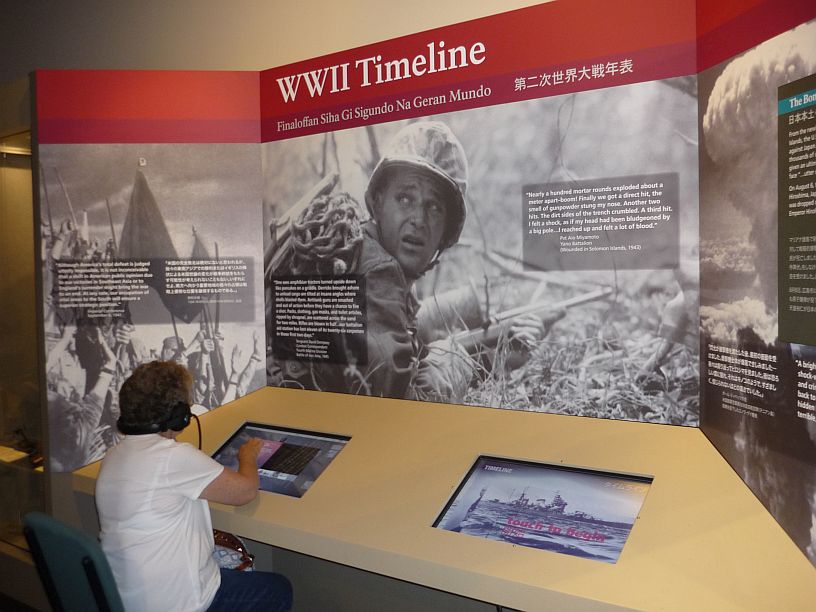
Virginia at the WWII Timeline exhibit at the visitor center.  It gave an excellent, extensive timeline of events.  This is where we spent much of our time at the visitor center.

Virginia at the WWII Timeline exhibit at the visitor center. It gives an excellent, extensive timeline of events. This is where we spent much of our time at the visitor center.

We had a bite to eat in mid-afternoon at Taco Bell which is across the street from the visitor center.  It was here that we first learned that we may be adapting to the heat in Guam.  It felt so cold inside and when we came out we were almost relieved to feel the warmth!

Our next visit was to the Piti Guns.  Fortunately, we had picked up a brochure — http://www.nps.gov/wapa/planyourvisit/upload/PitiGuns-for-web.pdf — at the visitor center for directions, otherwise we would never have found it.  It was not obvious, even with the directions. Fortunately, the brochure had a picture of the stairs behind the church’s social hall and I caught a brief glimpse of those stairs as we drove by.  There were no signs on the street and the ‘parking’ was just a grass lawn.
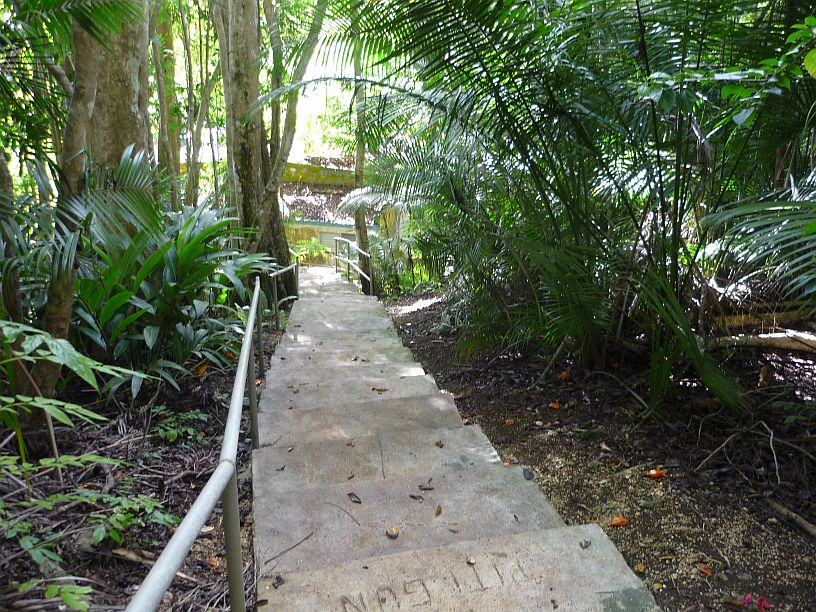
Looking down the stairs at the back of the church's social hall,  which really was in need of maintenance.

Looking down the stairs at the back of the church’s social hall, which is really in need of maintenance.

The trail was about 1/4 mile up to the gun placements.  Can you imagine what this would have been like without a trail in World War II?

The trail was about 1/4 mile up to the gun placements. Can you imagine what this would have been like without a trail in World War II?
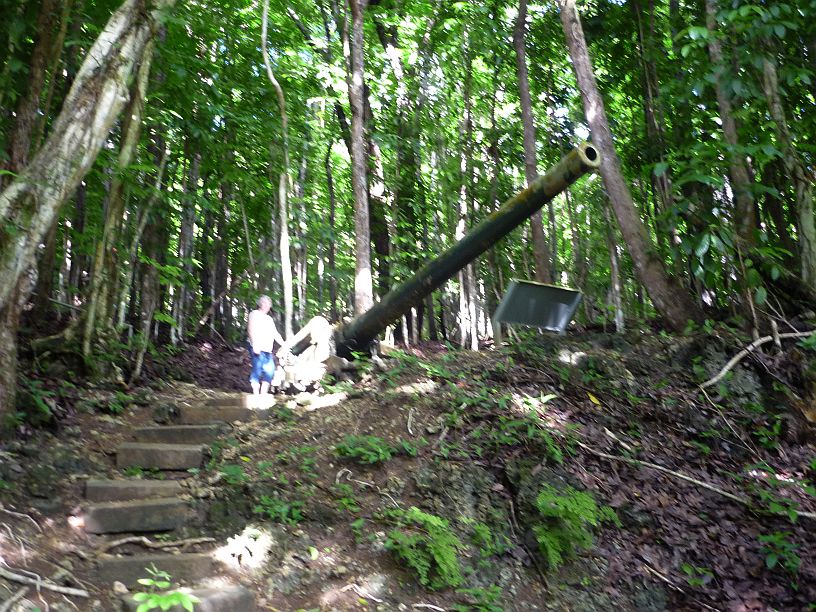
The first of three identical guns that could hit targets up to 10 miles away.
The first of three identical guns that could hit targets up to 10 miles away.

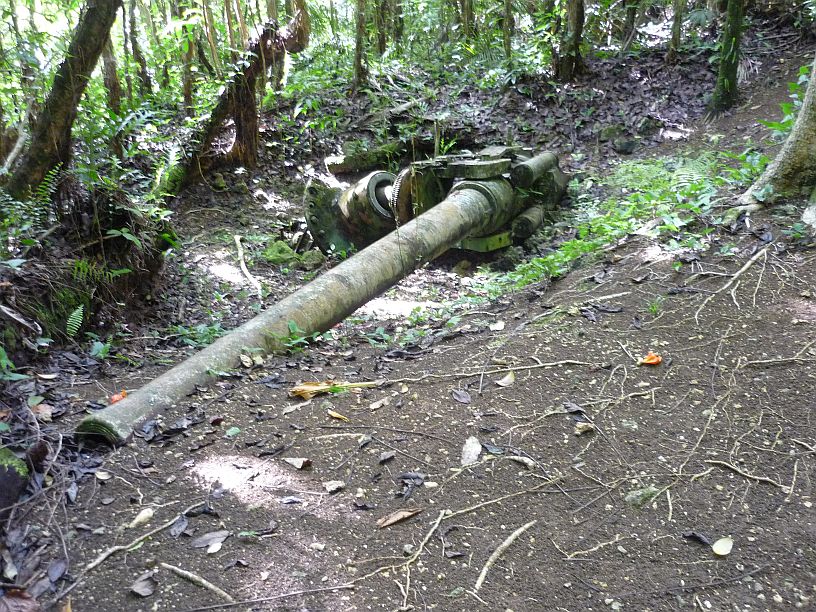
The second gun was toppled during a typhoon by a falling tree

The second gun was toppled during a typhoon by a falling tree.
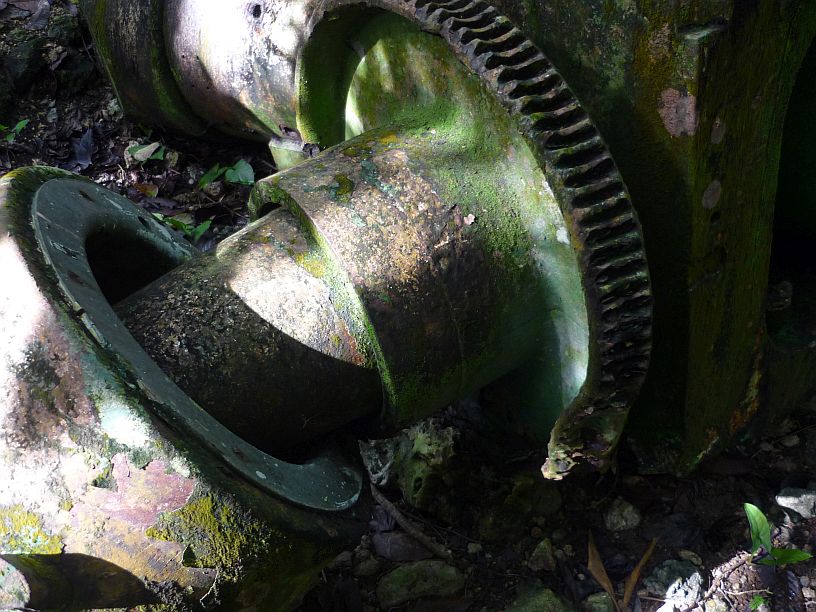
Gear at base of the second gun.

Gear at base of the second gun.

The third gun was in the best condition.  The rifling can be clearly seen in the barrel.
The third gun was in the best condition. The rifling can be clearly seen in the barrel.
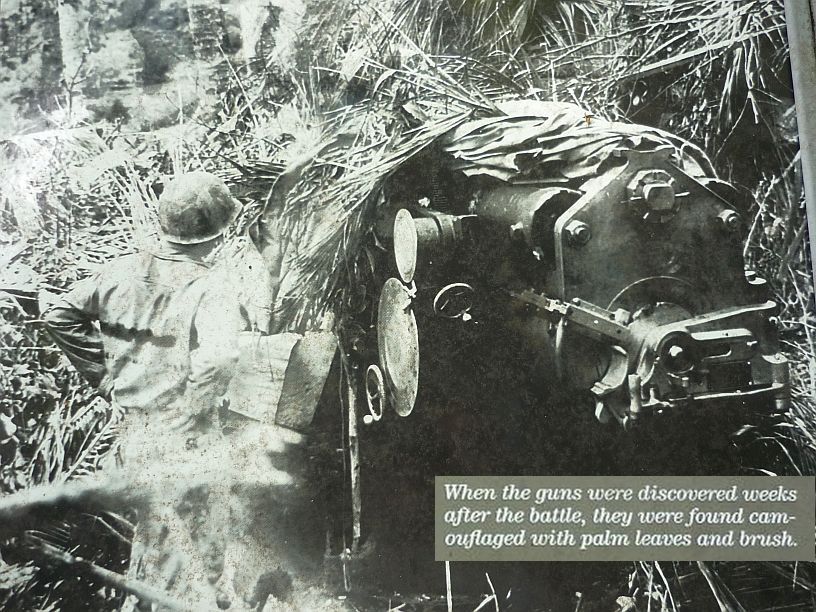
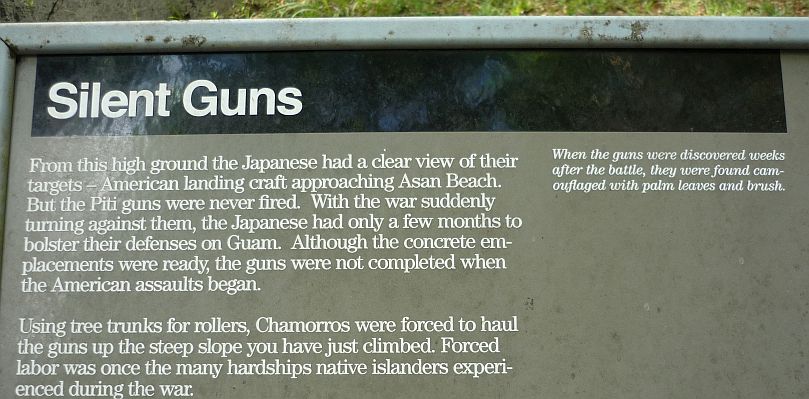
140621 -- PitiGun#3sign140621 -- PitiGun#3signb

This well hidden gun with a 10+ mile range was within 1/2 mile of Apra Harbor and one mile of Asan Beach.

This well hidden gun, with a 10+ mile range, is within 1/2 mile of Apra Harbor and one mile of Asan Beach.
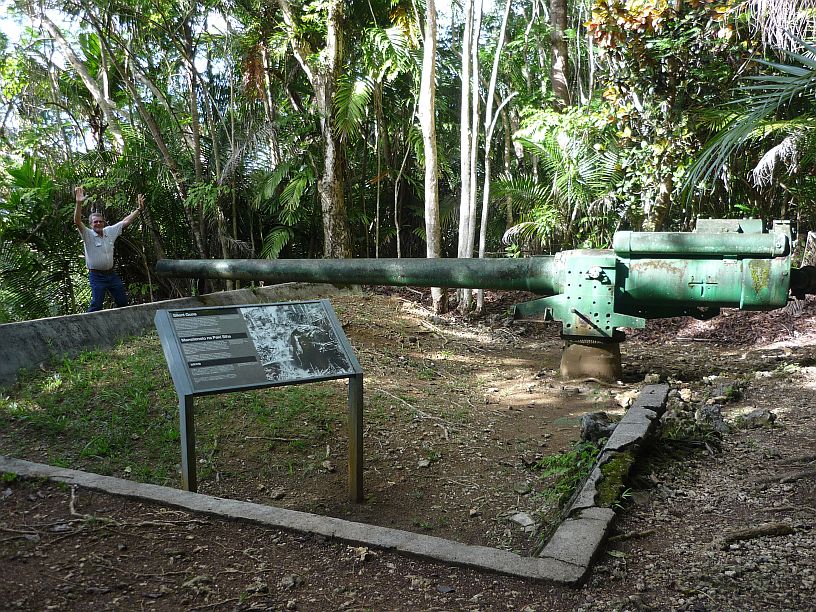
Couldn't resist having Virginia take this photo!
Couldn’t resist having Virginia take this photo!

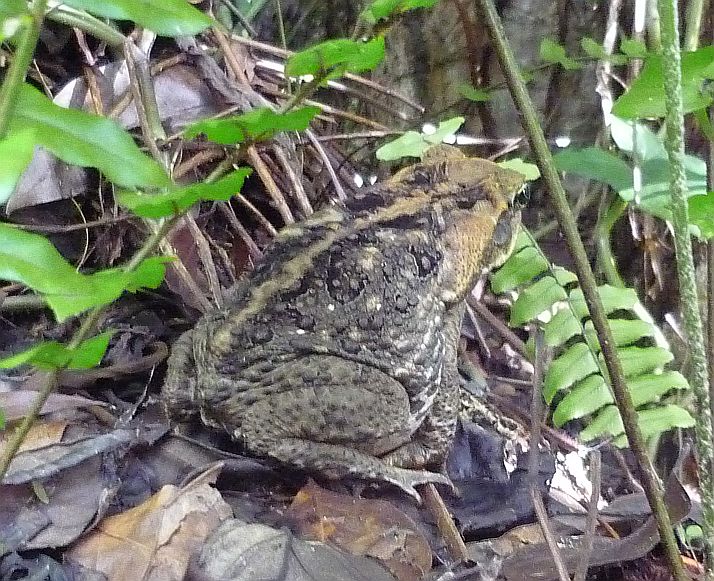
At the second gun, we saw this frog.  It is about 6 inches long from nose to tail.  I wonder if it is the same as the 'barking' frogs at the transmitter site.  We hear them constantly behind the transmitter building and they sound like barking dogs!

At the second gun, we saw this frog. It is about 6 inches long from nose to tail. Wonder if it might be the same as the ‘barking’ frogs at the transmitter site heard constantly behind the transmitter building that sound like barking dogs? [Don’t think so — www.guaminsects.net/gisac/index.php?title=Rana_guentheri ]
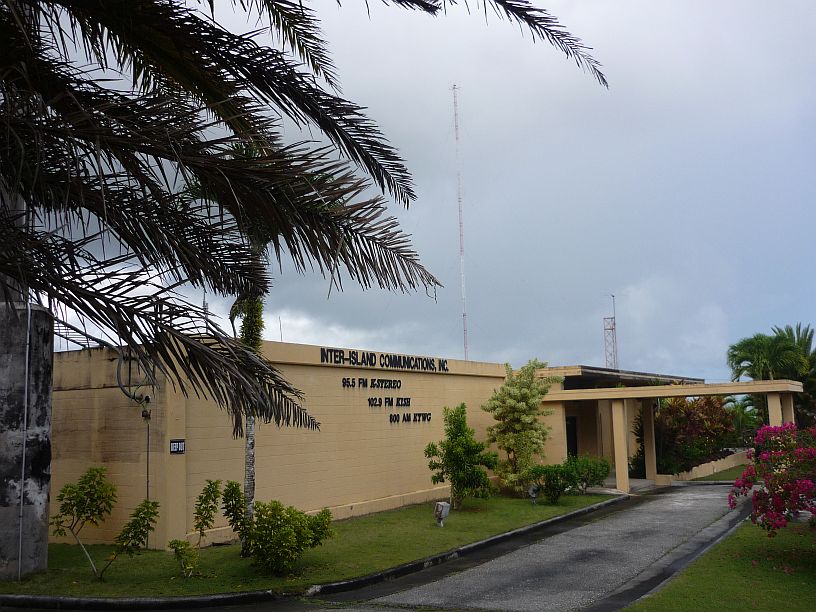
From the Piti Guns, we headed up Nimitz Hill past KTWG — TWR’s first station (10,000-watt AM) on Guam completed in 1975 before the shortwave site KTWR went on the air on the south end of Guam at Merizo.  KTWG has since been turned over to local Christian administration.

KTWG studio and office building with tall AM tower in the background.

KTWG studio and office building with tall AM tower in the background.  It also now houses two FM stations
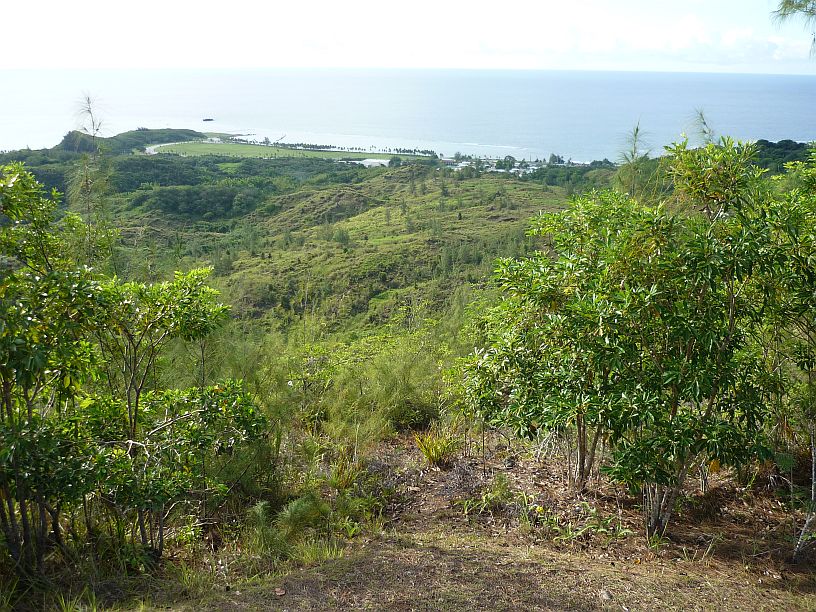
At the top of Nimitz Hill is an overlook of Asan Beach, the beach mentioned by the ranger at the visitor center earlier today.

At the top of Nimitz Hill is Asan Bay Overlook, an overlook of Asan Point and Beach, the beach mentioned by the ranger at the visitor center earlier today.  It is now a large park with several memorials.

Just past Asan Bay Overlook, we found the site of Mangan Quarry which was used as the command post for the Japanese during the battle for Guam. 140621 -- ManganQuarry
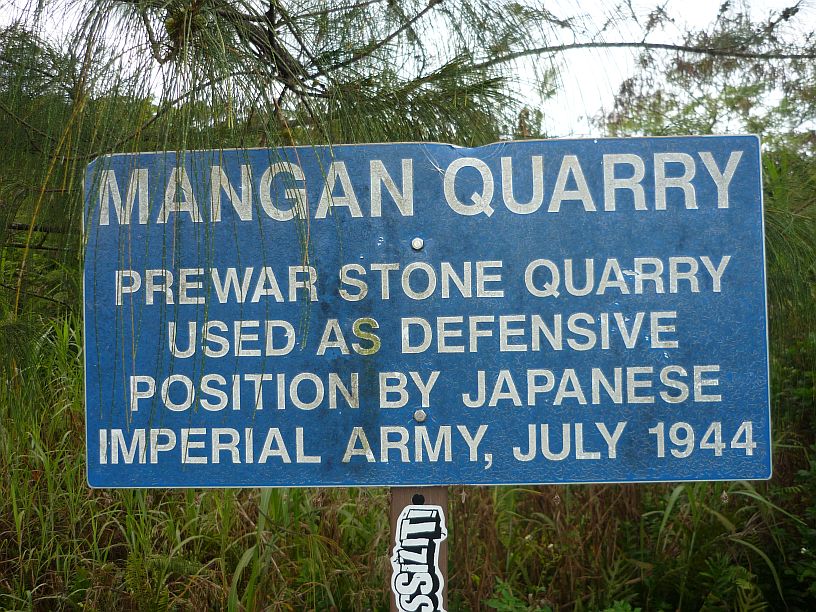
This is the site of the Japanese Command under General Takeshima.  It is located just over the top of Nimitz Hill opposite the side from which the American landed.

This is the site of the Japanese Command under General Takeshima. It is located just over the top of Nimitz Hill opposite the side from which the American forces landed.
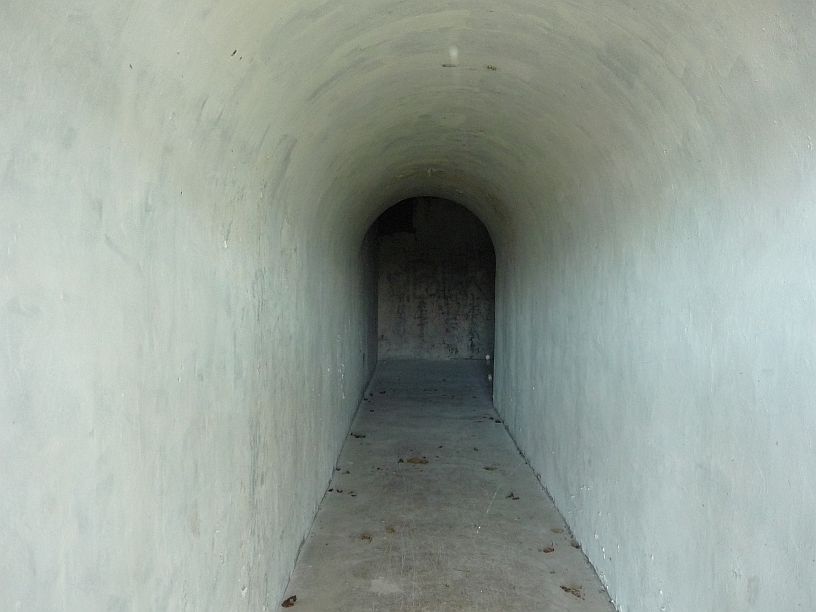
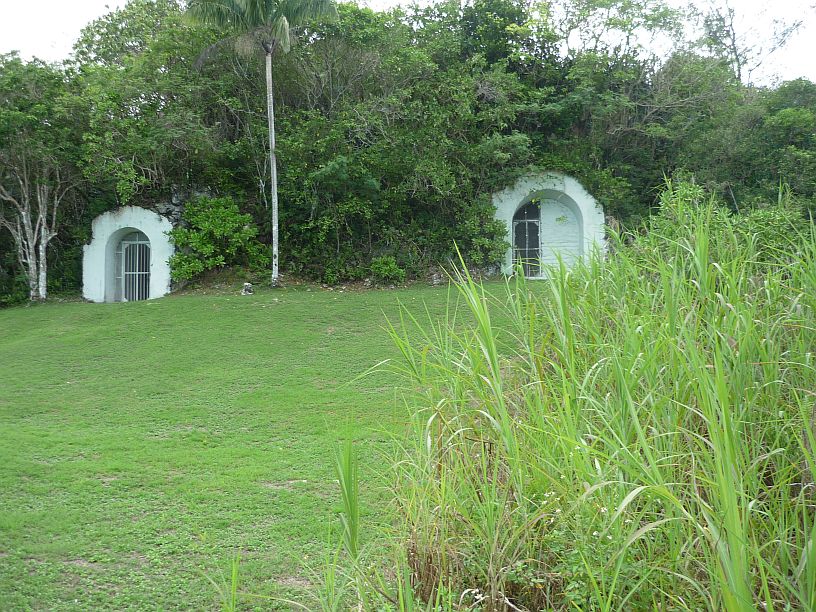
I took this photo through the gate entrance to the Japanese command post.  It tunnels quite far into the side of the hill.

I took this photo through the left gate entrance to the Japanese command post. It tunnels quite far into the side of the hill.
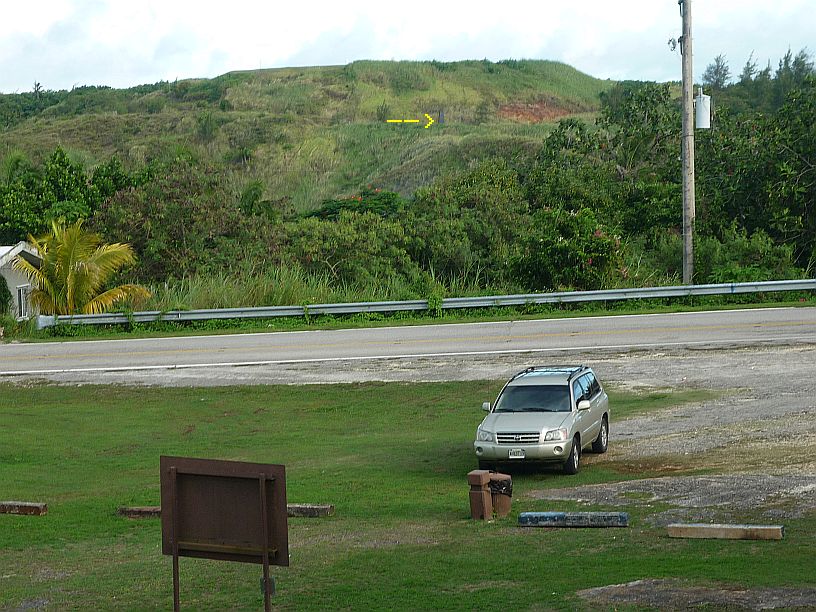
This photo was taken from the front of the Japanese Command Headquarters.  Initially, I thought the bare spot in the side of the hill might be the crash site of Korean Airlines 801 on August 6, 1997.  Only after examining the photo closely, the black obelisk memorial can be seen (yellow arrow).  It is on federal property and it is only possible to drive there on the anniversary dates of the crash.  But it is make the 1-1/2 mile hike there, if you can find the unmarked trail.  I think I have found it on Google maps and we must might try it sometime.

This photo was taken from the front of the Japanese Command Headquarters. Initially, I thought the bare spot in the side of the hill might be the crash site of Korean Airlines 801 on August 6, 1997 [It is]. Only after examining the photo closely, the top of the black obelisk memorial can be seen (yellow arrow). It is on restricted federal property and is only possible to drive there using the usually locked access road on the anniversary dates of the crash. But it is accessible by a 1-1/2 mile hike, if you can find the unmarked trail. I think I have found that trail using Google maps and we just might try it sometime.

Only a short distance past Mangan Quarry is this view of Agana bay and urban area of Guam.

Only a short distance past Mangan Quarry is this view of Agana bay and the main urban area of Guam.

It was now getting late, so we headed toward home.  On the way we decided to find Family Beach where TWR staff is supposed to meet for a picnic on July 5.  It is located along the thin peninsular north side of Apra Harbor. We discovered the commercial port is also located there, just before Family Beach.
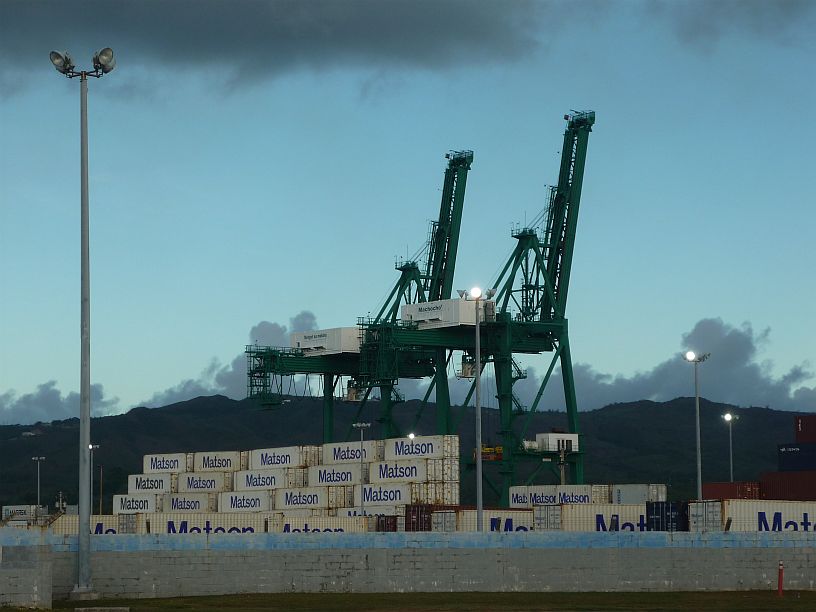
 

There appear to be about a hundred containers ready to load at the port.  The ones, identical to these, into which we packed the transmitter are still at the transmitter site waiting to be picked up.

There appear to be over one hundred containers ready to be loaded at the port. The ones, identical to these, into which we packed the transmitters, are still at the transmitter site waiting to be picked up.

We made it back to the apartment after 6pm.  It has been a long, but good, day!
 

2104/06/20 — Friday — First Connections on Antenna Switches

Virginia went to work with us today to remove the SW100 parts, that were packed with the transmitters, from inventory lists.

Since the spare integrated circuits have arrived that were ordered last week, Larry spent time installing IC sockets and five new ICs on the Tompson A to D card that he was working on last week.  Unfortunately, the problem was still not resolved.  We then tested the remaining socketed ICs on a working board and found no problems with these.  Once again, we’ll have to investigate further later.

Larry began to help with connecting the high voltage transmission line connection to the antenna switches.  We started with the easy and short runs first.

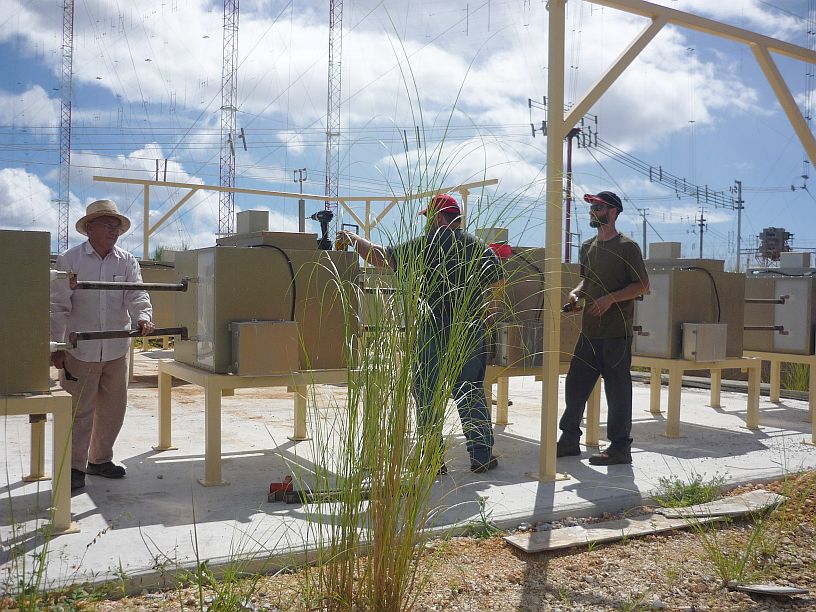
Joel and Jim are checking out the 'fit' of the first of several short connections

Joel and Jim are checking out the ‘fit’ of the first of several short connections

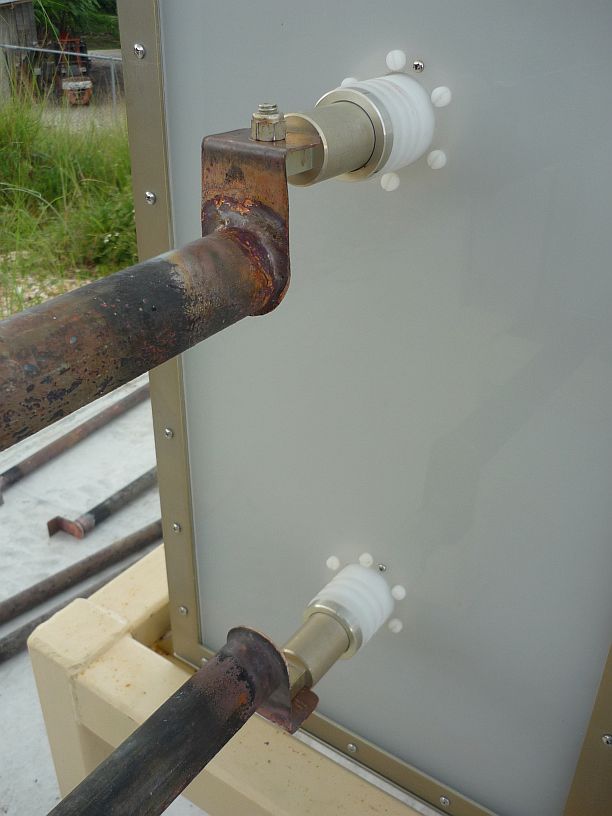
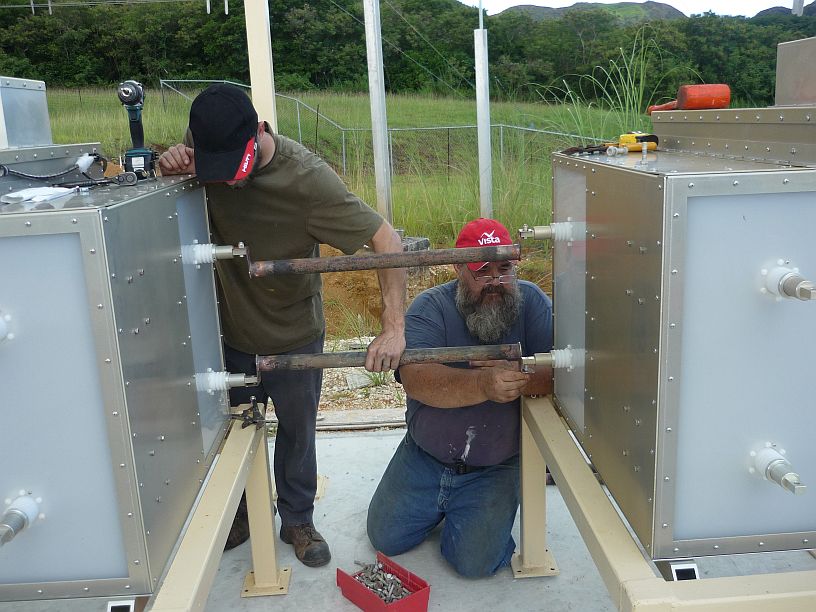
Detail photo of how the connection is made.  The diameter of the pipe and the spacing between the two is critical for maintaining the 300 ohm impedance of the transmission line.

Detail photo of how the connection is made. The diameter of the pipe and the spacing between the two pipes is critical for maintaining the 300 ohm impedance of the transmission line.

After verifying the first connection, Joel, Paul and Jim start to connect more switches.

After verifying the first connection, Joel, Paul and Jim start to connect more switches.

The short connections are completed on the first five switches.  Note that the fifth switch at the left is out of line with the rest, which required  slightly different connecting pipes.

The short connections are completed on the first five switches. Note that the fifth switch at the left needs to be out of line with the rest, which requires slightly different connecting pipes.

This evening, we got water refilled at the Water Store.  This time we had two 5-gallon jugs that could filled.  We actually found a third jug hiding in the bottom of the kitchen cupboard in a hidden corner.  This will help greatly in reducing the number of trips for purified water refills.

2104/06/19 — Thursday — Begin Antenna Switch Installation

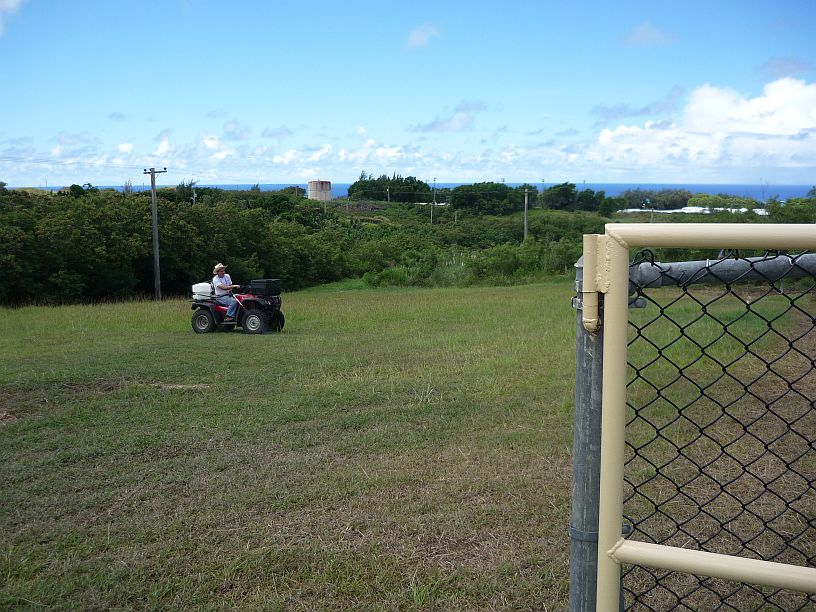
Today, Mike sprayed solar panel field with Roundup so it will be ready to install the frames, which are scheduled to arrive later this month.  It is my understanding that there will be a layer of gravel under the panels to keep grass from interfering with servicing the system.

Mike sprays the solar panel field to prepare it for installation of the solar panel frames.

Mike sprays the solar panel field to prepare it for installation of the solar panel frames.

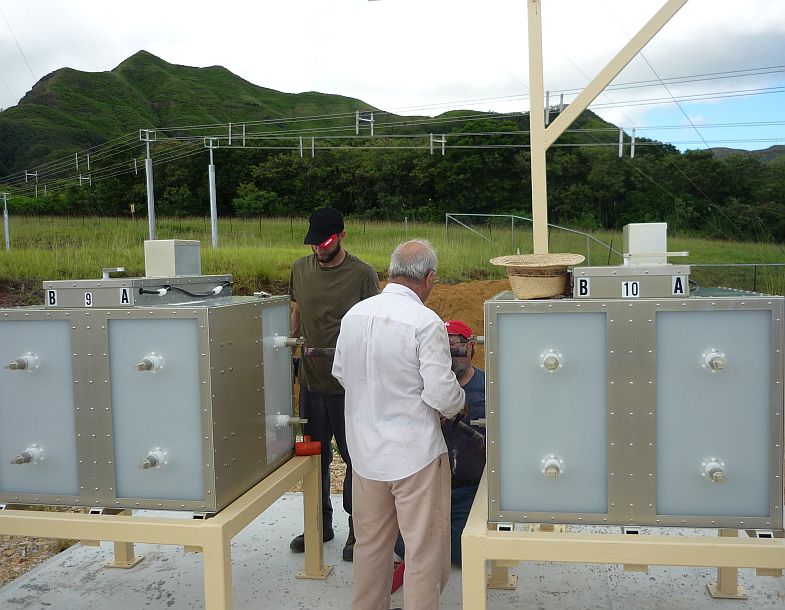
Jim, Joel, Paul and I began to arrange the antenna switches into their final positions.

Here the antenna switches are on the pad, but are not in their final positions yet.

Here the antenna switches are on their pad, but are not in their correct positions.

Joel, Paul, Jim and Larry (taking photo) are moving the antenna switches into their final positions before connecting them.

Joel, Paul, Jim and Larry (taking photo) are moving the antenna switches into their final positions before connecting them.

Virginia went shopping with Kathy in the big shopping centers in northern Guam.

Our Apartment

A photo tour of our apartment:

Virginia is standing by the door of our apartment.  We are in the far right of three apartments on the second floor.  The other two apartments on our floor are vacant at the moment.  All three apartments on the first floor are occupied.  Joel and Joanna have the middle one.

Virginia is standing by the door of our apartment. We are in the far right of three apartments on the second floor. The other two apartments on our floor are vacant at the moment. All three apartments on the first floor are occupied — we suspect, because they might be a little cooler without the sun beating on the concrete roof. Joel and Joanna have the middle one.


Looking into the living room from the kitchen.  The front door is on the extreme right.  The living room has a couch and TV, which is connected to cable.  The cable connection provides our internet service.  We use the internet a whole lot more than the TV.  Occasionally, we will watch CNN news, the only cable news available, but Guam ('where America's day begins') is 14 hours ahead of EDT.  When it is day here, it is night on the mainland.

Looking into the living room from the kitchen — note Virginia’s fresh bread on the stove. The front door is on the extreme right. The living room has a couch and TV, which is connected to cable. The cable connection provides our internet service. We use the internet a whole lot more than the TV! Occasionally, we will watch CNN news, the only cable news available, but Guam (‘where America’s day begins’) is 14 hours ahead of EDT. When it is day here, it is night on the mainland, which means prime-time news is on about 7am — we get Monday evening news on Tuesday morning our time.

The kitchen is rather small.  The back door leads to a small balcony, where a washer, dryer and hot water heater are located.

The kitchen is rather small. The back door leads to a small balcony, where a washer, dryer and hot water heater are located.

Our bedroom has an air conditioner and ceiling fan and just enough room for a bed and dresser.  No blankets or bedspread are needed, or wanted!

Our bedroom has an air conditioner and ceiling fan and just enough room for a bed and dresser. No blankets or bedspread are needed, or wanted!

The second bedroom has been converted into a spare room.  The bed is leaning against the wall.  The bedrooms are the only rooms with air conditioners.  Virginia spends a lot of time reading in here and this is where most of our work on our laptops is done -- including this blog.

We converted the second bedroom into a spare room. The bed is leaning against the wall. The bedrooms are the only rooms with air conditioners. Virginia spends a lot of time reading in here and this is where most of our work on our laptops is done — including this blog and Skype calls.

Of course, no accommodation would be functional without a bathroom.  This one is tiny, but functional.

Of course, no accommodation would be complete without a bathroom. This one is tiny, but functional.

2012/06/18 — Wednesday

We woke up this morning at 3 am because we were getting hot and discovered that the  electricity was off — no air conditioning or ceiling fan!  We went back to sleep on top of the sheets only to wake up at 4:30am feeling cold (relatively speaking).  Thankfully, the electricity was back on!

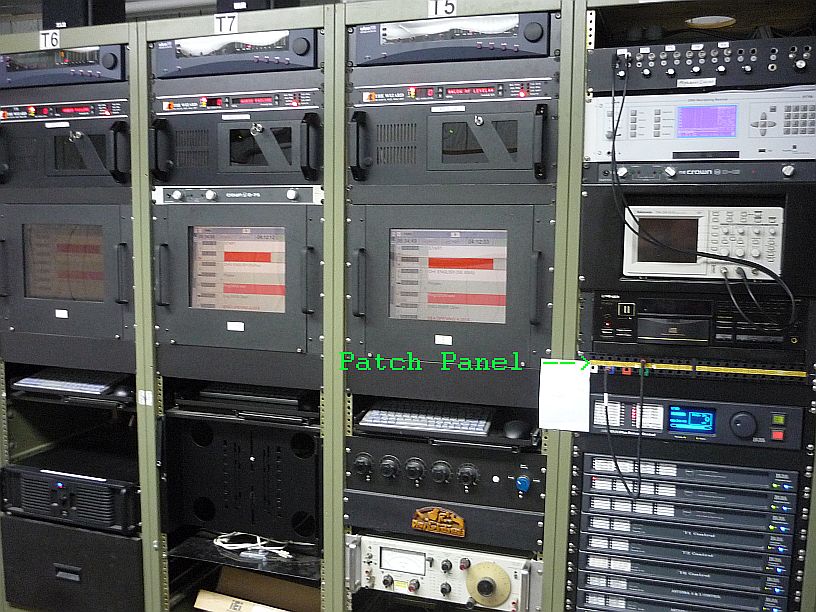
This is the automation equipment for sending the audio to the three transmitters.  There are two more identical racks to the left for two additional transmitters.  Text has been added to indicate the location of the 'patch panel' which can be used to electrically reroute equipment should the need arise, such as equipment failure.

This is the automation equipment for sending the audio to three transmitters. There are two more identical racks to the left for two additional transmitters. Text has been added to indicate the location of the ‘patch panel’ which can be used to electrically reroute equipment should the need arise, such as equipment failure.

Today, i worked with Joel trying to sort out some wiring issues.  A problem came up as a result of the wires that had been removed yesterday.  While trying to trace the problem, we discovered the audio patch panel has some unexplainable cross connections.  The audio to the various transmitters was ending up at the correct places but was taking a confusing route through the patch panel.  This made tracing the problem extremely difficult.  While correcting the problem, we decided to reconnect the wiring in the patch panel so that all the wiring now followed a logical path.  Hopefully, next time it should take a lot less time to troubleshoot audio problems.

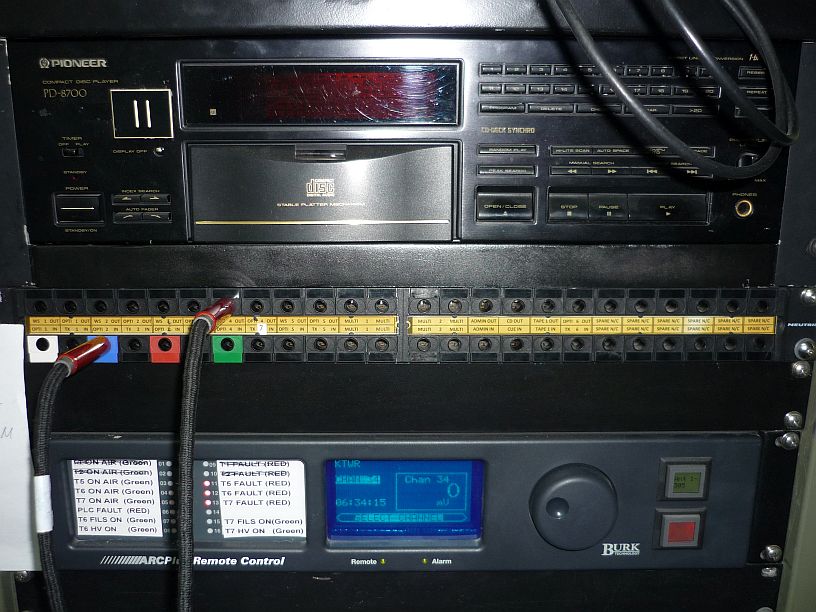
Close up of the patch panel which allows lots of flexibility in 'patching' around equipment problems.

Close up of the patch panel which allows lots of flexibility in ‘patching’ around equipment problems.

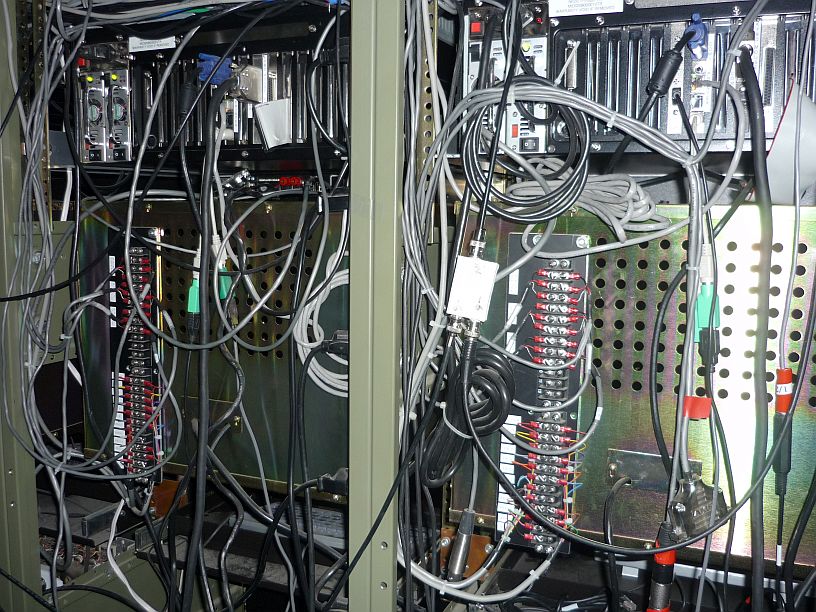
This is the wiring on the back side of the automation system and patch panel.  It took quite a bit of tracing wires, but Joel and I finally sorted them out.

This is the wiring on the back side of the automation system and patch panel. It took quite a bit of tracing wires, but Joel and I finally sorted them out.