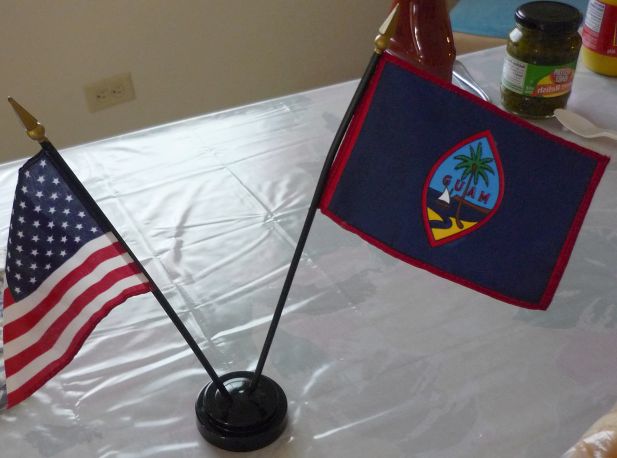
2014/07/04 — Friday — Independence Day

140704 -- FlagsDuring the night, tropical storm Neoguri passed about 150 miles southwest of Guam.  Strong wind and heavy rain could be heard even inside our concrete roofed apartment.  The wind was strong enough to make the seals in the window occasionally ‘buzz’. We slept in a little later than normal this morning.

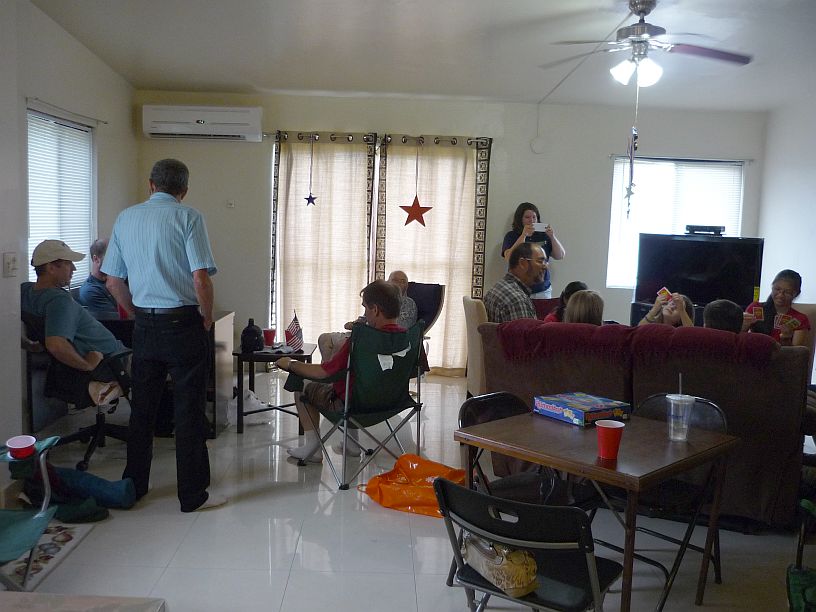
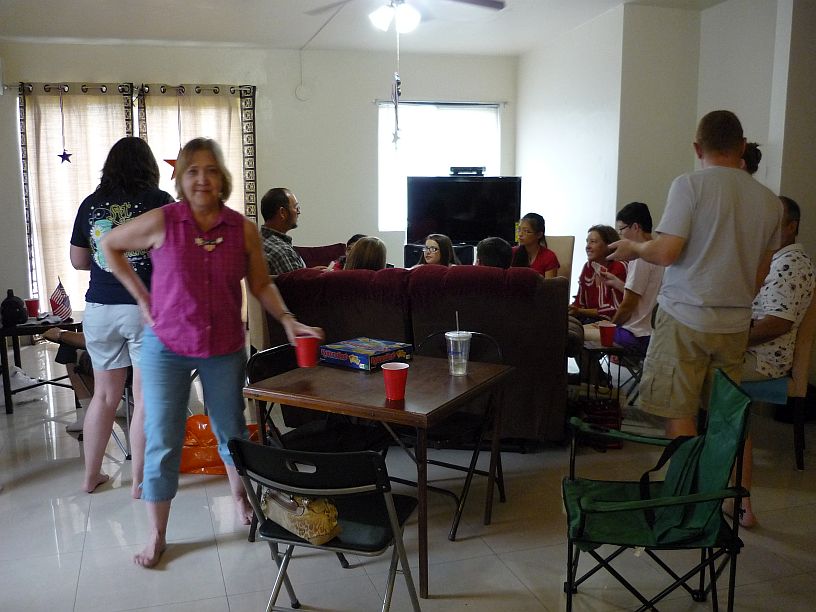
As a result of the passing storm, the TWR picnic at Nimitz Beach Park was moved inside.  The Canadian couple, Phil and April, opened their home for the ‘picnic’.  They have a large living/dining area with a big kitchen which easily accommodated the TWR staff .

The ladies prepared goodies to go with the hamburgers and hot dogs that were grilled under the carport.  One of the delicious desserts even had a patriotic theme.140704 -- Flag CakeHere are a few photos of the staff enjoying a time of relaxation:


The TWR 'girls'!

The TWR ‘girls’!

140704 -- LivingRoom4th140704 -- LivingRoom4thbAfter a good meal, we played some table games.  Some new ones, to us, were Bananagrams — http://www.bananagrams.com/our-games/bananagrams — and Bandits, a card game, which is no longer made.  [Located one used deck on Amazon as a collectible for $65 and one used deck on Ebay for $40!]

We headed home about 4 pm and, since we were within a couple miles of the east coast, decided to head that way first.  We passed through the villages of Ipan and Talofofo.  Unfortunately, the rain and haze did not allow for good photos.

On the way back to, and about 1/2 mile north of, our apartment, we noticed another ‘hidden’ memorial beach, Apaca Point, on the west side of Guam.
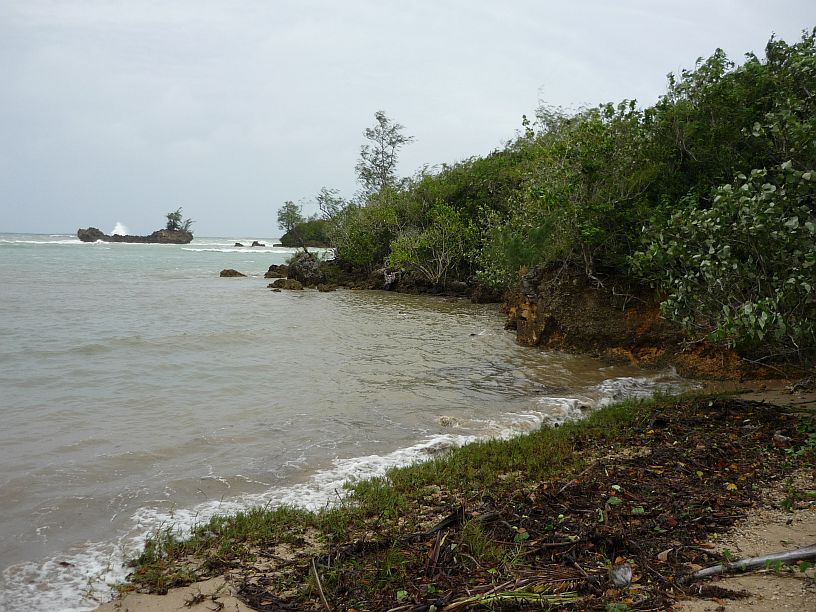
Apaca Point was another location where the Japanese had well-hidden defenses.

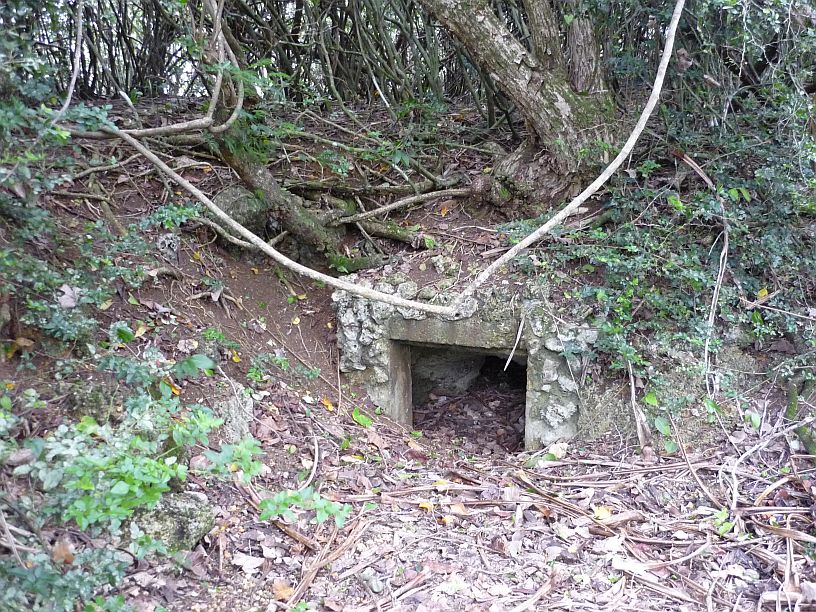
Apaca Point was another location where the Japanese had well-hidden defenses, including pill boxes and tunnels.
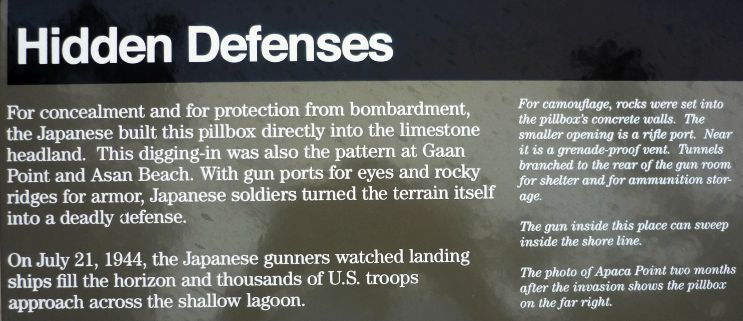
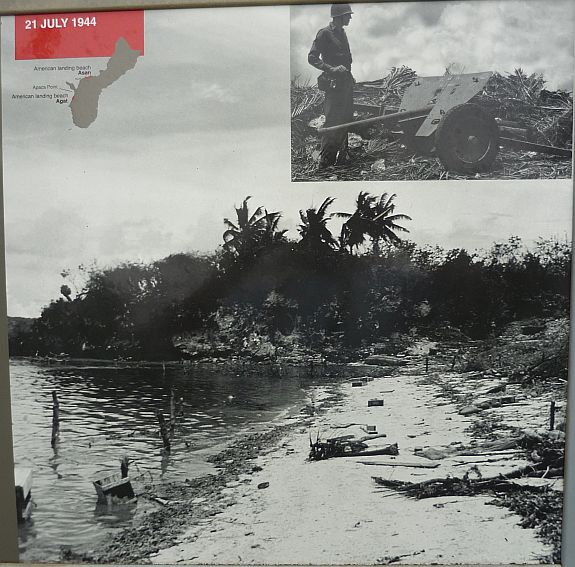
140704 -- ApacaPointSign140704 -- ApacaPointSign2

A Japanese tunnel at Apaca Point.

A Japanese tunnel at Apaca Point.

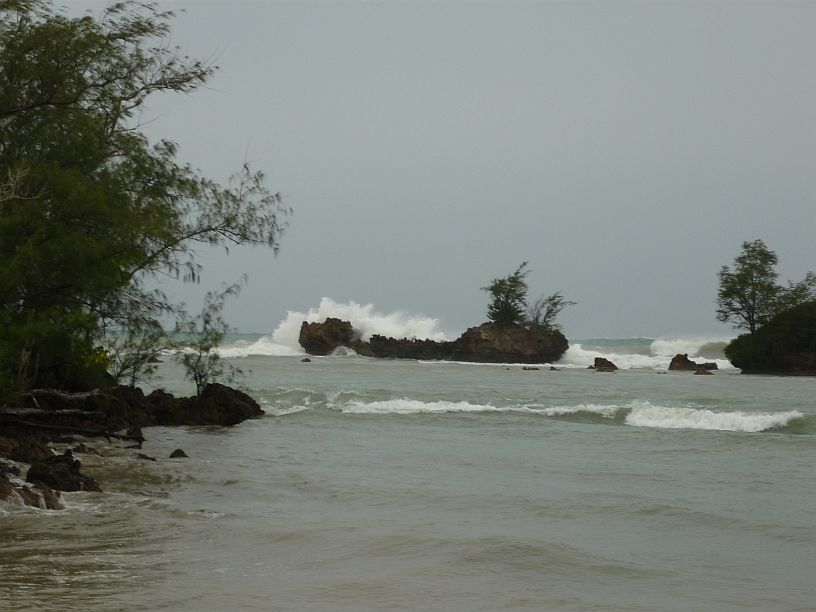
Apaca Point Island is just off Apaca Point.  Usually, the Philippine Sea is very calm on the west side of Guam.  Because of tropical storm Nigarow, the waves are quite spectacular.

Apaca Point Island is just off Apaca Point. Usually, the Philippine Sea is very calm on the west side of Guam. Because of tropical storm Neoguri, the waves are quite spectacular today.

While at Apaca Point we met a couple that were collecting shells on the beach.  We visited with them for a while and learned that they were here to attend her mother’s funeral.  They met while he was stationed on Guam with the US Army.  She was a local Chamorro and they were married in 1975 at Marianas Baptist, a church about 300 yards east of our apartment.
 

2014/07/03 — Thursday — Last Interconnecting Line

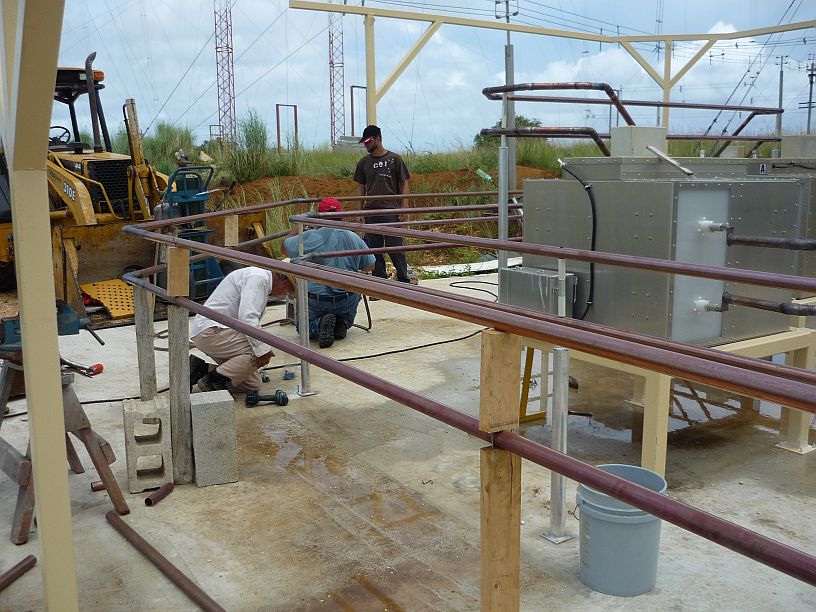
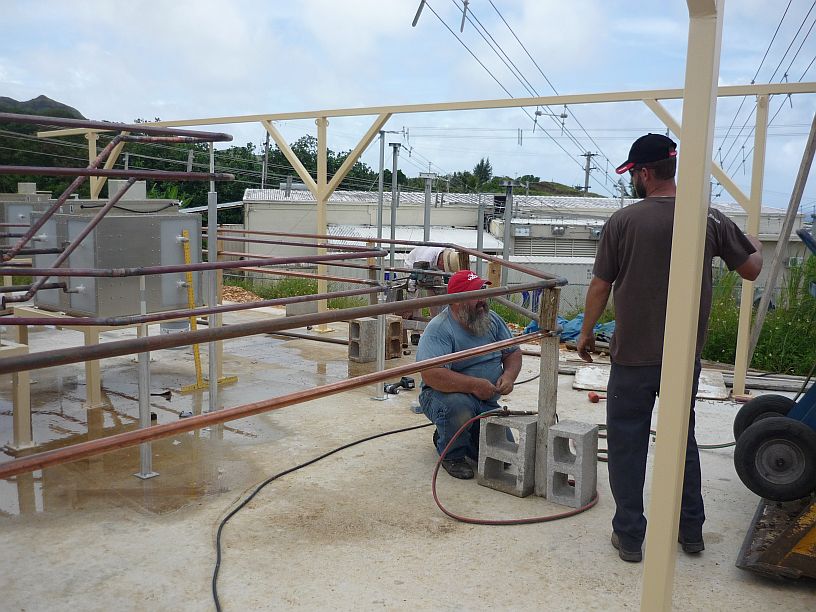
Today’s task?  Complete the last long ‘straight’ connection, make the support poles and anchor these poles to the pad.  The task was accomplished.  Photos below, plus one of a visiting critter:

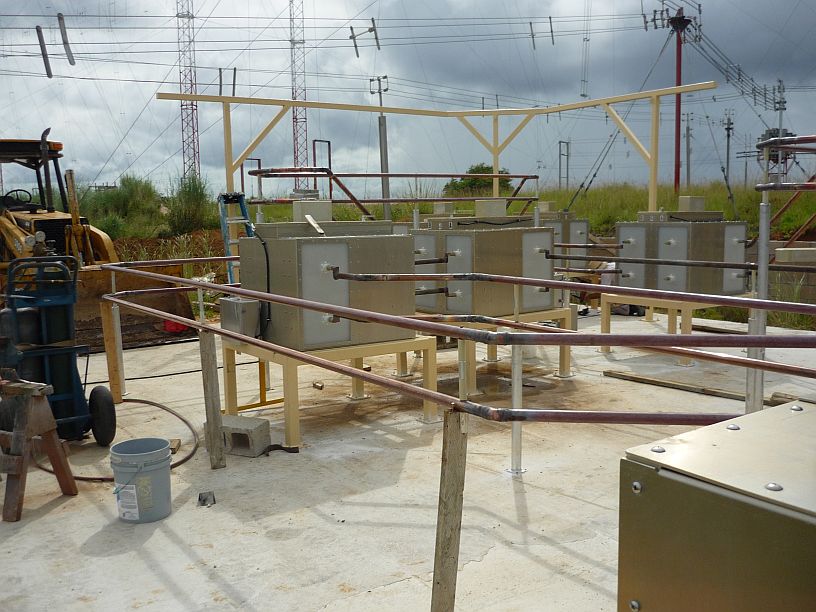
The line in the foreground is by far the longest.  Although what we call a straight run, it does make a corner.  It just does not go up and over other lines.  Paul is anchoring posts to the pad, Jim is silver soldering joints, and Joel is keeping Jim supplied with silver solder rods.

The line in the foreground is by far the longest. Although what we call a ‘straight’ run, it does make a corner. It just does not go up and over other lines. Paul is anchoring posts to the pad, Jim is silver soldering joints, and Joel is keeping Jim supplied with silver solder rods and making sure everything stays lined up straight.

By the end of the day, five supporting posts had been put under this line and had been bolted to the pad -- already for a tropical storm coming our way.

By the end of the day, five supporting posts had been put under this line and had been bolted to the pad — all ready for a tropical storm coming our way.

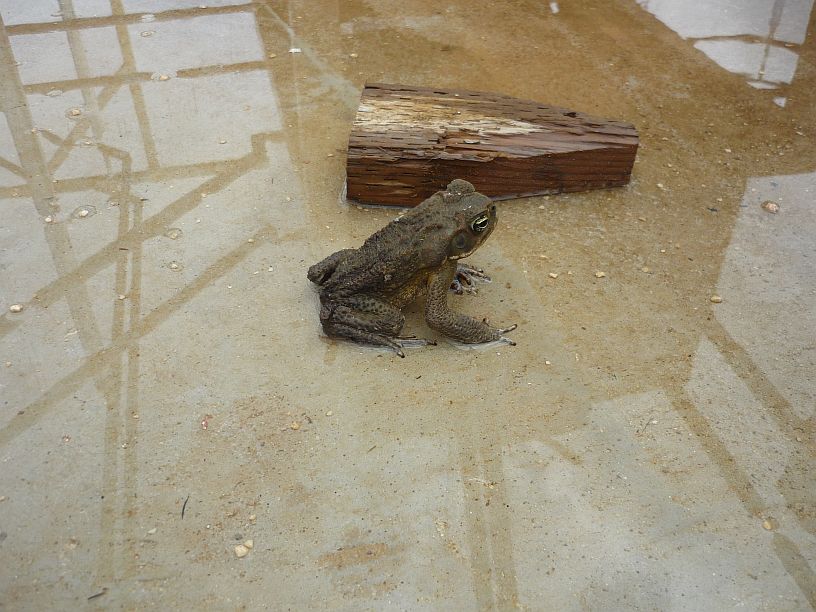
Our visiting critter of the day a frog, or is it a toad?  For size comparison, the wood block is from a 2X4.

Our visiting critter of the day — a frog, or is it a toad? For size comparison, the wood block is from a 2X4.

2014/07/02 — Wednesday — Solar Panels Arrive

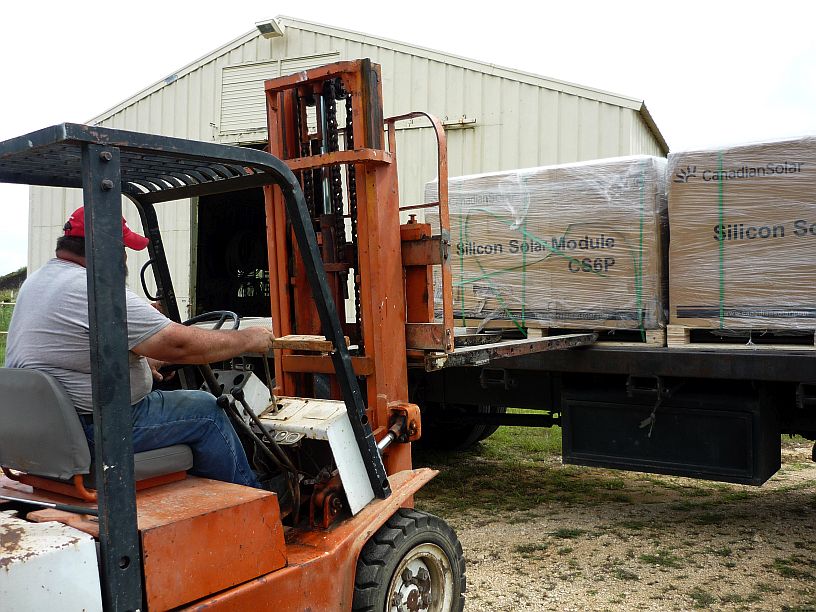
About noon a truck delivered the solar panels for the planned 30-kilowatt array.  The mounting posts and rails will be coming in a later load.  Here are some photos:

Jim unloads one of five boxes of solar panels.

Jim unloads one of five boxes of solar panels.

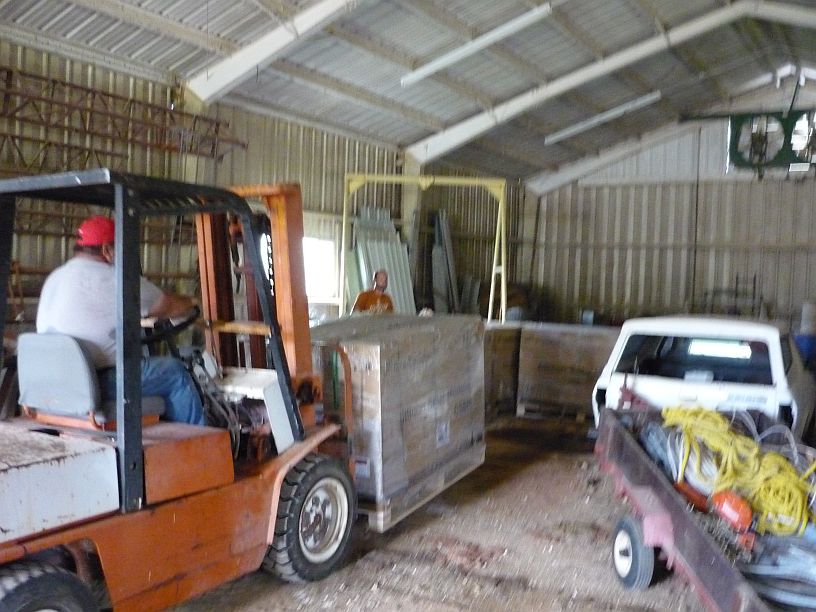
The boxes of solar panels are stored temporarily in the 'barn'.

The boxes of solar panels are stored temporarily in the ‘barn’.

Today we completed two relatively straight, but long, connections of the antenna switches.

The two sets of lines in the foreground were done today.  By the end of the day, the temporary wood stands were replaced with aluminum posts that were being made at the time this photo was taken.

The two sets of lines in the foreground were done today. By the end of the day, the temporary wood stands were replaced with aluminum posts that were being made at the time this photo was taken.

2014/07/01 — Tuesday — Second Crossover Done

Virginia got her hair cut today.  If you keep up with this blog, you should see the results in a few days.

We started and completed the second, and last, interconnecting crossover of the antenna switches.  It seemed to take a long time, but, in retrospect, we spent at least two days on the first crossover because a lot of the preliminary work was done under shelter during a rainy day.

Here are some photos of today’s work, of an unusual TP holder and of a butterfly that landed by the antenna switches pad:

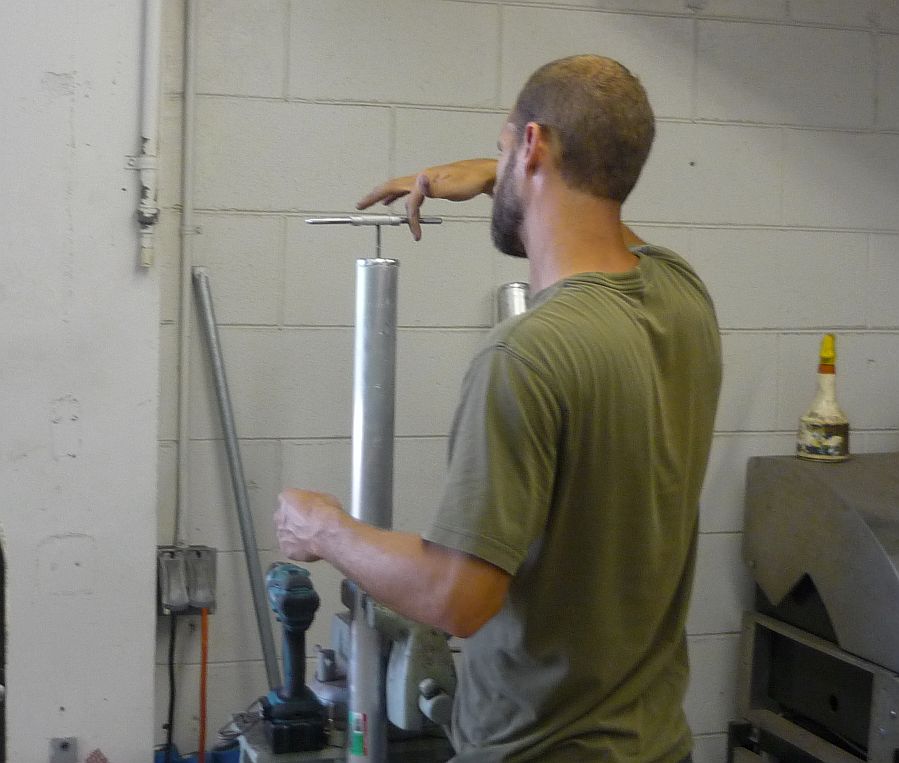
Paul is cutting one of the posts to support the crossover.

Paul is cutting one of the aluminum posts to support the crossover.

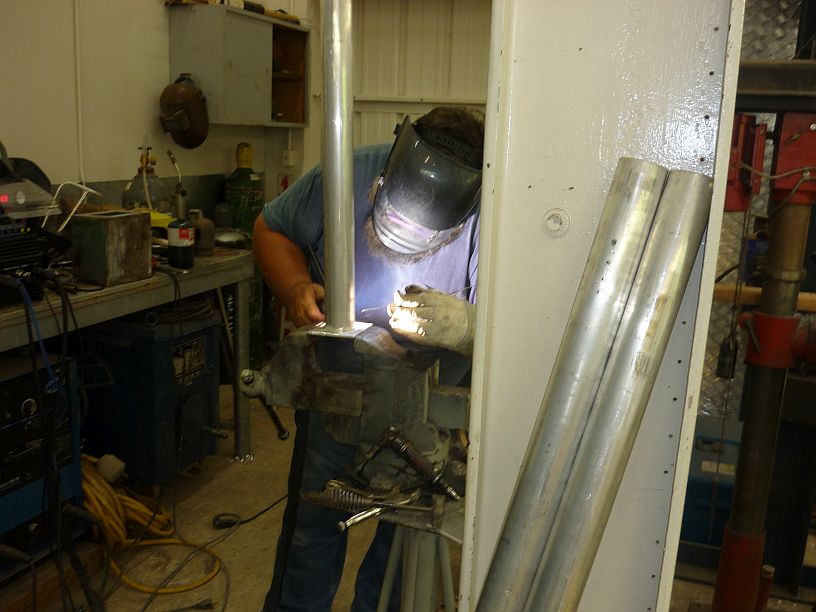
Jim welds an aluminum base on one of several poles.

Jim welds an aluminum base on one of several posts.

Joel cut caps for Jim to weld onto the top of the posts.

Joel cut caps for Jim to weld onto the top of the posts.

Joel taps a  mounting hole in the cap.  Meanwhile, I am makining the standoff insulator assemblies that are attached using the tapped holes.

Joel taps a mounting hole in each posts’ cap. Meanwhile, I am making the standoff insulator assemblies that are attached using the tapped holes.

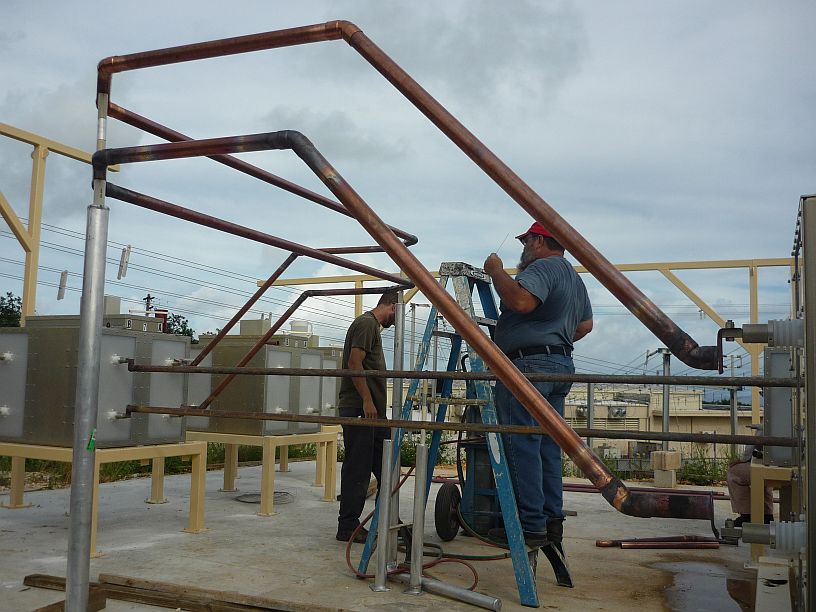
Using the posts with insulators, the crossover is in place and Jim is silver soldering all the joints.

Using the posts with insulators, the crossover is in its final position and Jim is silver soldering all the joints.

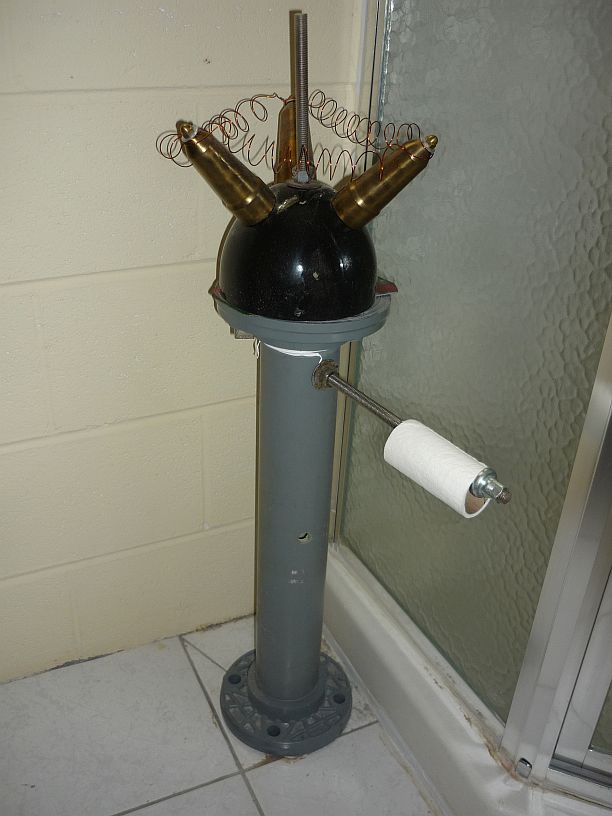
In a men's room behind the transmitter resides this unique TP holder.  Only a creative engineer would come up with one like this!!

In a mens’ room hidden behind one of the transmitters resides this unique TP holder. Only a creative engineer would come up with something like this!!

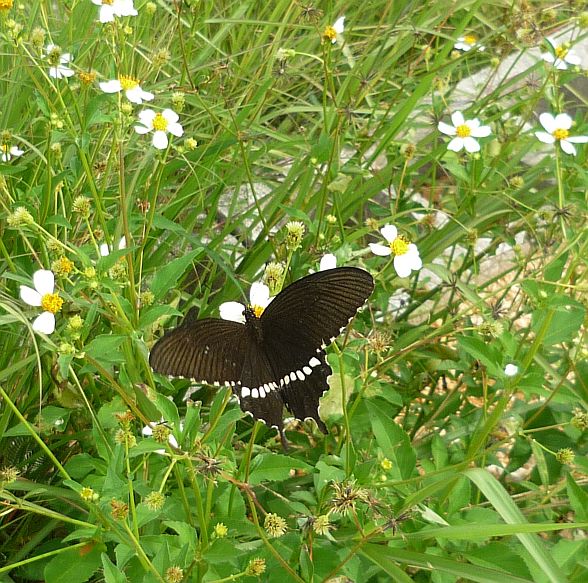
This butterfly briefly landed near where we were working.  I took this photo for our granddaughter Audrey who raises butterflies and gives talks to Nature Sleuths groups at Oxbow Park.  It looks like it might be some kind of swallowtail -- maybe she knows?

This butterfly briefly landed near where we were working. I took this photo especially for our 11 year old granddaughter, Audrey, who raises butterflies and gives talks to the Nature Sleuths groups at Oxbow Park. It looks like it might be some kind of swallowtail — maybe Audrey knows?  The plant that it has landed on is a pesky weed we called ‘black-jack’ in Swaziland.  The flowers are pretty and belong to the aster family, but the seeds cling to your clothing and are tedious to remove — see http://en.wikipedia.org/wiki/Bidens_pilosa


2014/06/30 — Monday — Voltage Regulator

Joel and Jim worked night shift this weekend and had today off,  so I hitched a ride with Paul.

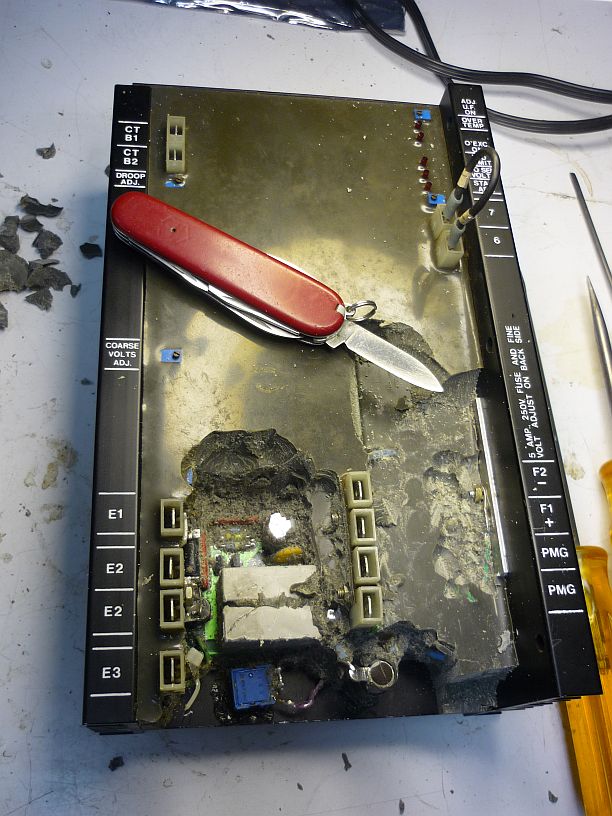
Mike ordered a replacement regulator from E-bay for the standby diesel power plant.  Until it arrives and without a working regulator, there will be no broadcasts in the event of a power failure.  With this prospect and since Jim and Joel were not here to work on connecting the antenna switches, I decided to see if there was any possibility of repairing the failed regulator.

Someone had already begun to chip away at the potting material, but I figured the most likely failure might be in the higher current circuits, probably on the right side of the voltage regulator.

Someone had already begun to chip away at the potting material around what looked like the sensing circuitry, but I figured the most likely failure might be in the higher current circuits, probably on the right side of the voltage regulator.  After removing the first layer, an extra heat sink began to appear.

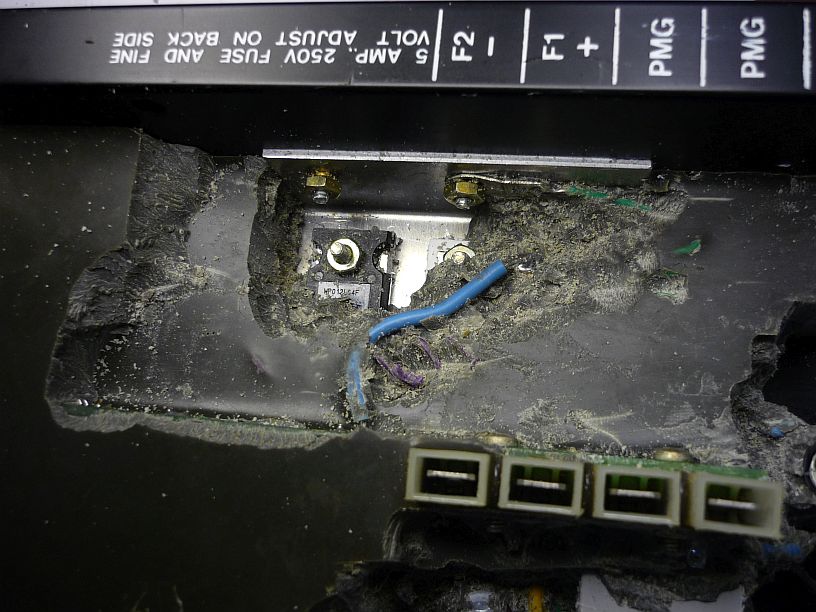
After shifting into 'archeological dig' mode, the first power device was exposed.

After shifting into ‘archeological dig’ mode, the first power device was finally exposed.

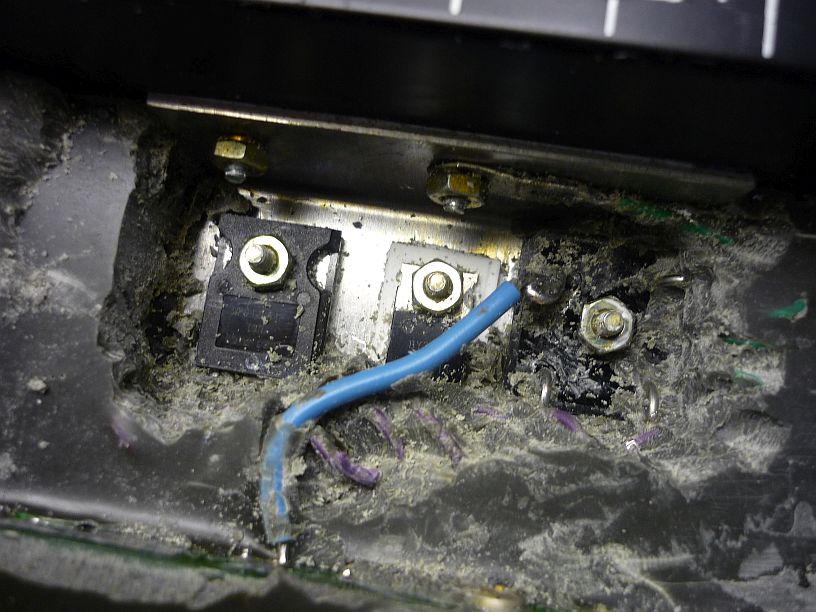
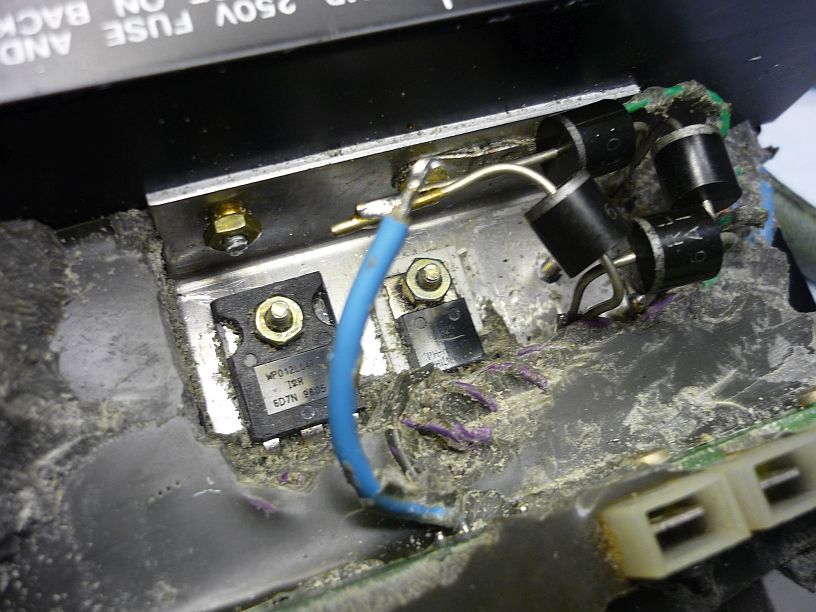
Eventually, three power devices were 'unearthed' that were attached to the heat sink.  The two on the left tested OK, but the rectifier bridge on the right had a dead short on one of its four diodes.

Eventually, three power devices were ‘unearthed’ that were all attached to the extra heat sink. The two on the left tested OK, but the rectifier bridge on the right had a dead short on one of its four diodes.

The faulty bridge was successfully removed and replaced with four discrete diodes.

The faulty bridge was successfully removed and replaced with four discrete diodes.

After the ‘repair’ was completed, we had just enough time to install and test the regulator in the standby power plant.  Unfortunately, the regulator’s 5 amp fuse blew immediately!  Now when we checked, the diodes were OK, but the other two power devices had both failed.  Our attempt was not successful, but at least we tried!